



Two white colonial houses with lit windows and black shutters photographed at dusk along a tree-lined residential street.

Furnace Repair in Island Pond, VT

Tell us about the job

Takes about a minute. No obligation.

RepairFurnace or heatingEssex County, VT
Step 1 of 2

What ZIP code is the job in?

Furnaces in Island Pond run September through June. That's ten months of the year, with overnight lows averaging 8°F in December, January and February. A furnace sized for most of the country gets a break in spring and fall. Yours doesn't get much of one. It's either heating the house or close to it almost year-round, and the parts inside, the igniter, the blower motor, the heat exchanger, wear against that schedule. A noise or a short cycle that would take years to matter somewhere warmer can show up a lot sooner here. Worth having someone look at it rather than wait and see.

10 months
September through June, your furnace is on duty
8°F
the average winter night it heats against
33 winter storms
in ten years, the nights a failure hurts most
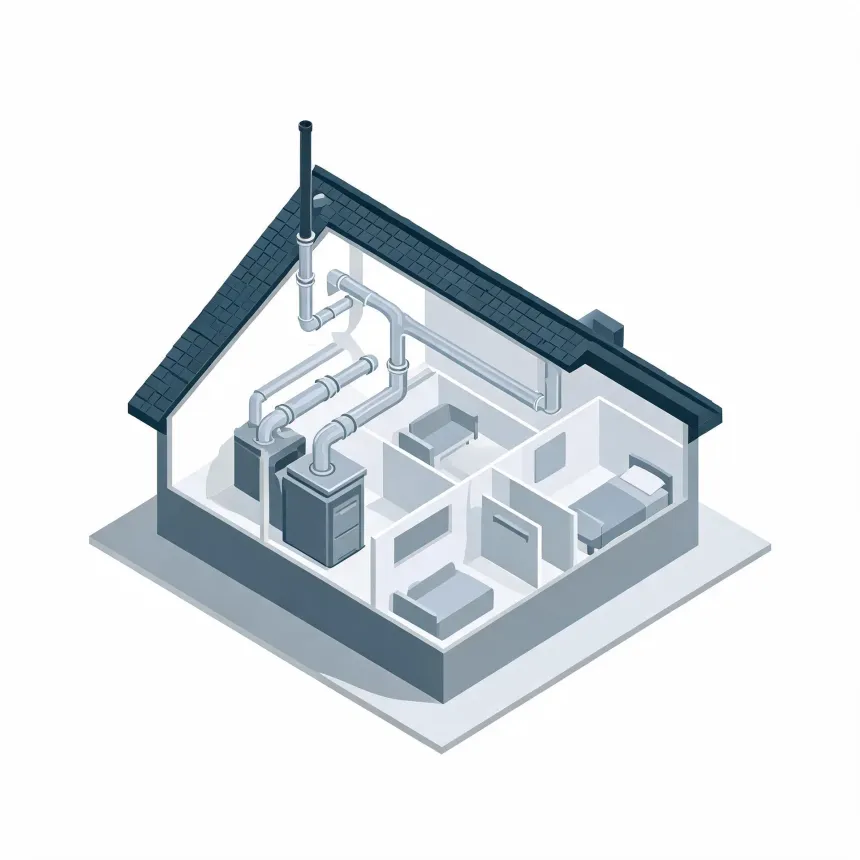
Isometric illustration of a cutaway house showing a furnace unit with ductwork and a flue pipe running through the interior rooms, which contain simple furniture.
Your furnace works hardest from November through April.

NOAA nClimDiv, 1991–2020 normals

Fuel oil in Vermont ran $26.53 per million Btu in 2024.

A furnace short cycling or running long burns through that oil faster. Get it looked at before the cold months pile on the cost.

September is when a furnace that limped through summer finally gets tested

Heat runs September through June
Winter nights average 8°F
Climate zone 6A

Half the homes in Essex County were built in 1973 or earlier. If your furnace came with the house, and the house is one of the older ones, it's worth asking how old the furnace itself is, not just the walls around it. Furnaces don't last forever, and one that's been heating an older home here has done more work than the same unit somewhere milder. Once a furnace is near the end of what its kind is built to do, a repair is really a bet on whatever breaks next. A technician can look at yours and tell you how much life is likely left before you decide what to spend fixing it.

A furnace problem in Island Pond is usually just a furnace problem

Essex County gets its share of wind and winter storms, same as the rest of Vermont. Nothing here is harder on a furnace than what furnaces are built to handle. If yours is acting up, it's most likely a normal part wearing out, not something the weather did to it. Worth getting it checked now, before you need it most.

Find a contractor
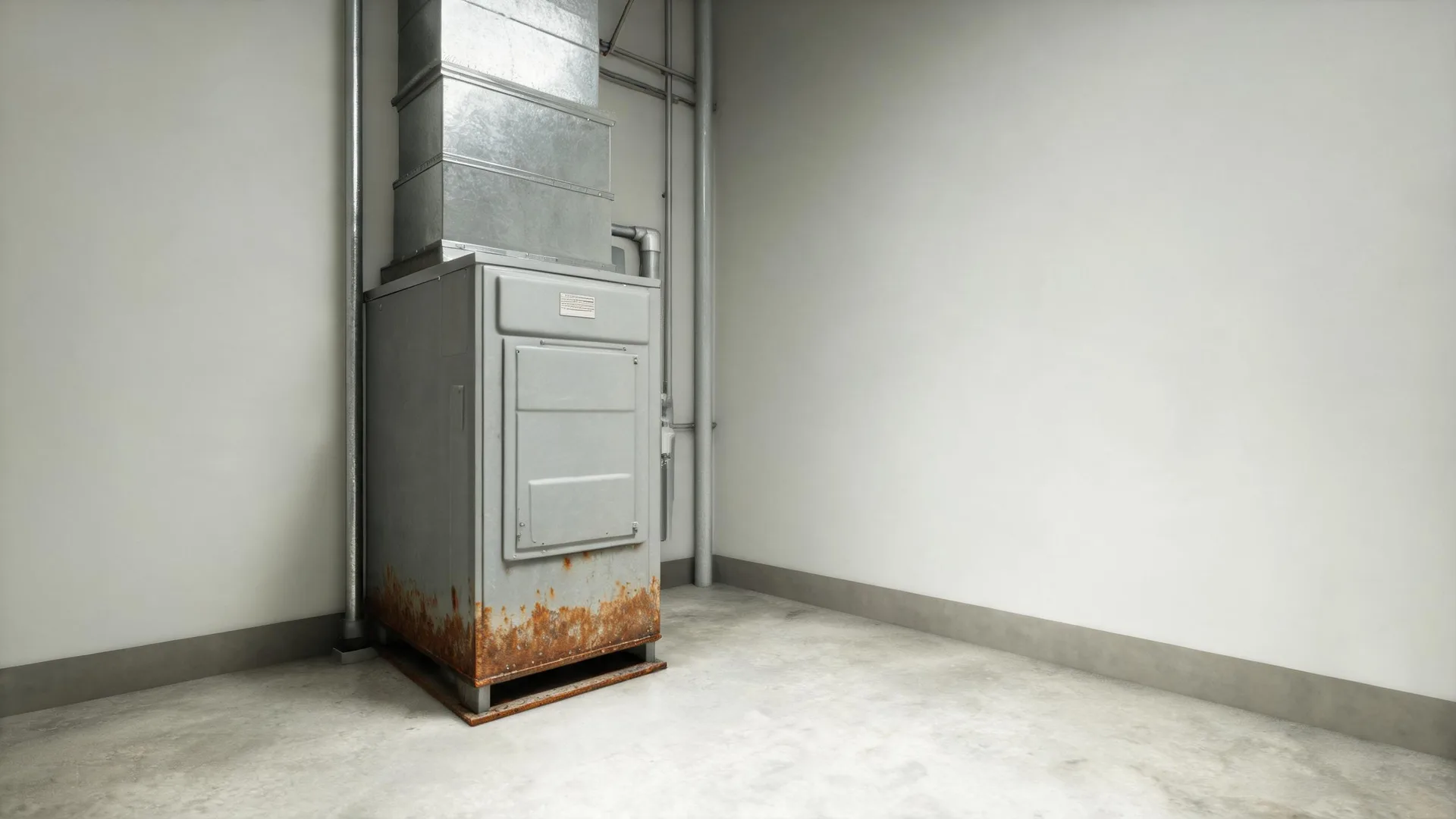
A gray residential gas furnace installed in an unfinished basement, surrounded by ductwork, a metal flue pipe, and a gas supply line.

Ten months a year leaves little room to guess

Get the diagnosis before the part fails outright. A furnace running this many months a year doesn't give a technician much guesswork to do, the wear shows up where you'd expect, in the igniter or the blower motor, and a proper look now tells you whether this is a quick fix or the first sign of something bigger. That's worth knowing before the next cold stretch, not during it.

What you'll notice first

A furnace in trouble usually tells you before it quits outright. The burner takes a few tries to light, or it lights and the flame looks uneven instead of steady blue. The blower runs loud, or it runs on after the house is warm enough. Rooms that used to heat evenly now have one that lags behind the rest. None of these fix themselves, and most get worse with use, not better.
What's worth a call now versus later

Short cycling, where the furnace fires up and shuts off again before the house warms, is worth calling about soon. It strains the igniter and the blower motor every time it happens, and it tends to happen more often, not less, until someone looks at it. A pilot light that's gone out once might be nothing. One that keeps going out points to a draft problem or a failing part that needs a real look.

A few things are worth checking before calling. Start with the thermostat. Make sure it's set to heat and the target temperature is actually above room temperature, not just on fan. Check the furnace switch too, the one that looks like a light switch near the unit or at the top of the basement stairs, since it's easy to bump off without noticing. Look at the air filter. One clogged with dust chokes off airflow, and some furnaces will shut themselves down rather than run that way. If the furnace has a digital display, check for an error code and note it down, that detail helps whoever comes out. Last, check the breaker. A tripped breaker stops a furnace cold even when the gas or oil side is working fine. If none of that brings it back, the problem is inside the furnace itself.

A furnace doesn't fail all at once, usually. Something wears a little, works harder to cover for it, and wears a little more. That's the part worth weighing before you spend money either way. If the part that's gone is cheap to replace and the rest of the furnace is sound, fixing it is the easy answer. The harder case is when one repair follows another, each one a different part, on a furnace that's been running a long time. At that point you're not really fixing a furnace, you're betting that nothing else gives out this season. A technician who's seen inside it can tell you which situation you're actually in, and that's a better guide than guessing from the symptom alone.