

Is it time to replace an oil boiler in Vermont

Send the form and the search for an installer is over.

Hand off my installation

How do I know if it's time to replace my oil boiler?

Oil boilers in Vermont run hard for months at a time, and most people only start asking this question when something's gone wrong, the bill looked worse than usual, or a repair call ended with the tech saying the system is getting old. You want a straight read on where the line is between fixing it again and replacing it.

Replace it once repairs get frequent or the boiler is old and inefficient

An oil boiler that needs a service call more than once or twice a season is telling you something. Each repair buys a little more time, but the parts failing now are usually a sign the next ones are close behind. Age matters too. A boiler that's been running for decades is working harder to do what a newer one does with less oil, and that gap shows up on your bill every winter. With power in Vermont among the most expensive in the country, an inefficient boiler costs more here than the same unit would somewhere else. If yours is old, breaking down often, or burning more oil than it used to for the same heat, that's the point where replacing it makes more sense than fixing it again.

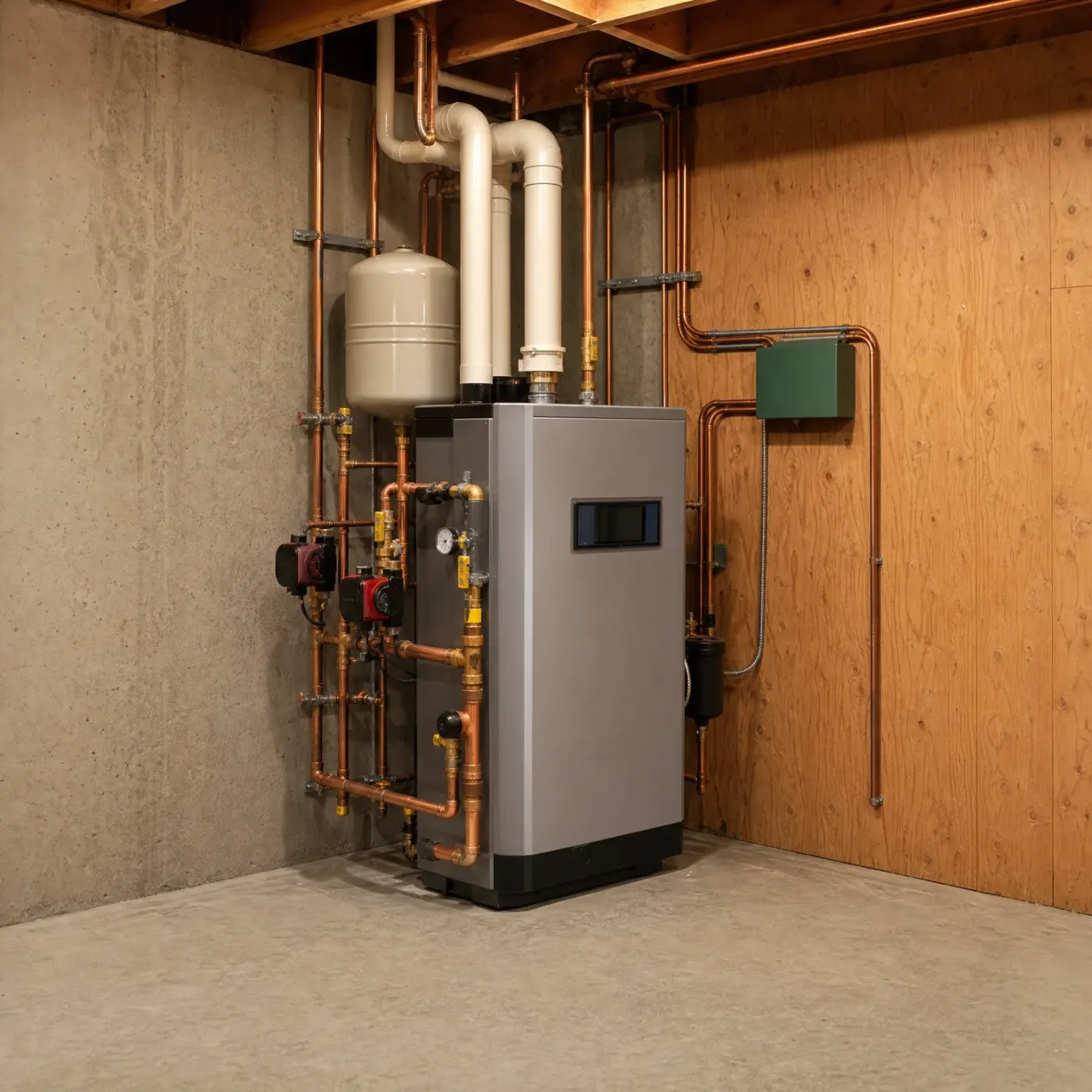
A gray floor-standing boiler in a basement corner with copper piping, two red circulator pumps, a beige expansion tank, white PVC vent pipes, concrete and plywood walls.

Running as it should

Heat comes up fast and even, the burner fires clean, and the pressure gauge sits where it's supposed to. No short cycling, no odd smell from the flue. A boiler in this shape can carry you through another Vermont winter without surprises.
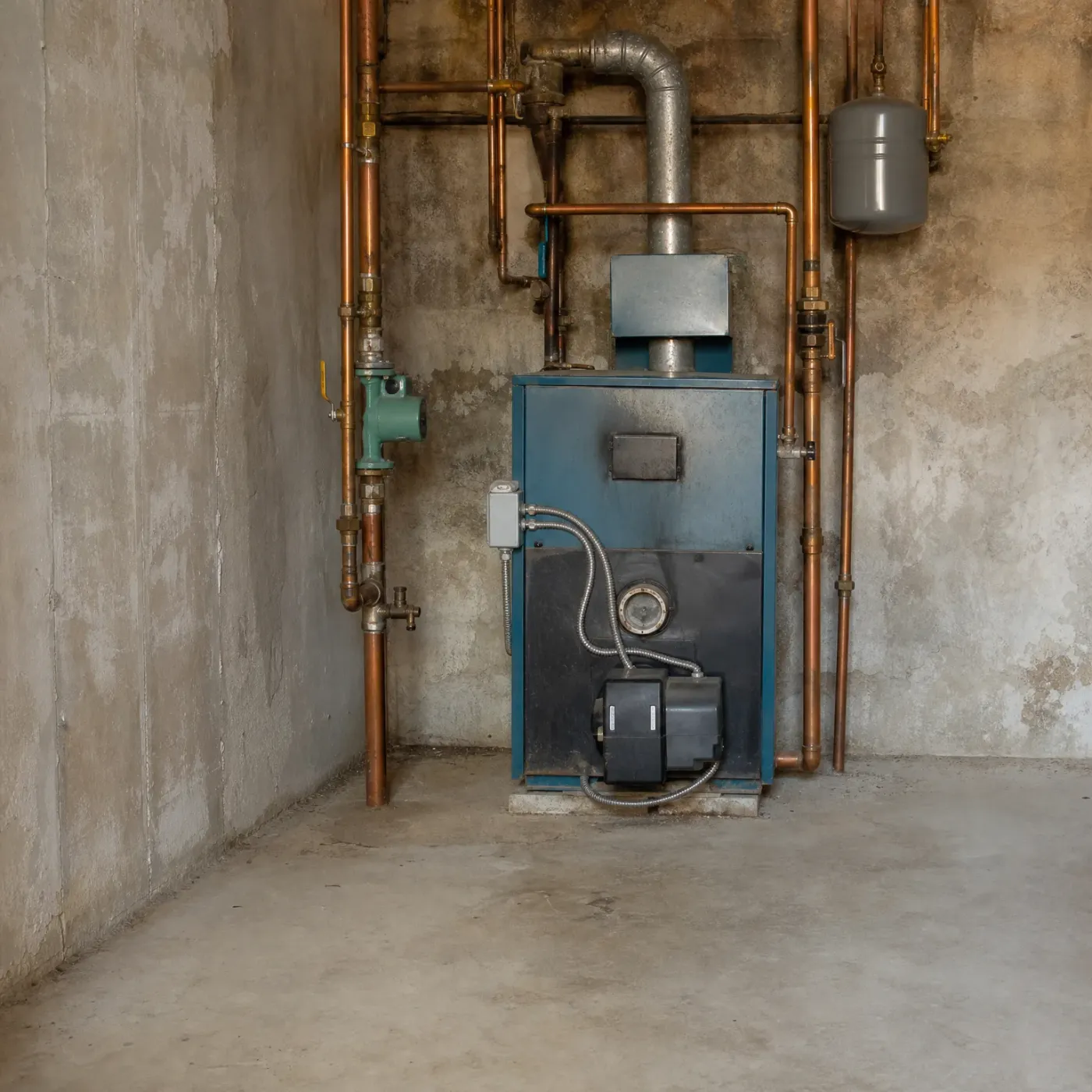

A blue residential boiler with a metal flue, pressure gauge and burner unit stands against a stained concrete basement wall, surrounded by copper pipes, a green circulator pump and a gray expansion tank.

Signs of trouble

Soot around the burner, a flue pipe going rusty, water pooling near the base. Oil use climbing while the house feels the same or colder. A boiler in this shape is working harder to do less, and that shows up on your oil bill before much else.

What's your boiler telling you this winter

Listen to it kick on. A healthy burner lights once and settles into a steady sound. If yours fires, cuts out, and fires again within a few minutes, that's short cycling, and it means the boiler is working harder than it should to keep up. Check the basement floor near the unit for water, and look at the flue pipe for rust or soot staining. A smell of oil when it's not actively running is worth paying attention to. So is a bill that climbed even though the house felt the same. With oil prices and electric rates both high here, a boiler losing efficiency costs you twice: once in fuel, once in the repair calls that keep coming back.

  1. The thermostat calls for heat and the burner motor starts.

  2. Oil sprays through the nozzle and the igniter lights it.

  3. The burner fires inside the combustion chamber, heating the boiler's water.

  4. A circulator pump pushes hot water out to the radiators or baseboards.

A smiling man in a dark navy sweater sits on a light sofa in a living room, with a glass bowl of popcorn on a wooden coffee table and bookshelves behind him.
A smiling man in a dark green sweater sits on a tan leather sofa in a dimly lit living room, with a bowl of popcorn in the foreground and a kitchen area blurred behind him.
A smiling middle-aged man in a dark shirt sits on a gray sofa in a living room, with a bowl of popcorn on a side table and shelves, a window and kitchen area behind him.
A smiling bearded man in a dark gray t-shirt sits on a gray couch in a living room, with a large glass bowl of popcorn on a wooden table in the foreground.

It's off your list after this

A boiler that's on its way out doesn't wait for a convenient time. It usually picks the coldest week to quit, and that's when you're stuck calling around, explaining the same symptoms to three or four companies, and waiting on quotes while the house gets cold. Oil isn't cheap here, and with electric rates in Vermont among the highest in the country, you want a system that's actually sized and installed right the first time, not patched together under pressure. If what you read above sounds like your boiler, the decision is already half made. What's left is finding someone who can look at your specific setup and tell you what it needs. Send the request and that search is off your plate. You won't be sorting through five bids or playing phone tag before the next cold snap. Getting that piece handled now, while you still have time to think it through, is worth more than waiting for the burner to decide for you.

What's actually wearing out inside

  • Heat exchanger scale and soot cut efficiency before they ever cause a leak you'd notice.
  • A boiler losing pressure overnight points to a pinhole leak somewhere in the system, not just a loose valve.
  • Puffback leaves soot around the burner door and means combustion isn't happening clean inside the chamber.
  • An aquastat that's drifted off calibration makes the boiler run longer than the water temperature actually needs.
  • Cast iron sections crack from thermal stress after enough years of firing up and cooling down.
  • A flame sensor caked with residue can shut the burner down mid-cycle even when the oil supply is fine.

A boiler doesn't fail all at once. Heat exchanger scale builds up slowly, coating the surface that's supposed to pass heat into your water, so the burner has to run longer to do the same job. You won't see it. You'll just notice the oil tank emptying faster than it used to. Soot does the same thing from the other side, and a puffback, where you see black residue around the burner door, tells you combustion isn't happening clean inside the chamber. That's not cosmetic. Unburned oil means wasted fuel and a harder-running system.

Pressure is another tell. If the gauge reads lower each morning, oil is getting into the system somewhere it shouldn't, and that's usually a pinhole leak rather than a valve you can just tighten. The aquastat is quieter about its problems. When it drifts off calibration, the boiler keeps firing past the point the water actually needs heat, which shows up as a bill that's climbed without anything obviously broken.

Cast iron sections are the part that ends the conversation. Decades of heating up and cooling down puts stress on the metal, and once a section cracks, it's not a part swap, it's a new boiler. A flame sensor coated in residue can also shut the burner down mid-cycle, which looks like a fuel problem but isn't one at all.

Winter nights average 12°F statewide

Twelve degrees is a fair winter night here, not a cold snap. Your boiler is sized to cover that every night for three months straight, not just on the worst ones. If it's struggling to keep up on an ordinary night, the cold hasn't even peaked yet.

NOAA nClimDiv 1991-2020 county normals weighted by homes

An oil boiler that fires clean, holds pressure, and heats the house evenly doesn't need replacing just because it has some years on it. One that short cycles, leaks, or struggles on an ordinary twelve-degree night is telling you it's losing the fight, and oil won't get cheaper to burn through a failing system. Vermont winters don't give a boiler a break to recover, and they don't give you much warning before a bad week turns into no heat at all. If what you read above matches what yours is doing, that's your answer, and waiting won't change it. If you're still not sure, a contractor who can look at the pressure gauge, the flue, and the burner in person will know faster than any list can tell you. Either way, you don't have to spend the next cold snap calling around, repeating the same symptoms to every company in the book, and sitting on quotes while the house loses heat. That part can be off your plate as soon as you decide to send it.

A woman in a dark gray sweater reclines on a light sofa with eyes closed and a slight smile, under a textured gray blanket with an open book resting on her lap, with a lit table lamp and plant in the background.
A smiling bearded man in a navy crewneck sweater sits at a dinner table with a glass of red wine, plates and glasses in the foreground, in a dimly lit room with a lamp and framed picture behind him.

Boiler Installation

Stop chasing a boiler pro

Skip collecting and comparing quotes for the new boiler.

A black-framed smartphone standing upright against a plain white background, its screen filled with solid green.
New system or replacementBoilerVermont
Step 1 of 2

What ZIP code is the job in?






