

Profile view of a bearded man wearing a dark green baseball cap and a dark gray T-shirt against a plain light background.

Oil boiler or heat pump for a Vermont home

New system or replacementBoilerVermont
Step 1 of 2

What ZIP code is the job in?

Should I replace my oil boiler with a heat pump in Vermont?

You're looking at the oil bill and wondering if a heat pump could take over for your boiler. With oil prices what they are and a cold-climate heat pump able to run efficiently even in Vermont winters, it's a fair question. But replacing an oil boiler outright isn't the only path, and it isn't always the right one.

For most Vermont homes, pairing a heat pump with the boiler works better than replacing it outright

A cold-climate heat pump can handle most of your heating through the fall and much of winter, and it will cool your home too, something the boiler never did. But Vermont winters still drop well below the point where a heat pump's output and efficiency fall off, and that's when the oil boiler earns its keep as backup. Electricity here costs more than almost anywhere else in the country, so running a heat pump through the coldest stretches can cost more than burning oil. Most homeowners end up keeping the boiler and adding a heat pump alongside it, letting the heat pump carry the mild months and the boiler take over when it's bitter cold.

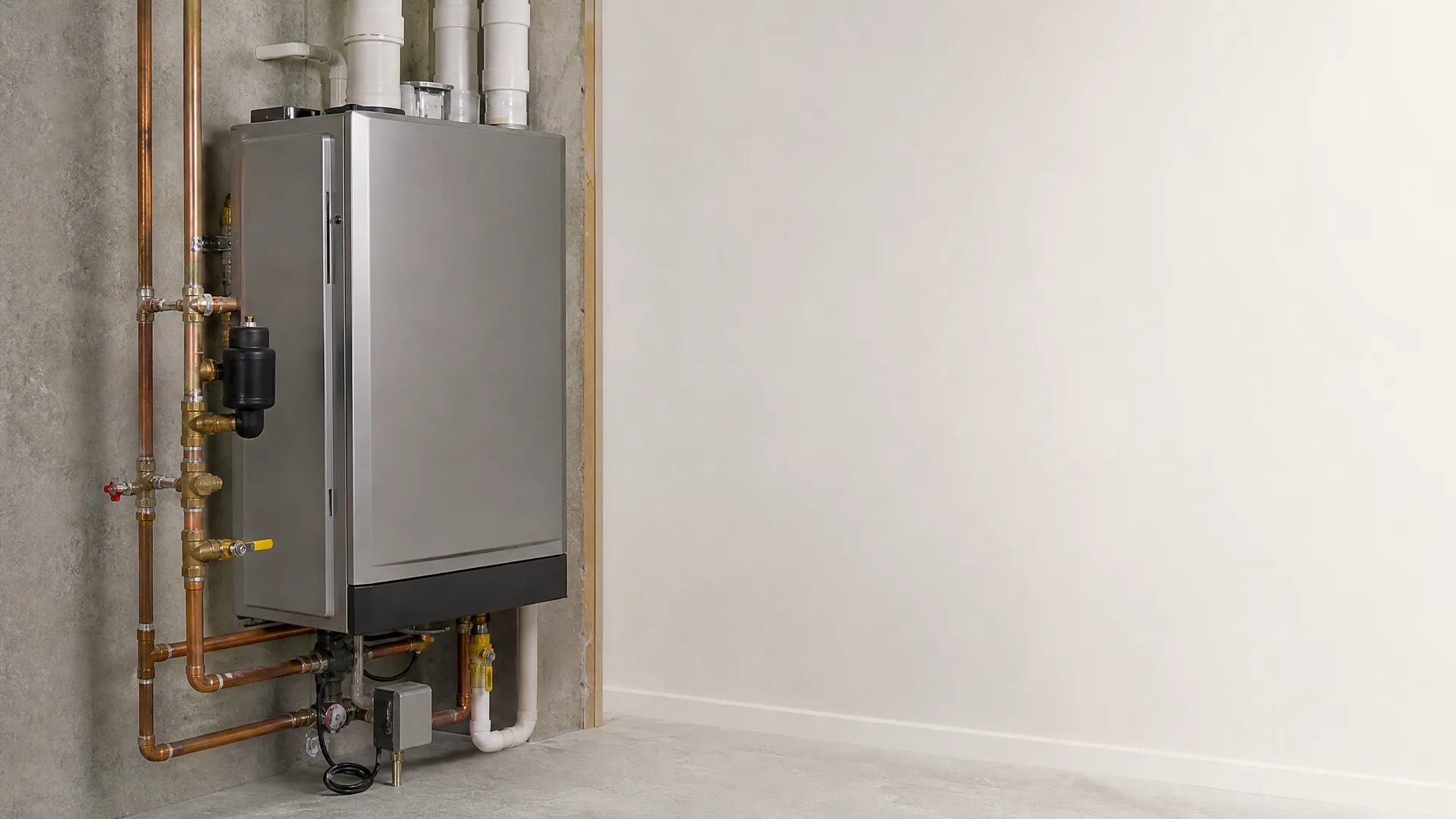
A wall-mounted grey boiler with copper pipework and white flue pipes installed against a concrete wall in an empty room with a plain pale wall to the right.

What a cold climate heat pump does at zero

A cold climate heat pump is built to keep pulling heat from outside air even when that air is well below freezing. The compressor and refrigerant are matched for it. Most models hold their rated output down into the single digits and keep running, at lower efficiency, well below that. Your oil boiler doesn't care what the thermometer says outside, which is the one place it still has the edge on a very cold January night.

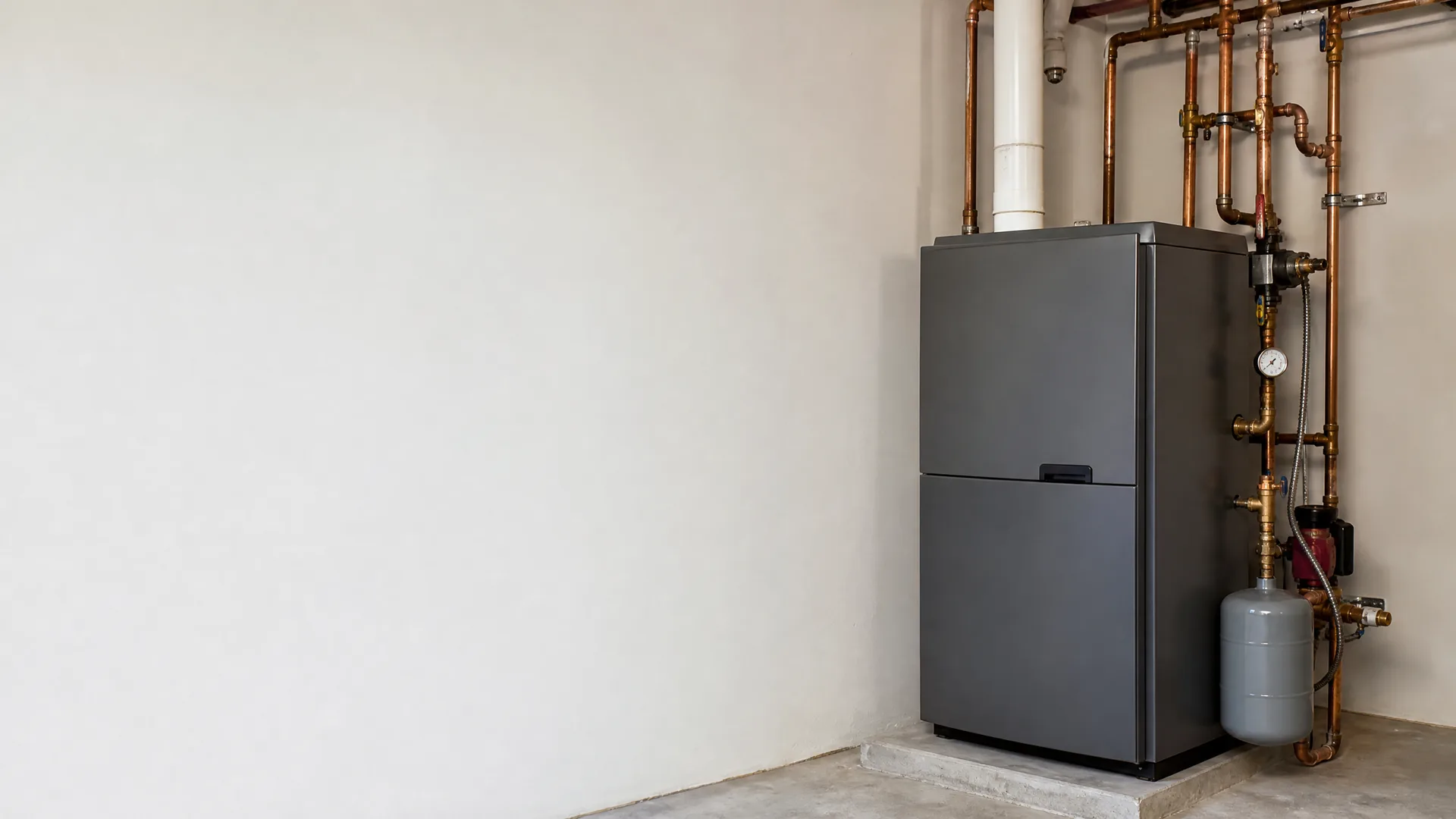
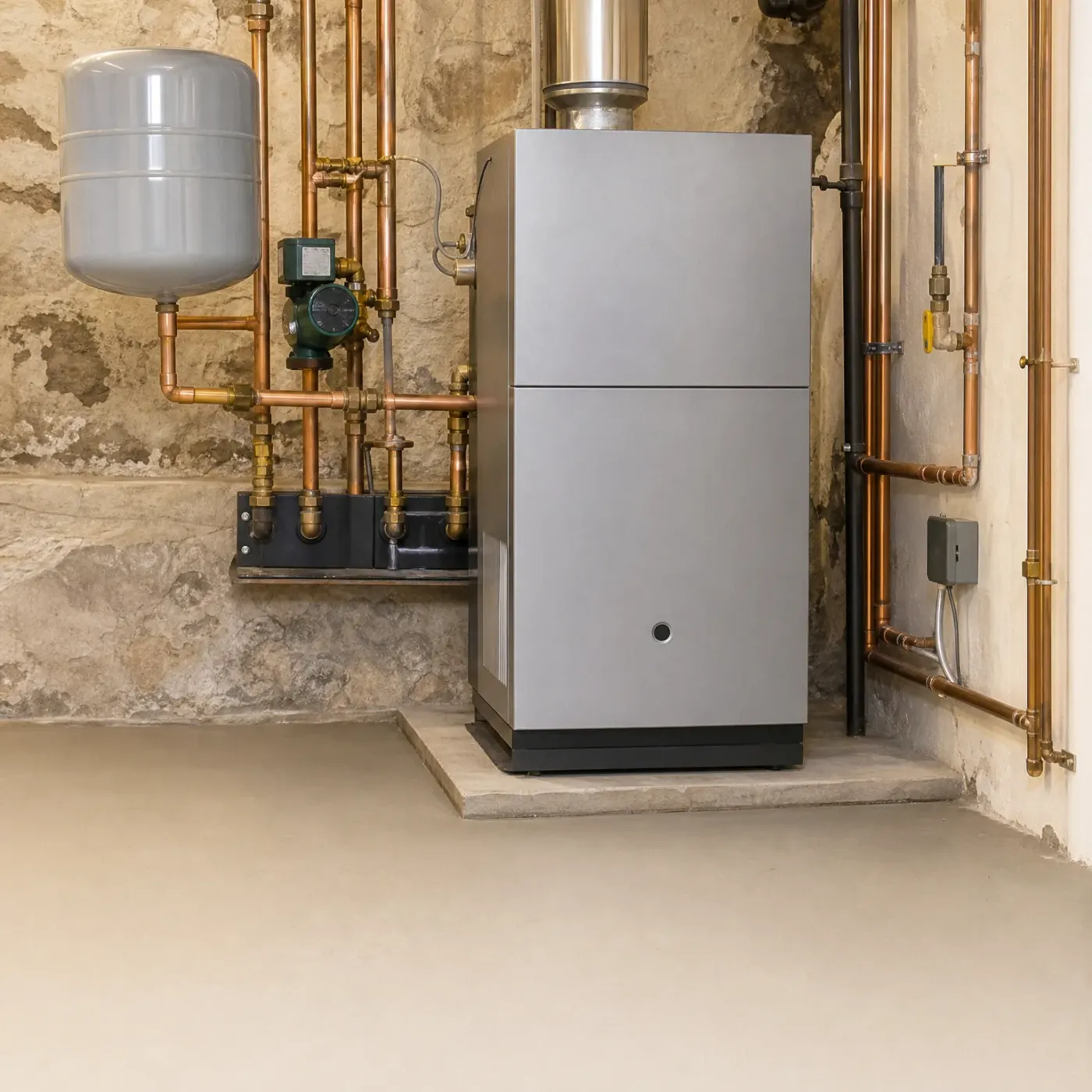
A dark grey boiler unit stands on a concrete pad against a plain light wall, connected to copper pipes, a pressure gauge, a pump and a grey expansion tank.

Where the electric bill comes in

Vermont power costs more per kilowatt hour than most of the country, and a heat pump runs on electricity for every hour it works. That changes the math on what you'd actually pay to replace the oil you're burning now. A contractor who knows the local rates and your home's heat loss can run the comparison against your actual oil bills instead of a national average, which is the only version of this number worth trusting.

A man in a dark blue shirt stands in an open front doorway of a stucco and wood-clad house, facing a blond woman seen from behind in the foreground on a stone walkway.

What this means for your house this winter

Your boiler runs on whatever the oil tank has in it, and that tank needs filling on a schedule you've probably memorized by now. A heat pump runs on the electric line already in your basement, so no more watching the gauge or timing a delivery around a cold snap. In a state where power costs what it does here, that's worth weighing against what oil has been running you.

A lot of Vermont homes keep the boiler in place and add a heat pump to carry the mild months, switching back to oil when it gets truly cold. Whether that split makes sense for your house, or whether a full changeover does, depends on your heating load, your electrical panel, and how your oil use has looked over the past few winters. That's the kind of assessment a contractor who knows Vermont heating can walk through with you, and you'd only have to explain your setup once instead of to every company you call.

A living room corner with a beige sofa and cushion, a round wooden coffee table holding a pale ceramic vase of eucalyptus stems and a wooden bowl, and a curtained window with a potted plant above a latticed radiator cover in the background.
A gray boiler unit with a flue pipe stands on a concrete pad in a basement, surrounded by copper piping, a circulator pump, an expansion tank mounted on a stone wall, and an electrical outlet.

Keeping the oil boiler

This is what a working oil boiler looks like: copper lines running clean to every zone, the expansion tank holding steady, the flue drafting right. If yours still looks like this, a tune-up and an oil contract may be all it needs. No rewiring, no new venting, no learning curve.
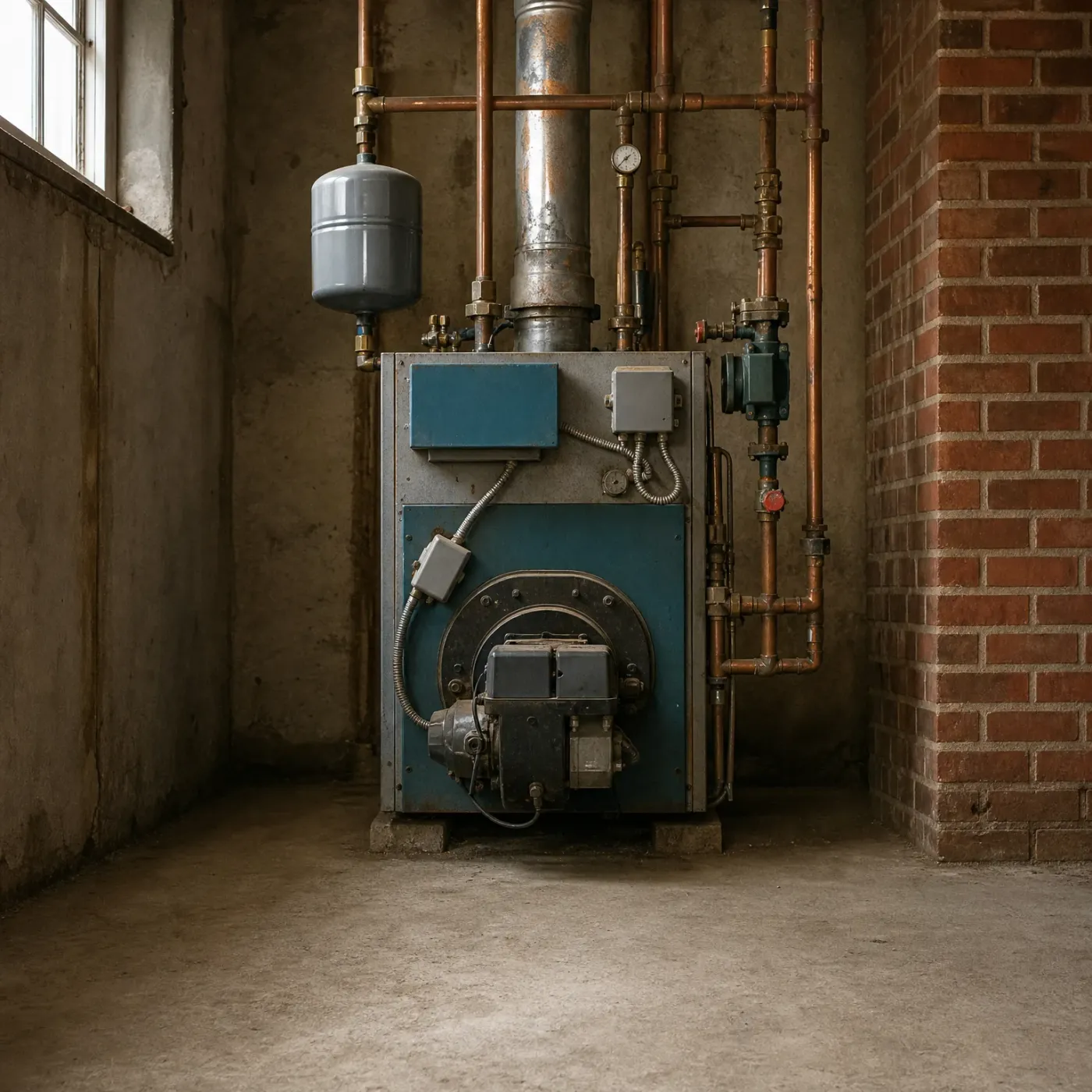

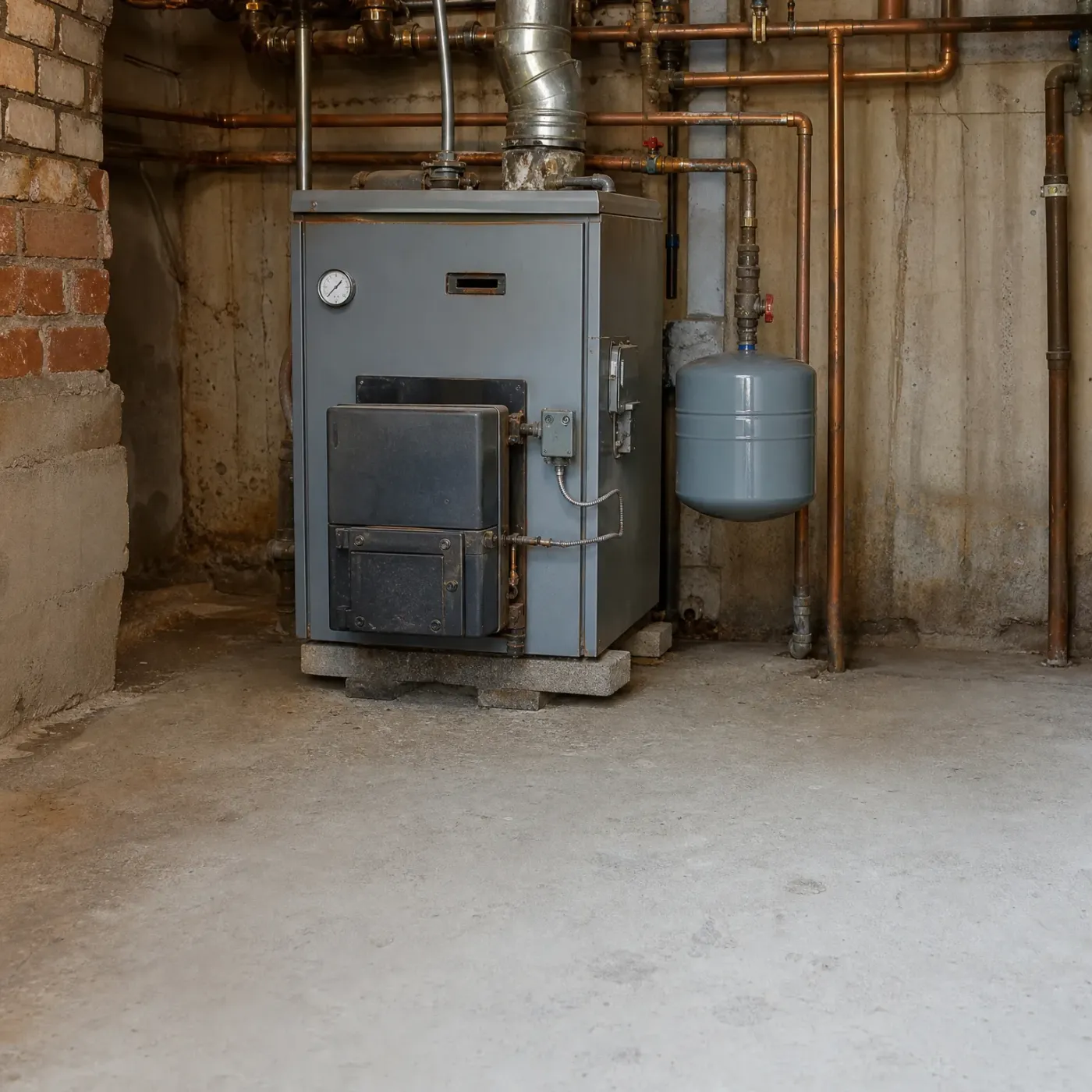
A blue cast-iron boiler with a burner unit, gauges and copper piping stands in a concrete-floored basement room beside a red brick pillar and a window.

Replacing it with a heat pump

An old boiler like this, painted over and surrounded by valves nobody's touched in years, is closer to the end than the start. Pulling it for a heat pump means no more oil deliveries and no more flue to maintain, but it's new equipment, new lines, and a different way of heating the house.

Keep the Boiler or Add a Heat Pump

Keep the boiler, add nothing

  • You keep the heat you know, the same radiators or baseboards warming the same way they always have.
  • Oil delivery keeps running on its own schedule, and the contract you have covers the burner and the nozzle.
  • A cold snap doesn't change anything about how the system behaves, since it was built to run at those temperatures.
  • You're still exposed to whatever oil costs next winter, and that price has moved a lot over the years.
  • Parts for an older burner or aquastat can take longer to source than they used to.

Add a heat pump alongside it

  • The heat pump carries most of the year, including the shoulder months when the boiler used to cycle on for a few hours at a time.
  • Vermont's electric rates are high, so the savings against oil depend on how efficiently the heat pump runs at your design temperature.
  • The boiler stays in place as backup for the coldest stretches, so you're not without heat if the heat pump ever needs service.
  • Installing one means finding space for an outdoor unit and running line sets to wherever the indoor head or air handler goes.
  • You end up running two systems instead of one, which means two things to maintain instead of one.
A gray-haired bearded man in a dark coat and scarf dusted with snow stands smiling in a dimly lit entryway with a white front door, a side table with a lit lamp, an oval mirror, and a patterned rug.
An older bearded man in a dark snow-dusted coat and gray scarf stands just inside a dimly lit home entry, with a framed picture, lit table lamp, and an adjoining room with a fireplace behind him, and snow visible through the open door.
A gray-haired, bearded man in a dark snow-dusted coat stands smiling in a dimly lit entry hall with a staircase, a lit table lamp, a framed picture, and a living room visible through a doorway.
An older man with gray hair and a beard, wearing a dark jacket dusted with snow, stands smiling in a dimly lit hallway with lamps and a living room visible behind him.

Winter nights average 12°F statewide

At 12°F, your boiler is firing often and staying on longer each cycle to hold the house at temperature. A heat pump sized for Vermont has to be picked to cover nights that cold, not just the mild ones in between.

NOAA nClimDiv 1991-2020 county normals weighted by homes

  1. A contractor sizes the heat pump to your coldest nights, not the average

  2. Indoor air handlers or ducts get placed room by room for even heat

  3. The electrical panel is checked for the new circuit the compressor needs

  4. The oil boiler stays connected as backup for the nights the heat pump can't cover

A gray boiler on a concrete block base in a basement, with copper piping, a metal flue, and a gray expansion tank mounted beside it against a concrete wall.
Before you get your boiler installation
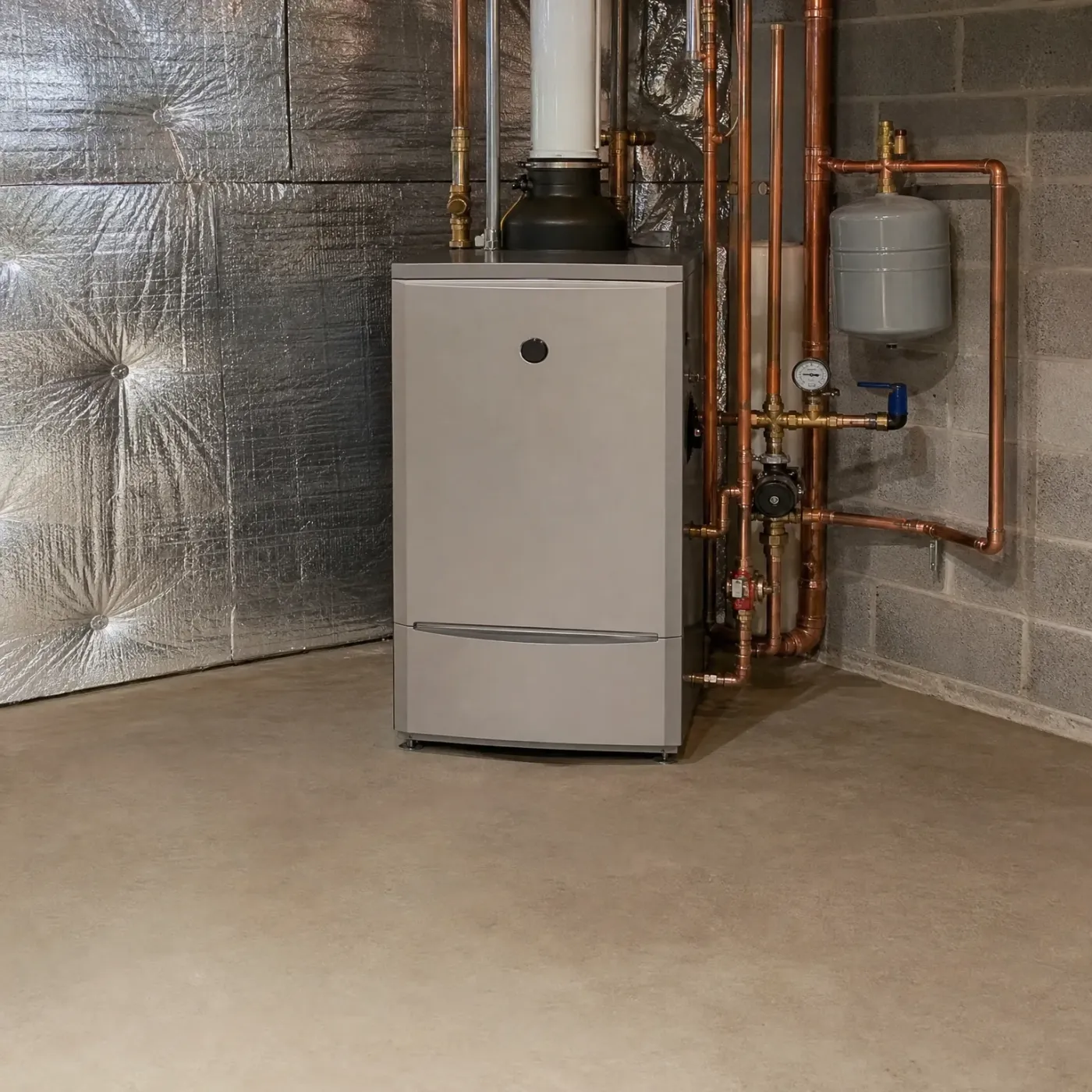
A gray residential boiler in a basement corner with copper piping, a circulator pump, pressure gauge, blue-handled valve and gray expansion tank against a concrete block wall, next to a foil-insulated wall.
After you get your boiler installation

A pro who works on boilers

Explain the job once and skip repeating it on every call.

No fee to send it, and nothing to sign.

Replacing the boiler outright

Some homes pull the oil boiler and put a cold climate heat pump in its place, sized to cover the coldest nights on its own. The oil tank comes out, the burner contract ends, and the electric line in the basement takes over the whole job. This works best when the house can take ducts or air handlers in the rooms that need them, and when the panel has room for the new circuit. It's a bigger job up front than adding a heat pump alongside what's there, but it's the one that gets you off oil for good.

Running both side by side

Other homes keep the boiler and add a heat pump next to it, splitting the work between the two. The heat pump carries most days, even down into the cold, and the boiler kicks in on the nights the heat pump can't keep up alone or when the power's out. The oil tank stays, and so does the delivery schedule, just a lot less often. It costs less to install than a full replacement since the radiators or baseboards don't need to change, and the boiler stays as backup.

A woman wrapped in a thick beige fleece blanket sits on a sofa with an open book on her lap, beside a lit table lamp, with a frost-covered window behind her.
A gray-haired woman in a cream knit sweater stands in a dimly lit kitchen at night, looking to her right, with a round loaf of bread in the foreground and a dark window and potted plant behind her.
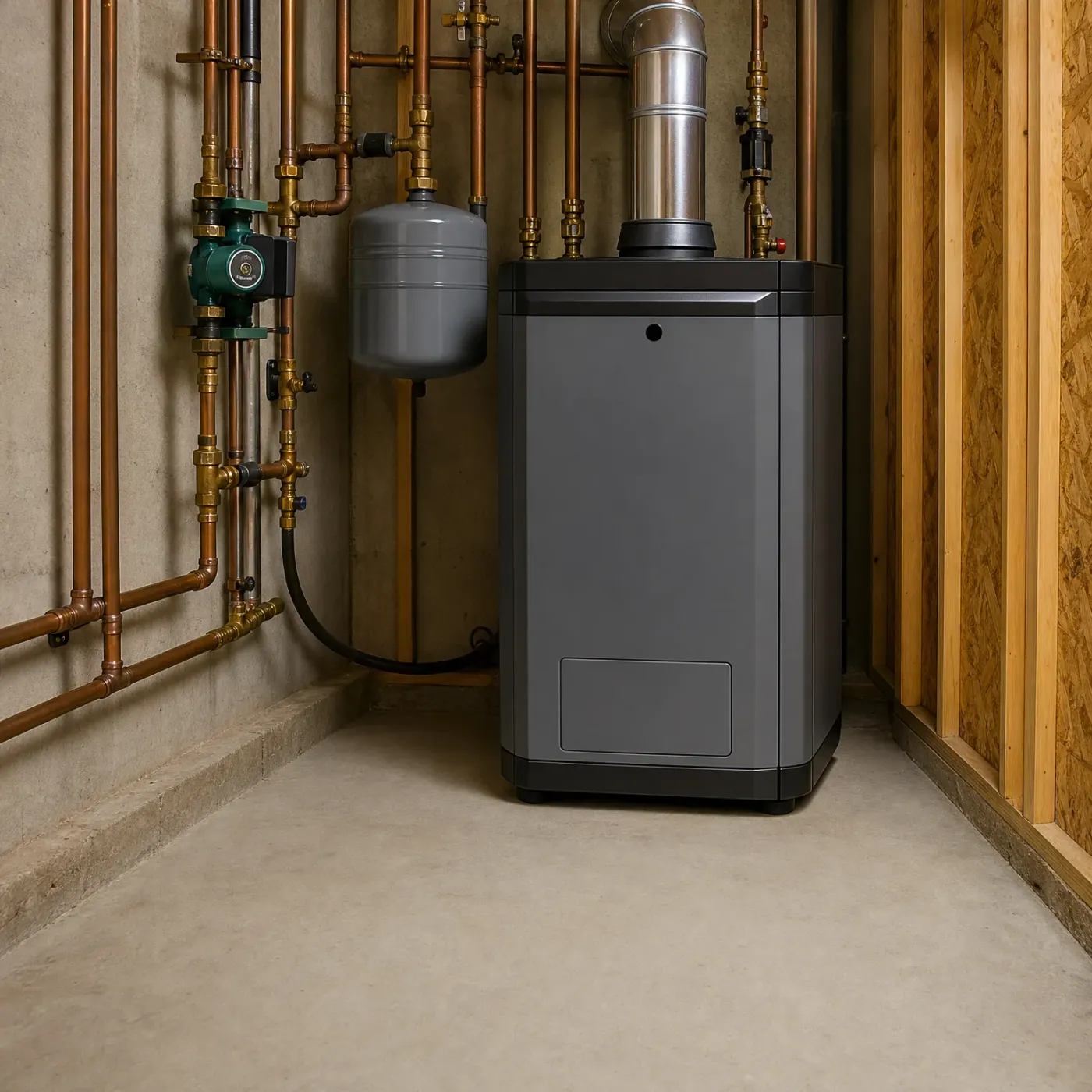
A gray floor-standing boiler with a metal flue pipe stands in a basement corner beside copper piping, brass valves, a green circulator pump, and a gray expansion tank on a concrete wall, with exposed wood framing and sheathing at right.

The boiler that's earning its keep

This is a boiler doing its job. The pump is circulating, the flue is venting clean, the expansion tank is holding pressure where it should. Pipes and fittings throughout show no sign of the leaks or corrosion that come with age.

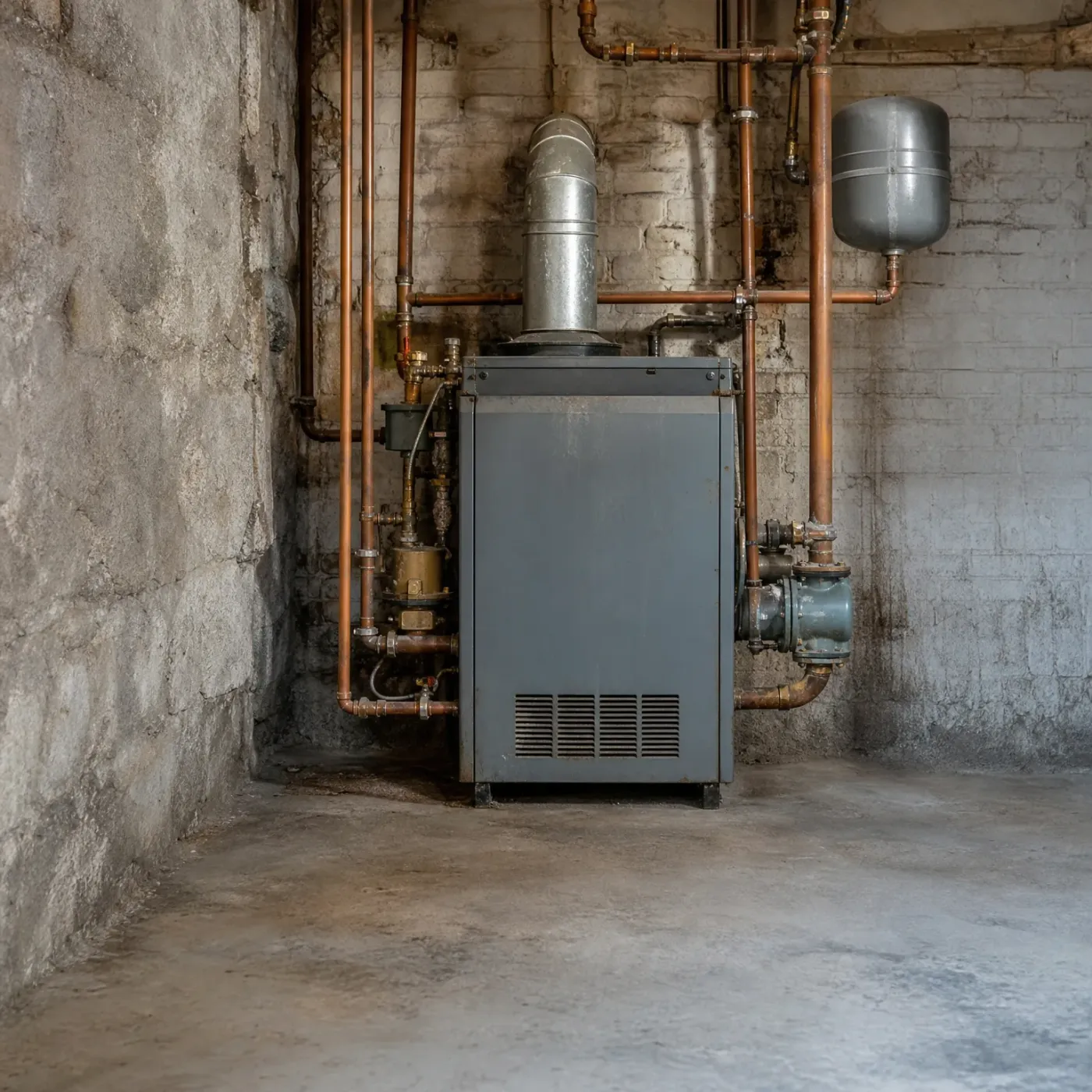
A gray boiler with a metal flue pipe and copper piping stands against a weathered painted brick basement wall, with an expansion tank mounted overhead and a bare concrete floor in front.

The boiler on borrowed time

Cast iron like this can run for decades, but the galvanized flue and the aging valves are worth a second look. If the burner is cycling oddly or the pipes near the fittings show rust, that's a contractor visit, not a wait and see.

Is your boiler telling you something this winter

Listen to it on the coldest nights. A burner that used to cycle on and off now seems to run long stretches without stopping. The oil gauge drops faster than it used to, and you're calling for a delivery sooner than your usual schedule. Maybe there's a faint oil smell near the burner, or soot around the flue connection that wasn't there before. Rooms farthest from the boiler take longer to warm, or never quite catch up. None of this means the boiler is finished, but a unit working harder to hold the same temperature is burning more oil to do it, and a leak or crack left alone can mean a bigger repair, or a house that's cold when you need it least.

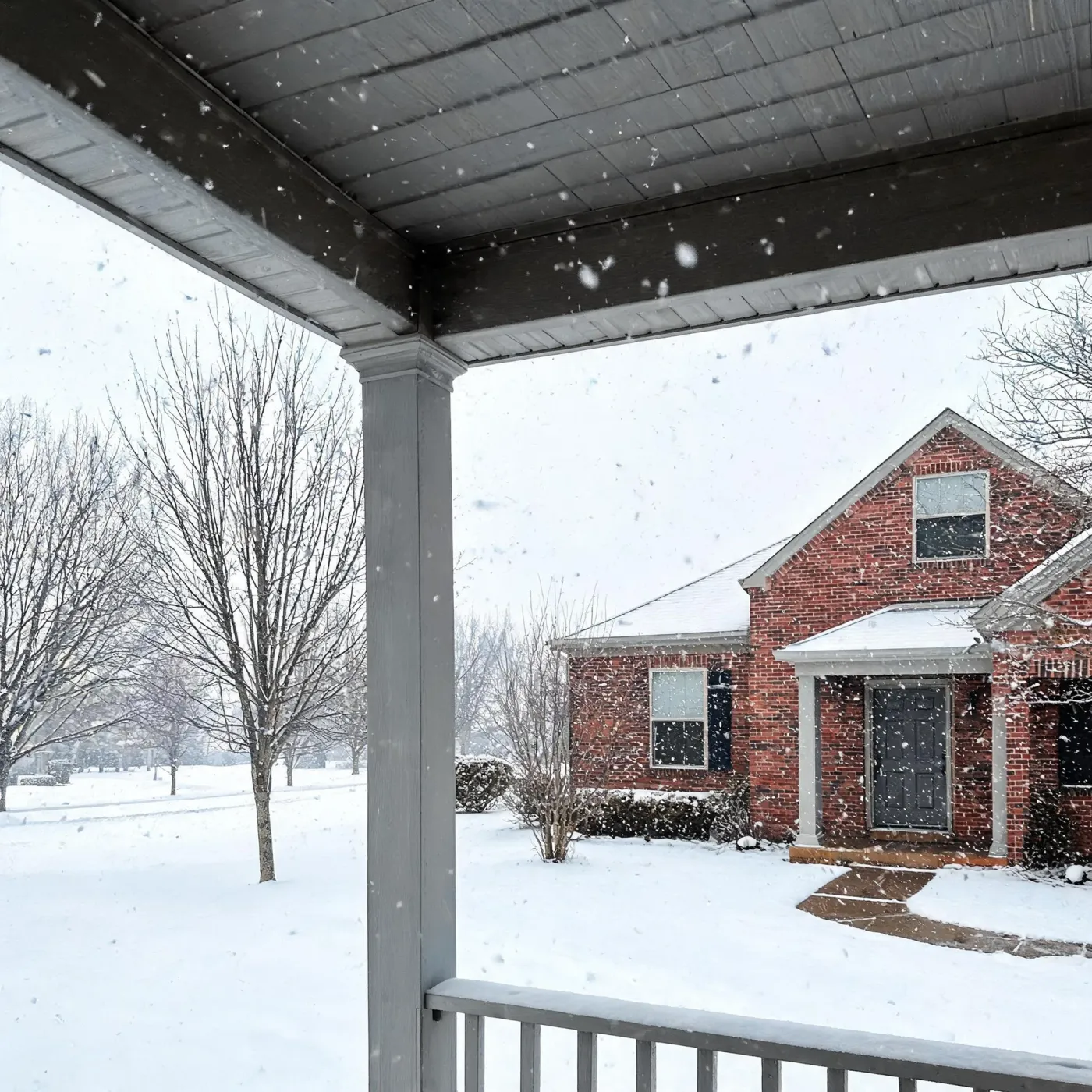
View from a covered porch with a white post and railing toward a red brick house across a snow-covered yard, with falling snow and bare trees.

Statewide, winter nights average 12°F, according to NOAA climate data. That's the kind of cold your boiler is built for, but it's also the cold that keeps the burner firing most of the night instead of cycling off and resting. You'll notice the oil gauge moving faster on those stretches, and the basement staying warm to the touch long after the thermostat's been satisfied. If you're weighing a heat pump against the boiler you've got, this is the number that matters most. It's not the mild nights in October that decide whether a heat pump can keep your house warm. It's nights like this one.

NOAA nClimDiv 1991-2020 county normals weighted by homes

Whether you keep the oil boiler running or bring in a heat pump to cover part or all of your heat, the choice comes down to what your house needs on the coldest nights and what you want to stop dealing with. A boiler that's still tight and venting clean can keep going with the oil contract you already have. A heat pump sized for Vermont winters can take over the load, or share it, and run on the electric line already in your basement. Either way, getting there means finding a contractor who knows cold climate systems, explaining your setup more than once, and sorting through quotes that size things differently. That part doesn't have to fall on you. You already know your oil gauge and your burner better than anyone. What you don't have to do alone is the work of lining up someone qualified to size the job right and tell you straight what your house needs.

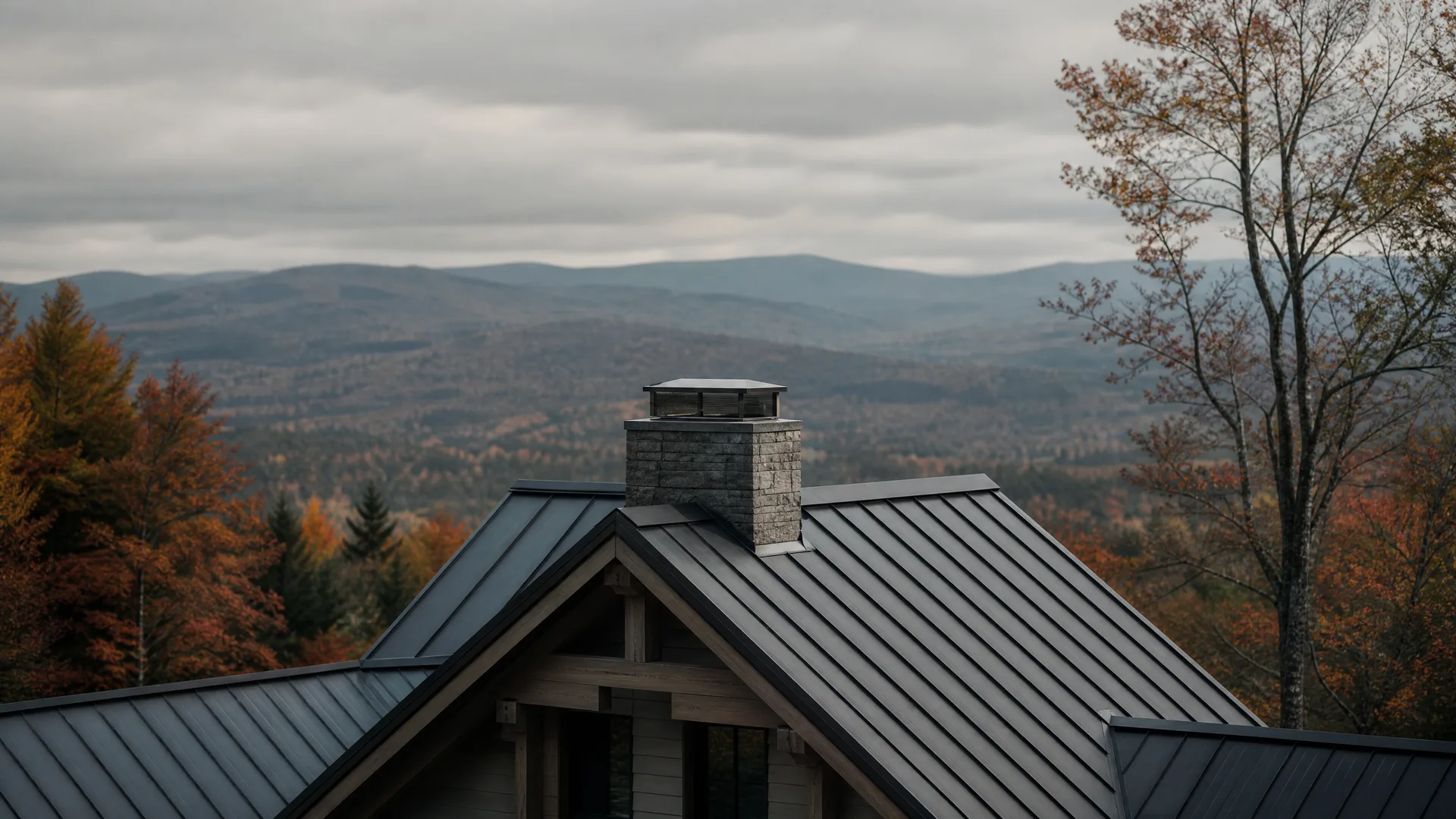
A dark standing-seam metal roof with a stone chimney and metal cap, seen against a backdrop of autumn-colored forest and layered hills under an overcast sky.

Get your boiler to the right pro

Get a local pro

Sending the form costs nothing.

Send the request and skip the part where you call around Vermont for quotes on a heat pump install, explain your oil setup to each one, then sort through bids yourself. A contractor who knows cold climate systems reaches out to you instead.