Why your baseboard heat isn't working in Vermont

RepairBoilerVermont
Step 1 of 2

What ZIP code is the job in?

Baseboard heat in Vermont runs off your boiler, so when it stops putting out warmth, the boiler is almost always the reason, not the baseboard unit itself. Air trapped in the line is the most common cause. It collects at the high points and blocks hot water from reaching that run, which is why one room goes cold while the rest of the house stays warm. A failed zone valve or circulator pump will do the same thing, but across a whole zone instead of one baseboard. If the boiler itself has shut down, with oil heat that often means the burner lost ignition or the oil supply is interrupted, and the system needs a reset or a look at the nozzle and filter. A thermostat wired to the wrong zone, or one that has simply failed, can also leave baseboard cold while the boiler runs fine for the rest of the house. Catching which one it is early keeps a single cold room from turning into a boiler that won't fire at all.

  1. The boiler fires and heats water in its tank.

  2. A circulator pump pushes hot water through the lines.

  3. Trapped air blocks water from reaching some baseboards.

  4. Water reaches the baseboard's fins and heats them.

A smiling man in a denim shirt and white t-shirt stands in an open dark doorway of a stucco house, facing a woman with long brown hair and a green jacket seen from behind in the foreground.

A cold baseboard in January isn't a small thing to leave alone

You'll notice it room by room. One baseboard stays cold while the others run warm, or the whole house runs but never quite gets there. With oil heat, a boiler that's working harder to push water past an air pocket burns more oil doing it, and Vermont already asks a lot of your heating bill. Left alone, that trapped air can let a line sit full of water with no flow at all, and that's how pipes freeze and split in a cold snap.

A problem like this usually needs someone who's bled a hundred Vermont boilers and knows where the air collects in a system like yours before they open anything up. That's who you'd be matched with: one local contractor, licensed, who works on this equipment all winter, not a handful of companies calling you back at once.

Interior corner of a room with a window and sheer curtain at left, a gray upholstered sofa with a cushion at right, and a round wooden table holding stacked books and a round vase with an olive branch.
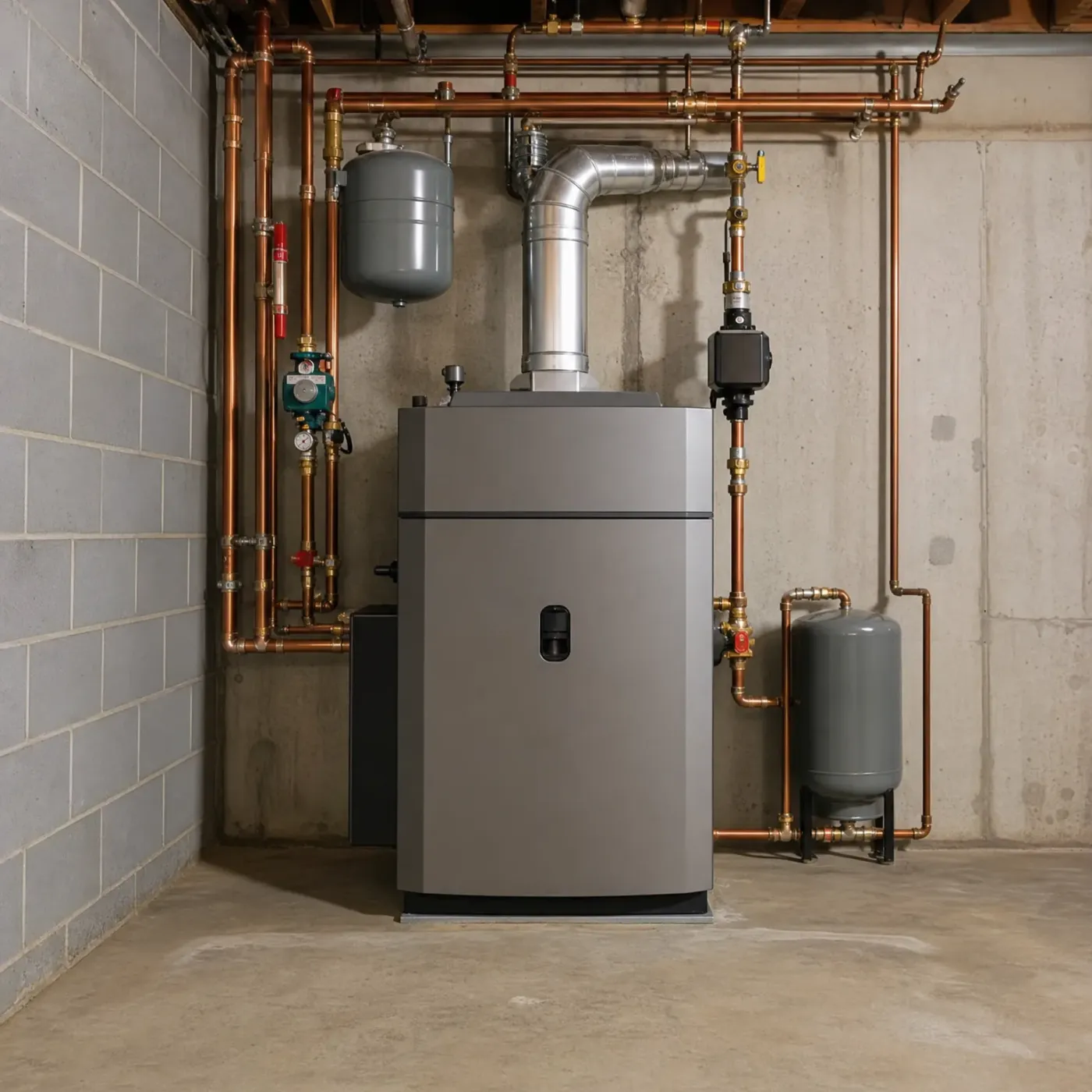
A gray boiler with a metal flue pipe stands in a basement against concrete and concrete-block walls, connected to copper piping, a circulator pump, and two gray expansion tanks.

Running the way it should

A boiler like this holds steady pressure, moves water quietly through the lines, and keeps every baseboard in the house warm to the touch. The gauges sit where they should. No hissing from the expansion tank, no streaks of rust near the fittings.

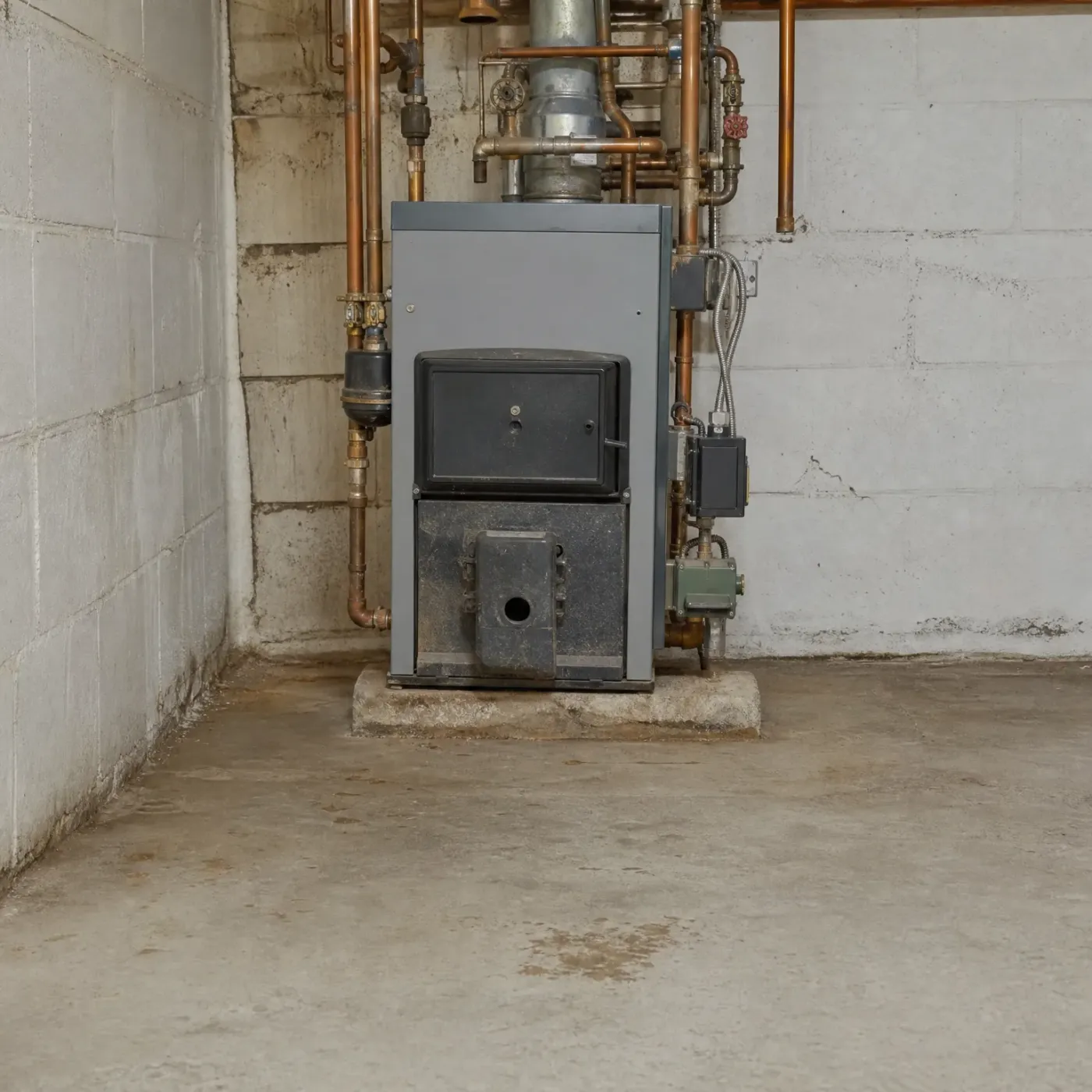
A gray boiler on a concrete pad in a basement with painted concrete block walls, copper piping, a metal flue, and electrical control boxes.

Signs it's falling behind

An older unit on a raised pad often shows its age at the joints first. Watch for mineral buildup around the valves, a flue pipe that's gone dull or flaking, or a control box that trips more than it used to. Any one of these can keep heat from reaching the baseboards upstairs.

How do I know if it's trapped air or something else?

You can hear air moving in the pipes, or one baseboard stays cold no matter how long the boiler runs. Before you call anyone, it helps to know what points to air and what points to something else, since the fix is different and you'd rather not pay for a bleed if the real problem is the circulator or the pressure.

Gurgling or one cold baseboard means air. Steady cold or low pressure means something else.

Air makes noise. If you hear gurgling or a faint knock in the pipes near a baseboard, that's water trying to push past a pocket of air, and bleeding the line usually clears it. If one baseboard is cold while the rest of the house is warm, that's also air, sitting at the highest point in that loop. What air doesn't explain is a boiler that won't hold pressure, a gauge sitting near zero, or every baseboard in the house running lukewarm at once. That points to the circulator pump, a leak, or the boiler itself, not a stuck air pocket. Vermont winters don't leave much room to guess wrong on this.

A woman in a gray turtleneck sweater stands by a window looking outside at snowy ground, with a dimly lit living room containing a sofa, shelves, lamp and a lit candle behind her.
A woman in a cream cable-knit turtleneck sweater stands in a warmly lit living room with a fireplace and shelves behind her, looking out a window toward snow-covered trees and a railed deck.
A woman in a cream knit turtleneck sweater stands by a window looking out at snow, with a lit fireplace, sofa and lamp in the room behind her.
A woman in a gray knit sweater sits by a window looking out at falling snow, with a dimly lit living room containing a sectional sofa, pillows, a lamp and houseplants behind her.
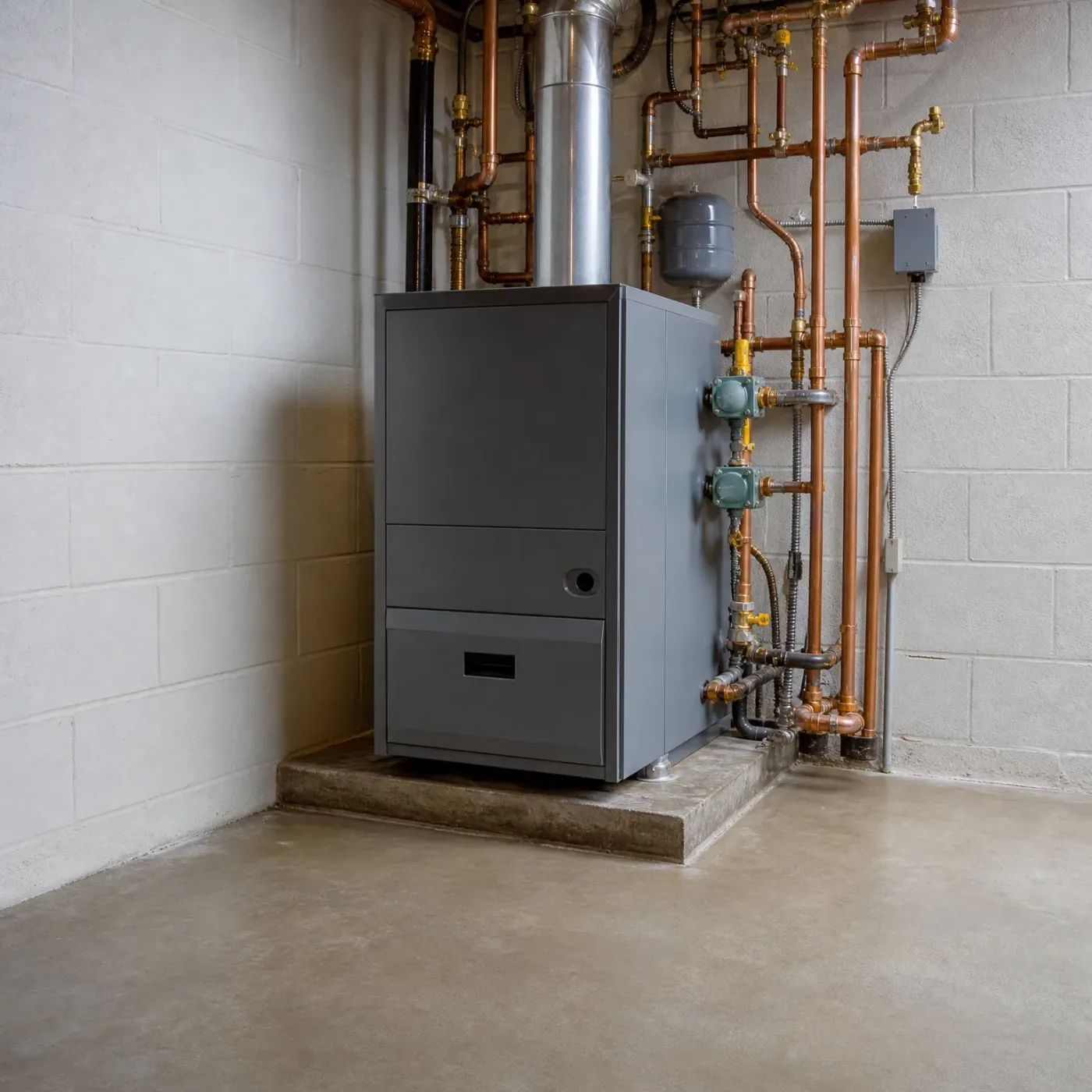
A gray boiler unit on a concrete pad in a basement corner, connected to copper piping, valves and a metal flue against painted concrete block walls.
A boiler like this holds steady pressure and even heat, so every baseboard from the first floor to the attic room warms up the same way.
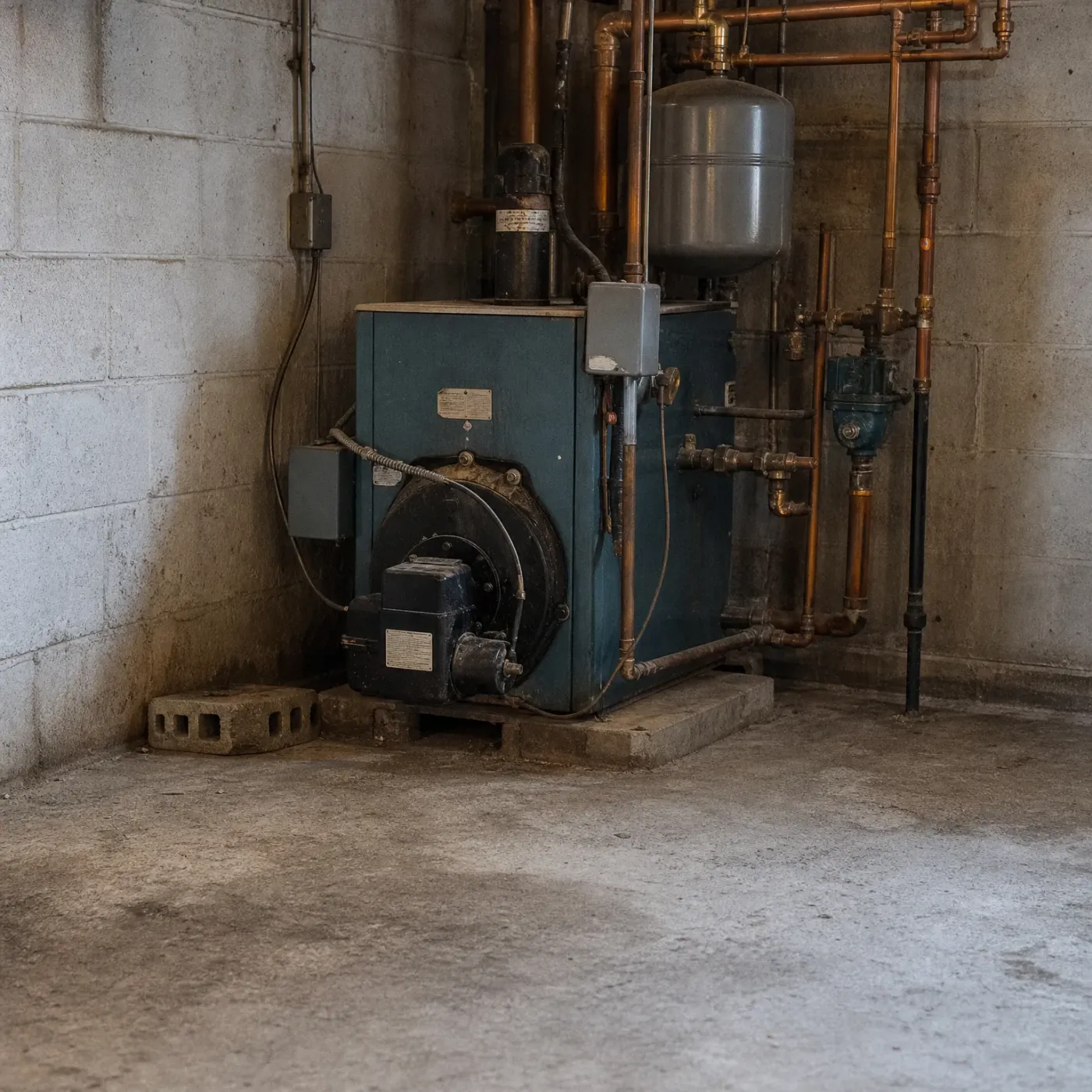
A blue oil-fired boiler with a burner unit sits on a concrete pad in a basement corner, with copper piping, valves and a gray expansion tank overhead against concrete block walls.
A boiler left blue with age like this one is the kind that starts losing ground: a leak at a fitting, a cracked seal, pressure that won't hold.
A bearded man in a plaid flannel shirt stands in a kitchen looking out a window toward snow-covered shrubs, with a steaming mug on the windowsill and potted plants on a shelf behind him.
A smiling man with dark curly hair in a navy t-shirt sits on a gray couch indoors, with a large-leafed plant and a window in the background.

The right pro for this job

A boiler that won't bleed clean, a circulator that hums but doesn't push water, a zone valve stuck half open, these aren't things to chase down with a wrench you don't normally use. Oil heat in Vermont isn't optional in January, and every day spent guessing is a day of running a boiler that's working harder than it should on fuel that isn't cheap. A local contractor who services these systems every winter has likely already seen whatever's keeping your baseboards cold. They'll know which models in this area tend to lose their circulator pumps early, which ones build up sediment in the tank, which ones just need the loop bled the right way. Sending the request means one contractor looks at your situation, not a handful of strangers bidding on it. Get the heat back the way it's supposed to run, evenly, through every baseboard in the house, before the cold gets worse.

What bleeding a baseboard actually does

A bleed valve sits at the end of each baseboard unit, usually behind a small cap. Opening it lets trapped air escape so water can take its place. You'll hear a hiss, then water. That's the sign the line is clear. Some homes have one bleed point per zone, others have one at every baseboard. If you only bleed one and the rest of that zone is also cold, the air may have collected somewhere you haven't reached yet, and the boiler keeps working against it.

Why oil heat makes this cost more to ignore

A boiler pushing water past a pocket of air runs longer to heat the same rooms. With oil, that shows up fast, since oil is bought by the tank rather than drawn as needed like gas. A furnace that cycles longer each time burns through a delivery sooner than it should. Vermont winters run long, often into April, so a boiler working harder in December is still working harder in March. The fix is usually simple. Left alone, it just adds up over the months it has to run.

Winter nights average 12°F statewide

At 12°F overnight, a boiler that's only getting warmth to part of the house is working against a cold your baseboards were sized to cover in full. A dealing with it now, before the next cold snap, costs you a lot less than a frozen pipe later.

NOAA nClimDiv 1991-2020 county normals weighted by homes

Where this leaves you

  • A cold baseboard almost always traces back to the boiler, not the unit itself.
  • Air in the lines is the most common cause, and bleeding the baseboard often clears it.
  • A boiler that keeps losing pressure or running longer than it used to is telling you something before it fails outright.
  • Oil heat in a Vermont January doesn't leave room for guessing at a problem for weeks.
  • A local contractor who services this equipment all winter has seen which part usually gives out first.
  • Getting matched means one licensed contractor who knows your area reaches out, not a string of calls to sort through.

A cold baseboard in a Vermont winter has a cause, and it's almost always upstream at the boiler. Air trapped in the line is the usual answer, and bleeding the unit is the first thing worth trying before anything else. If that doesn't hold, or the boiler keeps losing pressure, running longer than it used to, or cycling more than it should, that's the boiler telling you something ahead of a harder failure. None of that is something to sit on through an oil-heat January here, when a system sized to cover the whole house is only reaching part of it.

The part worth knowing now is who ends up looking at it. Vermont winters keep boilers like yours busy enough that a local contractor who works on this equipment all season has already seen most of what causes a baseboard to go cold, from a stuck zone valve to a circulator that hums without moving water. That's different from someone who sees your model once a year. Getting matched puts one licensed contractor, local to where you live, in touch with you about what you're dealing with. Not several companies competing for the job, not a list of names to call and vet yourself. Just the one who's a fit for what's going on in your house, reaching out directly. From there, it's a conversation about your boiler and your baseboards, not a cold call about nothing in particular.


Interior room corner with sunlight from a window, showing peeling paint and damaged plaster on the wall above a white baseboard, a wooden cabinet with a pale bowl on top, hardwood floor and a patterned rug.
Interior corner of a room with tan walls, white profiled baseboard and window trim, a wood-plank floor in sunlight, and green foliage visible through the window.
An empty room corner with cream walls, white baseboard, two windows with deep sills showing green foliage outside, and a wood plank floor lit by sunlight.
Empty room corner with beige walls, white beadboard wainscoting, chair rail and baseboard, a window with green foliage outside, and sunlight casting leaf shadows on the wall above a wood floor.
Sunlit room corner with a multi-pane window, beige walls, white baseboard, wood floor with a woven rug, and a dark wooden cabinet holding a ceramic table lamp below a framed picture.

Matched to your boiler job

Your request stays with one local pro.

Get a licensed local pro

There's no charge for the request.