Profile view of a bearded man wearing a black baseball cap and a dark gray T-shirt against a plain light background.

How to keep boiler pipes from freezing in Vermont

Tune-up, service, or cleaningBoilerVermont
Step 1 of 2

What ZIP code is the job in?

Keep heat on in the room the pipes run through, and keep a slow trickle of water moving if a pipe has ever frozen before. Boiler pipes freeze when a room goes cold enough, long enough, for standing water inside the pipe to turn solid. That usually means a pipe running through a crawl space, an unheated basement corner, or along an outside wall where insulation is thin. Vermont winters sit below freezing for weeks at a stretch, so a pipe that only sees a cold snap once or twice a year elsewhere can freeze repeatedly here. Oil boilers push hot water through those pipes, and if the water stops moving, it cools to match the room around it. Wrapping exposed pipe, sealing drafts near where it runs, and not letting the room drop low are the parts you can control. Once a section of pipe actually freezes, the fix isn't something to wait on. A frozen pipe under pressure can split, and you won't know until it thaws and leaks.

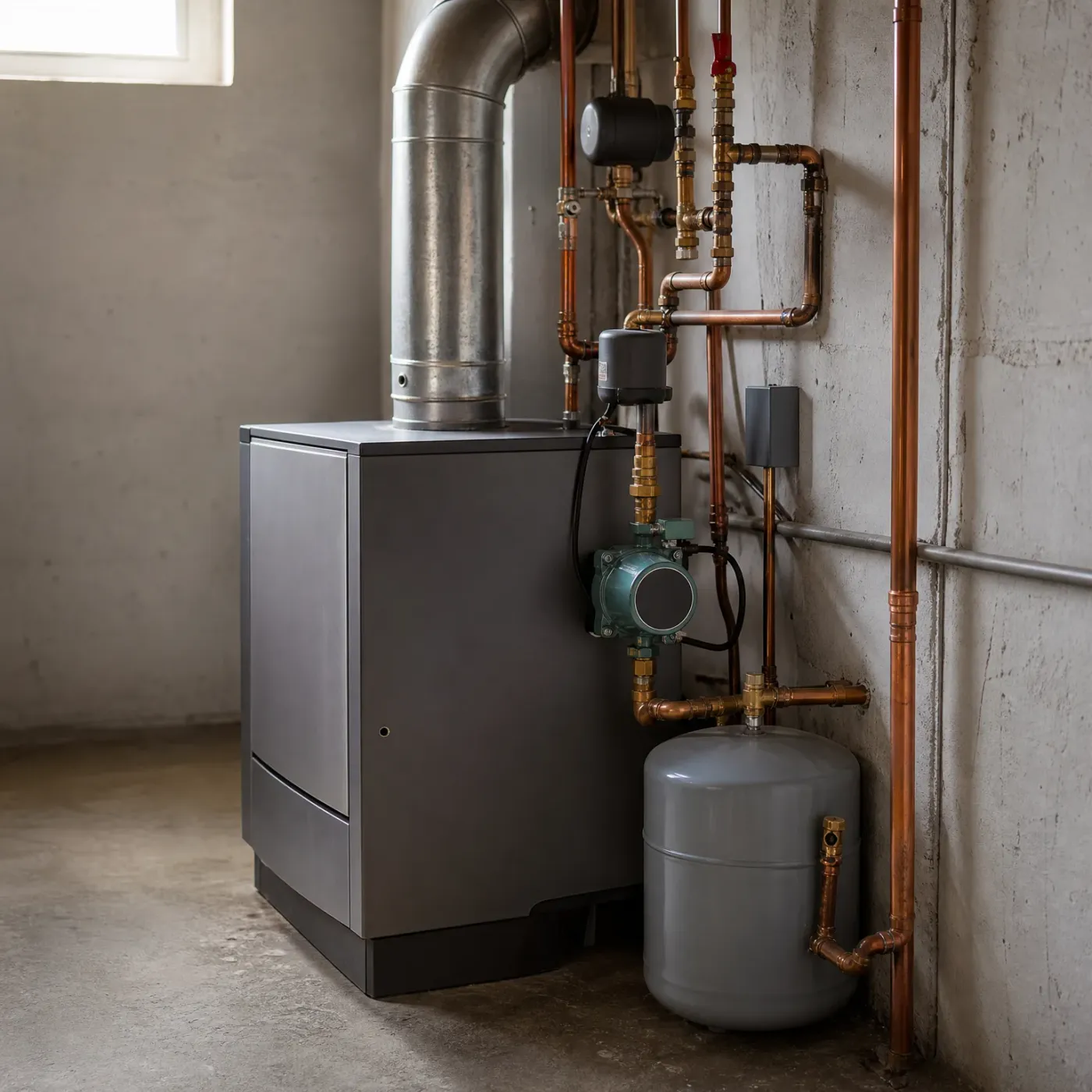
A gray floor-standing boiler with a metal flue stands against a concrete block wall, connected to copper pipes, brass valves and a gray expansion tank, on a bare concrete floor.
A boiler circulating normally keeps every pipe above freezing because the water inside is always moving.
A blue oil-fired boiler with a burner unit and pressure gauge stands in a concrete basement corner, connected to copper pipes and a metal flue.
A boiler sitting idle lets water stand still in the pipes, and still water is what freezes first.

Has That Pipe Frozen Before

Pipes that have frozen before

  • Once a pipe has frozen and thawed, the spot where the water pressure split the metal is weaker than the rest of the run.
  • A slow trickle through that section keeps water moving past the weak point, which is the only thing that kept it from freezing the first time.
  • If that room has a history of dropping cold fast, a thermostat change in another part of the house won't fix it.
  • An oil boiler that short-cycles or won't fire at all in that stretch of cold has less chance to push heat into a room that's already lost the fight once.
  • A pipe that froze once and got reinsulated usually won't need the trickle again, but one that froze with insulation already on it will keep freezing without the water moving.

Pipes with no history of freezing

  • If a pipe has never frozen, the room it runs through has stayed warm enough on its own, winter after winter.
  • Running the heat in that room and keeping the boiler circulating is normally enough, with no trickle needed.
  • A thermostat set low overnight in an unheated part of the house is the most common reason a pipe freezes for the first time.
  • Vermont winters push outdoor temperatures low enough that a room losing heat for the first time can still catch a pipe off guard.
  • Checking that the boiler is actually firing and circulating before a hard cold stretch catches a problem before the pipe ever sees freezing water.
  1. A cold snap drops the temperature in an unheated room first.

  2. Water sitting still in that section of pipe starts to cool.

  3. Ice forms at the coldest point, usually near an outside wall.

  4. The ice blocks the pipe before the whole run freezes solid.

Winter nights average 12°F statewide

12°F is the average overnight low here for a typical December, January or February night, not the worst of it. A room with no heat reaching the pipes can sit at that mark for hours, and that's long enough for still water to turn to ice.

NOAA nClimDiv 1991-2020 county normals weighted by homes

A closed laptop and a cream mug of coffee on a coaster sit on a dark wooden table, with a potted plant at left and a kitchen counter, tiled backsplash and shelf of ceramics in the background.

A frozen pipe doesn't ask what the oil tank costs to refill

A split pipe from a hard freeze usually shows up where you can't see it, inside a wall or under a floor near the foundation. By the time you find the water stain on the ceiling or the puddle in the basement, the boiler has likely already lost pressure, and now you're dealing with a repair on top of a repair. The room that froze is probably the same one that's always been colder than the rest of the house, the one with the thermostat someone turned down last winter to save on oil.

Finding someone to look at it before that happens usually means calling around, explaining the layout of your basement twice, and waiting on quotes from people who've never seen your boiler. A contractor who works on heating systems in this area every winter has likely already seen which pipes freeze first in houses built the way yours was, and what a cold room near a crawlspace does to a run of pipe that nobody checks until it's too late.

A gray upholstered sofa with a textured cushion sits beside a dark round side table holding a vase of green foliage, with a table lamp and sheer-curtained window behind.
A smiling woman with dark shoulder-length hair in a cream V-neck sweater sits at a marble counter with a glass of red wine, with a kitchen and softly lit living room behind her.
A woman in a dark green sweater laughs while seated at a marble kitchen island with a glass of red wine, with open shelving, cabinets and a living room visible behind her.
A woman with long dark hair in a cream knit sweater laughs while looking off to the side, seated at a counter with a glass of red wine, in a dimly lit living room with a sofa, lamp, framed pictures and houseplant behind her.
A smiling woman with long dark hair in a beige sweater sits at a marble kitchen counter with a glass of red wine, with a dimly lit living room behind her.

Skip calling around

A boiler technician who covers your part of Vermont has gone into the same crawl spaces and old additions you're dealing with, and knows which rooms in a Vermont house go cold first and which runs of pipe tend to be the ones that split. That's the kind of thing you only learn from doing this every winter here, not from a general plumber who sees a frozen pipe once a season. Finding that person yourself means calling around, explaining where the cold room is and what the boiler is doing, and doing it again with the next company because the first one is booked through the cold snap. Oil heat and power bills here are expensive enough without paying for a freeze that could have been checked before the hard cold set in. One request puts this in front of a licensed local contractor who already knows what to look for in a house like yours, instead of five different companies calling back at once while the pipe sits there.

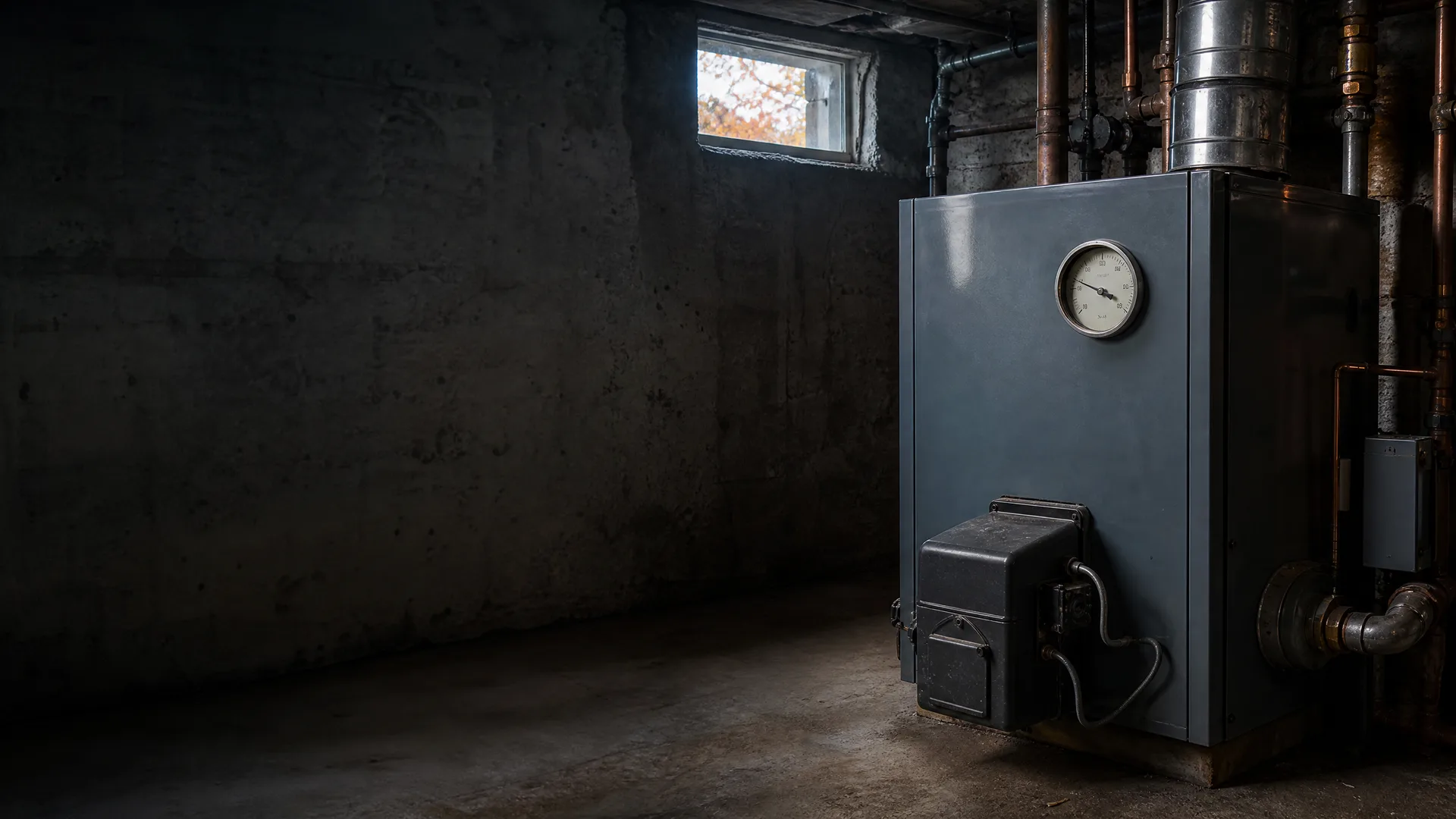
A gray boiler with a round pressure gauge and copper and metal pipes stands in a dim concrete basement lit by a small window.

The basement is cool and smells like the oil tank. It's late October, the first real cold snap, and you went down to check on things before bed. The boiler sits quiet, the burner off, and you crouch in front of the gauge to see it anyway. The needle sits low, below where it usually rests this time of year. Upstairs the thermostat reads fine. Down here, near the foundation wall where the old addition's pipe run ties in, the concrete floor is cold enough that you can feel it through your boots. You stand there a minute, listening for the burner to kick on, and it doesn't.


Why does that one room feel so much colder tonight

Walk past the room where the pipes run and you'll feel it before you think about it. The air is sharper there than in the rest of the house, maybe by enough that you notice your breath near an outside wall. A baseboard that stays cold to the touch while the rest of the house warms up is telling you water isn't moving through it. If you turn on the tap nearby and it sputters or runs thin before stopping, that section has likely already started to ice over. Leave it alone through a hard night and the ice can split the pipe, and you won't know until the thaw sends water into a wall or a floor you can't easily get to.

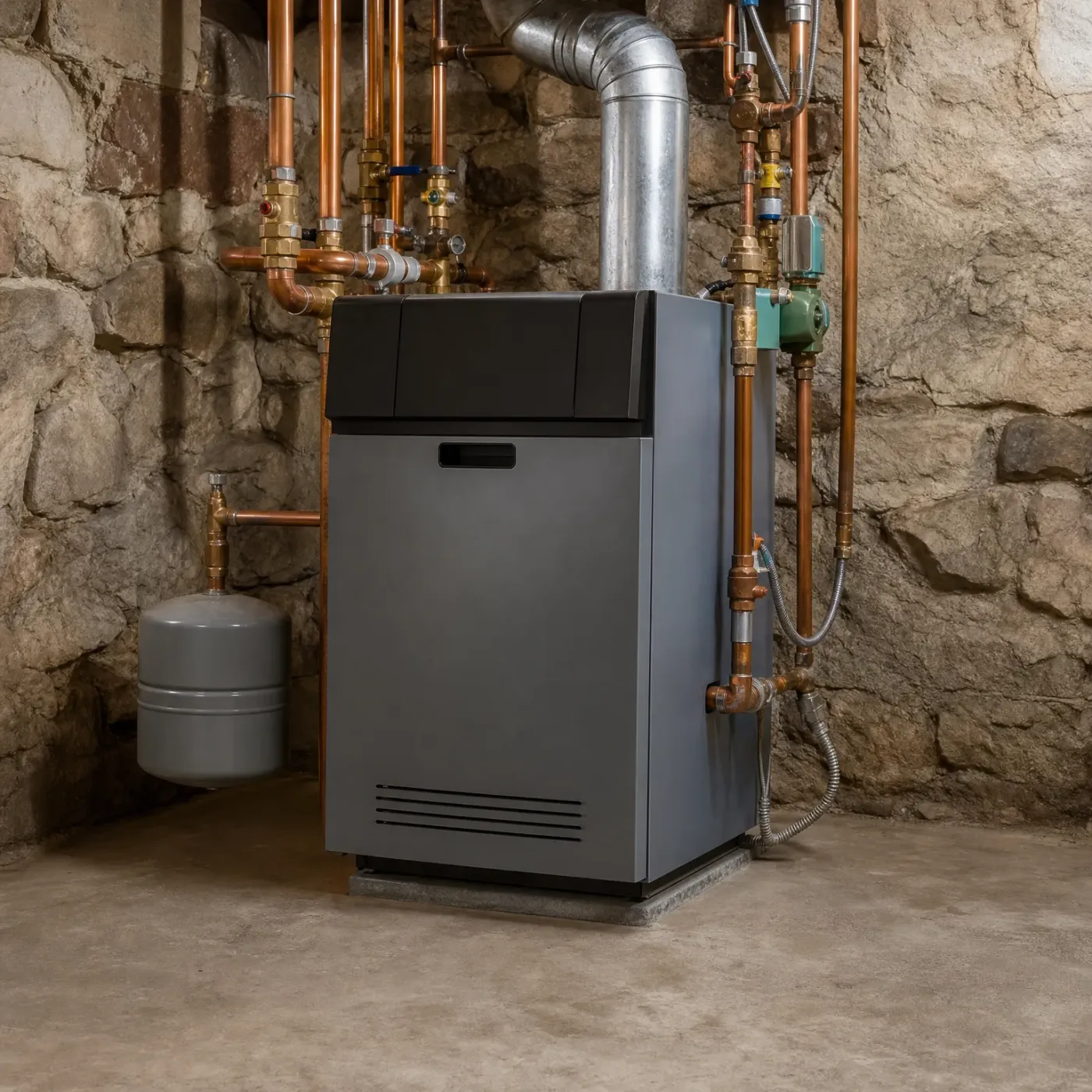
A gray residential boiler on a concrete pad in a basement with stone walls, connected to copper piping, brass valves, a circulator pump, an expansion tank, and a metal flue duct.

The boiler running as it should

Water moves through every pipe, the circulator pump pushes it along, and nothing sits still long enough to cool off. The expansion tank, the valves, the exhaust duct all do their job while the system stays warm and even, basement to attic.

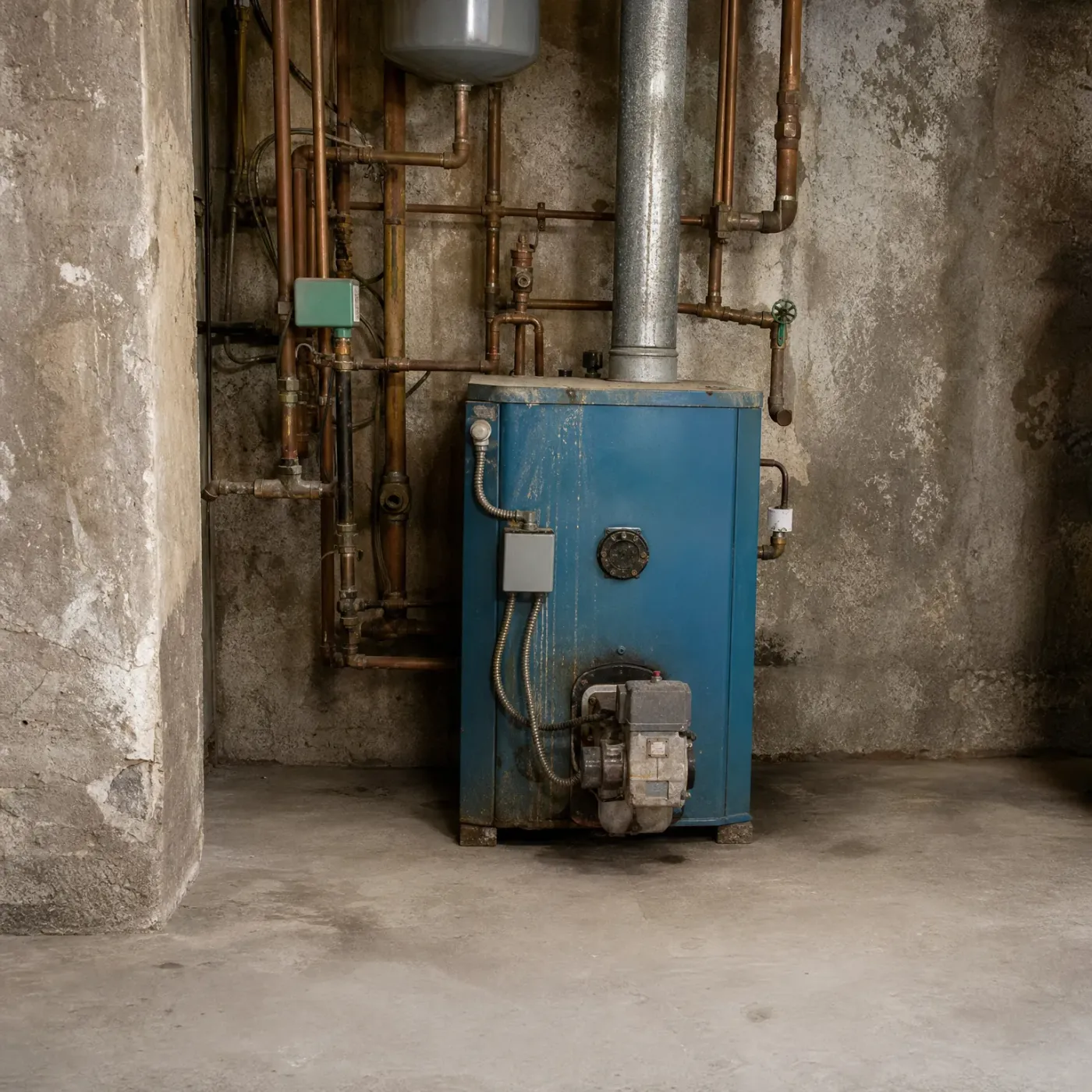
A blue cabinet boiler with a metal flue pipe and copper piping stands against a bare concrete wall in a basement with a concrete floor.

The boiler left to idle

No burner firing, no pump moving water, nothing but a cold basement and a flue pipe with nothing coming through it. Every pipe still holds water, and in weather like this, that water has nowhere to go but toward freezing.

A blue boiler on a raised concrete pad in a basement corner, with copper and steel pipes, a gauge cluster, an expansion tank, and a metal flue running up the bare concrete walls.
Before you get your boiler maintenance
A dark gray floor-standing boiler on a concrete pad in a basement, surrounded by copper piping, brass valves, a gray expansion tank, a circulator pump, and a metal flue pipe against concrete block walls.
After you get your boiler maintenance
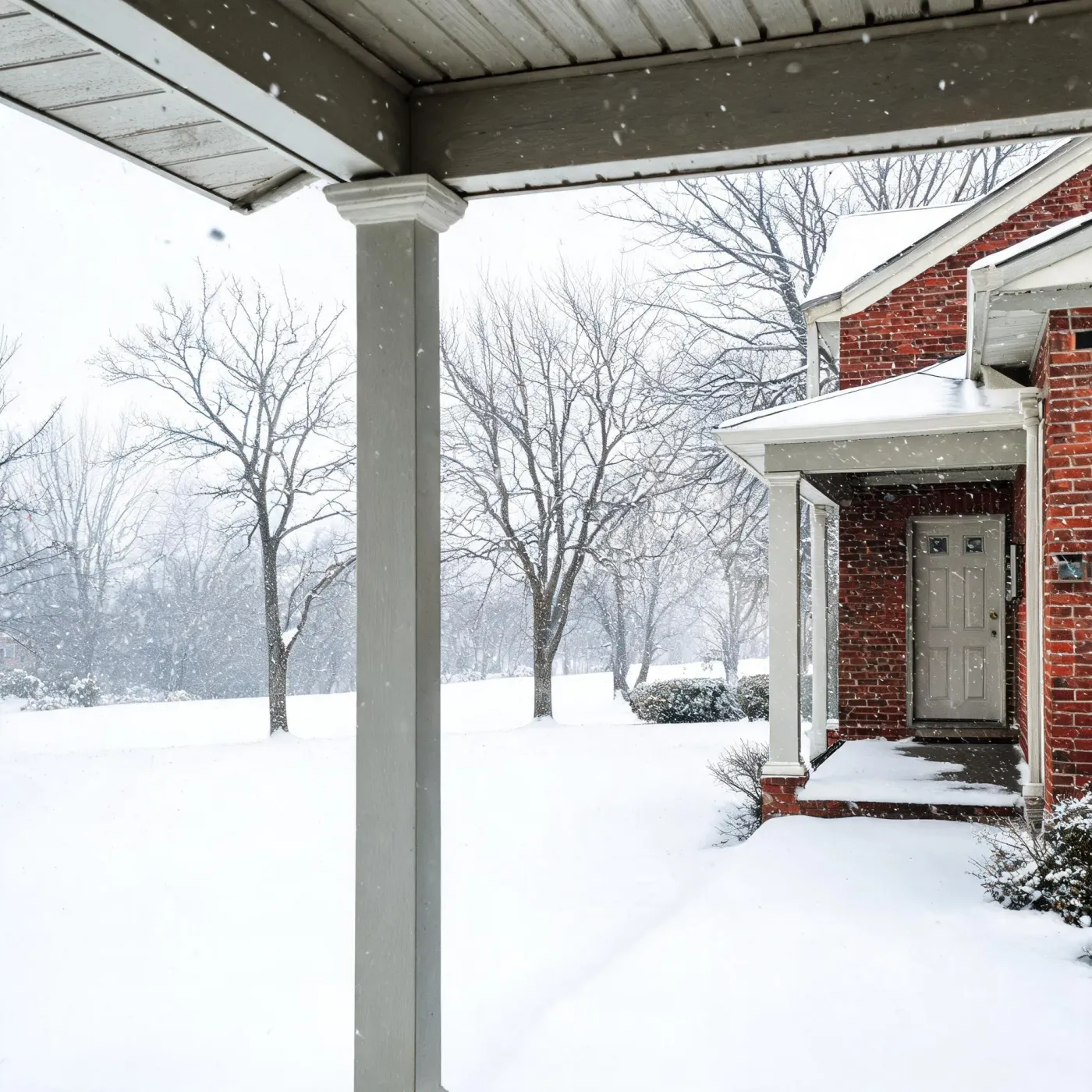
View from under a covered porch with a white column toward a red brick house entrance with a gray door, surrounded by deep snow, bare trees, and falling snowflakes.

A boiler that short-cycles because of a dirty nozzle or a weak pump already struggles to keep every room even. Add a stretch where the overnight low averages 12°F statewide, and the room farthest from the boiler is the one that cools fastest while the rest of the house stays warm. You might notice the floor near that far wall feels colder underfoot than it did last winter, or the boiler runs longer stretches to catch up. That's a system working harder to push heat through pipes that aren't getting serviced the way they should. Source: NOAA.

NOAA nClimDiv 1991-2020 county normals weighted by homes

A smiling bearded man in a navy sweater sits at a candlelit dinner table with a glass of red wine, a bowl of salad, and plates of food in the foreground.
A woman with dark hair in a bun reclines on a sofa with her eyes closed, wrapped in a cream fleece blanket, a closed blue hardcover book resting in front of her, with a lit lamp and a vase of dried flowers in the background.

What keeps a boiler's pipes from freezing

  • Keep the room where the pipes run warm and keep water moving if that run has frozen once already.
  • A boiler only protects pipes while it's circulating, so an idle system leaves standing water to cool and freeze.
  • The weak point after a freeze is the pipe itself, not the boiler, and that spot stays weak every winter after.
  • A technician who works on boilers across Vermont all winter already knows which rooms in these houses go cold first.
  • One local contractor takes the call instead of several, so you explain your setup once and deal with one person who knows it.
  • By the time a frozen pipe shows itself through a stain or a puddle, the split usually happened somewhere you can't see.

Heat in the room, water moving if that pipe has frozen before. That's the whole answer. A boiler only does its job while it's circulating, which is why a system sitting idle on a cold night is the same as no boiler at all to the water standing in a pipe near an outside wall. If a run has already frozen once, the metal there is weaker than the rest of the pipe, and it stays that way every winter after. A slow trickle is what keeps water moving past that weak point.

None of this shows up until it fails. A split pipe is usually behind a wall or under a floor, and by the time you see a stain or a puddle, the cold already did its work somewhere you couldn't check. That's the kind of thing worth having someone look at before the next hard freeze, not after.

A boiler technician who covers your part of Vermont has been in these basements and crawl spaces all winter and knows which rooms tend to go cold first and which runs of pipe tend to be the ones that give out. You get matched with one local contractor, not a handful of companies competing for the job, so you explain your setup once to someone who already has a sense of what's likely before they walk in.

The room stays warm, the water keeps moving where it needs to, and the pipe that already failed once gets the attention it needs to not fail again.

A gray boiler with a metal flue pipe stands in a concrete-walled basement, connected to copper piping, a circulator pump, and a gray expansion tank on the floor.

Describe it once

Describe it once

A licensed local pro takes the request for your boiler tune-up.

There's no charge for the request.