


A row of white Colonial-style houses with glowing windows photographed at dusk along a road bordered by a stone wall.

Furnace Repair in Burlington, VT

Tell us about the job

Takes about a minute. No obligation.

RepairFurnace or heatingChittenden County, VT
Step 1 of 2

What ZIP code is the job in?

A diagnostic visit starts with the complaint. Short cycling, no heat, a burning smell, a furnace that runs but never gets the house warm, each of those points somewhere different, and the tech will ask when it started and whether anything changed first. From there they check the thermostat call, the power and gas supply, and the condition of the flame itself if the burners light. A lot of the real diagnosis happens with the panels off, looking at the igniter or pilot assembly, the flame sensor, the inducer motor, and the wiring at the control board. They'll also pull the filter and look at the vent and intake to rule out something simple before they chase anything electrical. By the end they should be able to point at the failed part and explain what it does, not just that it's broken.

9 months
September through May, your furnace is on duty
12°F
the average winter night it heats against
55%
of homes here heat with gas, so most furnaces here burn gas
53 winter storms
in ten years, the nights a failure hurts most
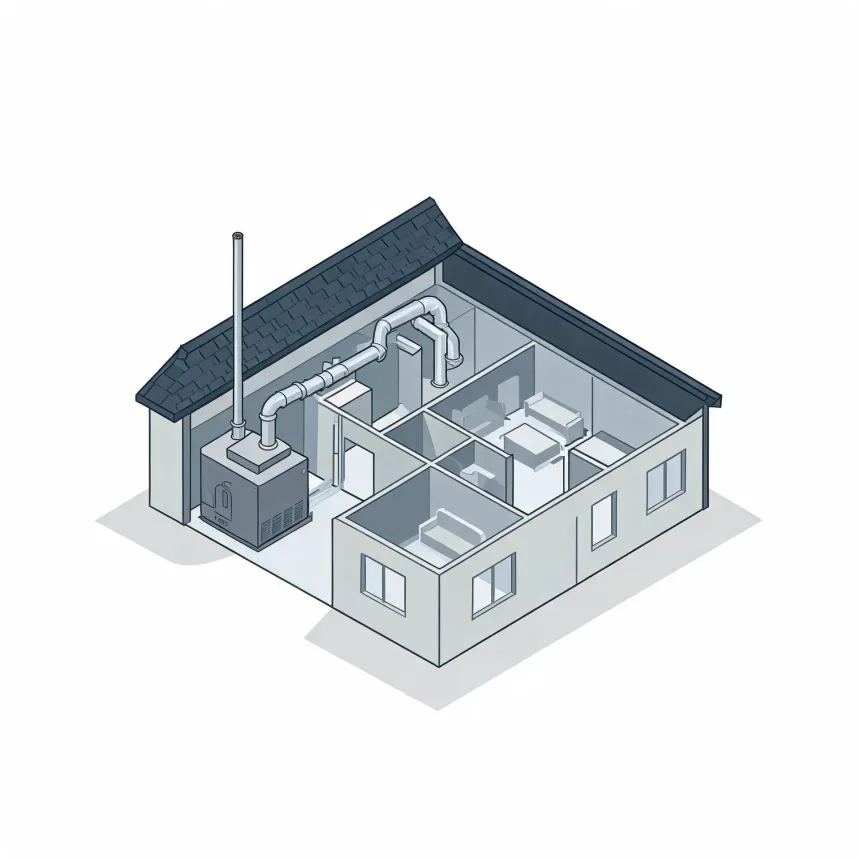
Isometric grayscale illustration of a cutaway single-story house showing interior rooms with furniture, plus an exterior furnace unit with a tall flue pipe and ducting running into the attic space.
Your furnace works hardest from November through March.

NOAA nClimDiv, 1991–2020 normals

Gas here runs $16.61 per million Btu, among the highest rates in the country.

A furnace that's short cycling or struggling to heat burns more gas doing less work, so the longer it runs broken, the more that rate costs you.

Furnace trouble tends to show up in September, the first month it has to work

Heat runs September through May
Winter nights average 12°F
53 winter storms from 2015 to 2024

A furnace that's starting to fail usually says so before it quits outright. It may short cycle, kicking off again before the house actually warms up. It may light with a bang instead of a quiet whoosh, which points to delayed ignition. You might notice the blower running while the air coming out barely feels warm, or a burning dust smell that doesn't fade once the system has been running a while. A pilot or igniter that won't hold, a thermostat call that doesn't get answered, cold rooms on one end of the house while the rest stay fine, these point at something specific inside the cabinet. None of them mean the same thing, but all of them are worth a look before the part fails the rest of the way.

Nine months of heat a year wears a furnace down faster

Furnaces here run nine months of the year, September through May, with overnight lows averaging 12°F in the dead of winter. That kind of stretch wears parts down faster than a system that only runs part of the year. If yours is short cycling or struggling to heat, a proper diagnosis now finds the part before it fails the rest of the way.

Find a contractor
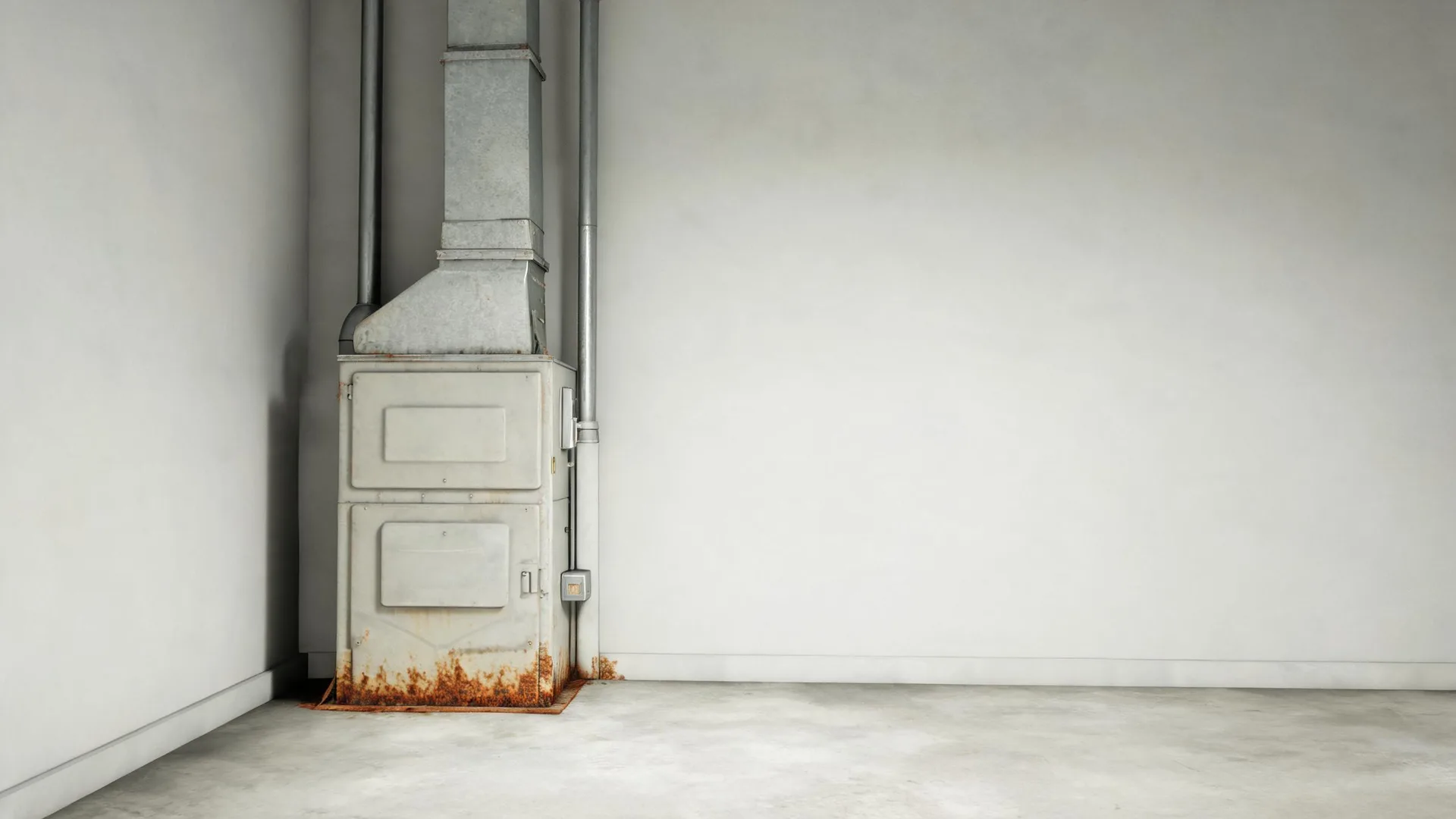
A gray gas furnace with attached ductwork and piping installed in an unfinished concrete basement.

A newer furnace is still worth fixing

Half the homes in Chittenden County were built in 1981 or later. If yours is one of them, the furnace inside it is probably not old enough to be the reason it's acting up. A failed igniter or flame sensor is just that, a failed part, worth fixing on its own terms rather than a sign the whole system is done. Repair makes sense when the cabinet underneath it still has years ahead.

What you can check safely

Make sure the thermostat is set to heat and set a few degrees above room temperature, and check that it has power if it runs on batteries. Look at the furnace switch, the one that looks like a light switch on or near the unit, and make sure it's on. Check the breaker it runs on. If the furnace has a visible filter, pull it and hold it up to a light. A filter packed with dust chokes airflow and can shut the whole system down on its own.

What to leave alone

Don't take the burner compartment apart or reach for the igniter or flame sensor. Those sit close to a live flame or an electrical arc, and the sensor especially is easy to damage with a touch. If you smell gas, don't flip any switches at all. Leave the house, then call the gas utility or a contractor from somewhere else.

A gray forced-air furnace with ductwork stands in an unfinished concrete basement surrounded by storage items and clutter.

A new furnace would cut about $150 a year off heating for a typical Chittenden County home.

  • A new high-efficiency furnace$610 a year
  • An older furnace$760 a year

Estimates for a typical Chittenden County home, compared with an older unit built to the previous federal minimum, from EIA household energy data, Vermont fuel prices and NOAA climate normals. Your home will differ.

Repair makes sense when one part has failed and the heat exchanger is sound.

Replacement makes sense when the heat exchanger is cracked or the furnace keeps needing parts.

Age by itself doesn't settle whether a furnace is worth fixing. What matters more is which part failed and what else has gone wrong with it recently. A cracked heat exchanger means the cabinet is done, because that part isn't sold separately and isn't meant to be. An igniter, a flame sensor, a draft inducer motor, a control board, those get replaced on their own all the time without touching the rest of the system. The harder call is a furnace that keeps coming back for different repairs. Each one might be small on its own, but that pattern usually means something upstream is stressing the parts around it, and the next failure is rarely the last.