




An unfinished basement interior showing a gray furnace unit beneath a bare incandescent bulb, surrounded by exposed joists, concrete walls, cardboard boxes, and utility pipes.

Furnace Installation in St. Albans, VT

Tell us about the job

Takes about a minute. No obligation.

New system or replacementFurnace or heatingFranklin County, VT
Step 1 of 2

What ZIP code is the job in?

Fuel oil ran $26.53 per million Btu in Vermont last year. If your furnace runs on oil, that number lands on every bill all winter. A furnace that converts more of that fuel into heat instead of losing it up the flue costs less to run at that price, and the difference is bigger here than in a state where oil runs cheaper. Worth asking any contractor what efficiency rating they're quoting you and how it compares to what you have now.

9 months
September through May, your furnace is on duty
11°F
the average winter night it heats against
80% AFUE
the federal minimum any new unit must meet
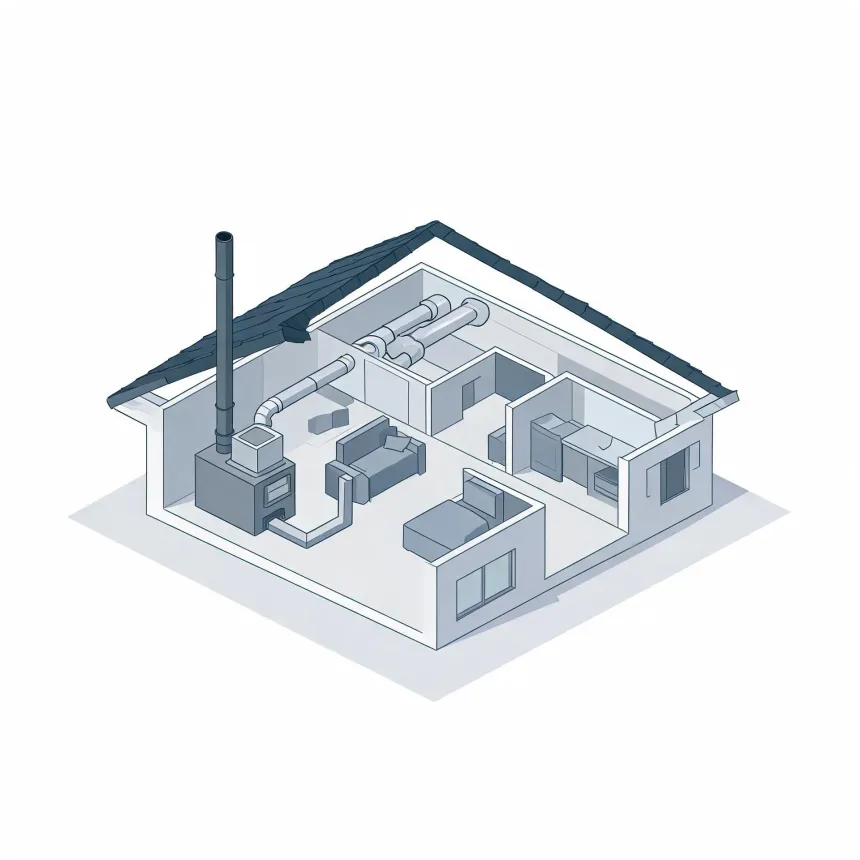
Isometric line illustration of a cutaway single-story house showing interior rooms with furniture, a furnace unit with a tall flue pipe, and connected ductwork running under the pitched roof.
Your furnace works hardest from November through March.

NOAA nClimDiv, 1991–2020 normals

Furnaces in Franklin County start running in September.

Replace it in August and it's broken in on your terms, not in a cold snap.

Nine months of heat and 11 degree nights mean this furnace doesn't get an easy season

Heat runs September through May
Winter nights average 11°F
51 winter storms from 2015 to 2024

Franklin County has logged 128 severe weather events in the past decade, most of them damaging wind or winter storms with heavy snow and ice. A new furnace needs a plan for when the power goes out, not just the right size. Statewide, 21% of households lost power for a day or more last year. If your furnace runs on an electric blower, and most do, no power means no heat no matter how new the unit is. Worth asking your contractor about a battery backup or a transfer switch for a generator, so losing power doesn't mean losing heat too.

Most furnaces here run on oil. Replacing yours with one is the simpler path.

Oil heats most homes in Franklin County, more than any other fuel. If that's your furnace now, replacing it with another oil furnace means a straightforward install, since the tank, the lines and the vent are already set up for it. Switching fuels is its own project. Staying with oil is usually the simpler one.

Find a contractor
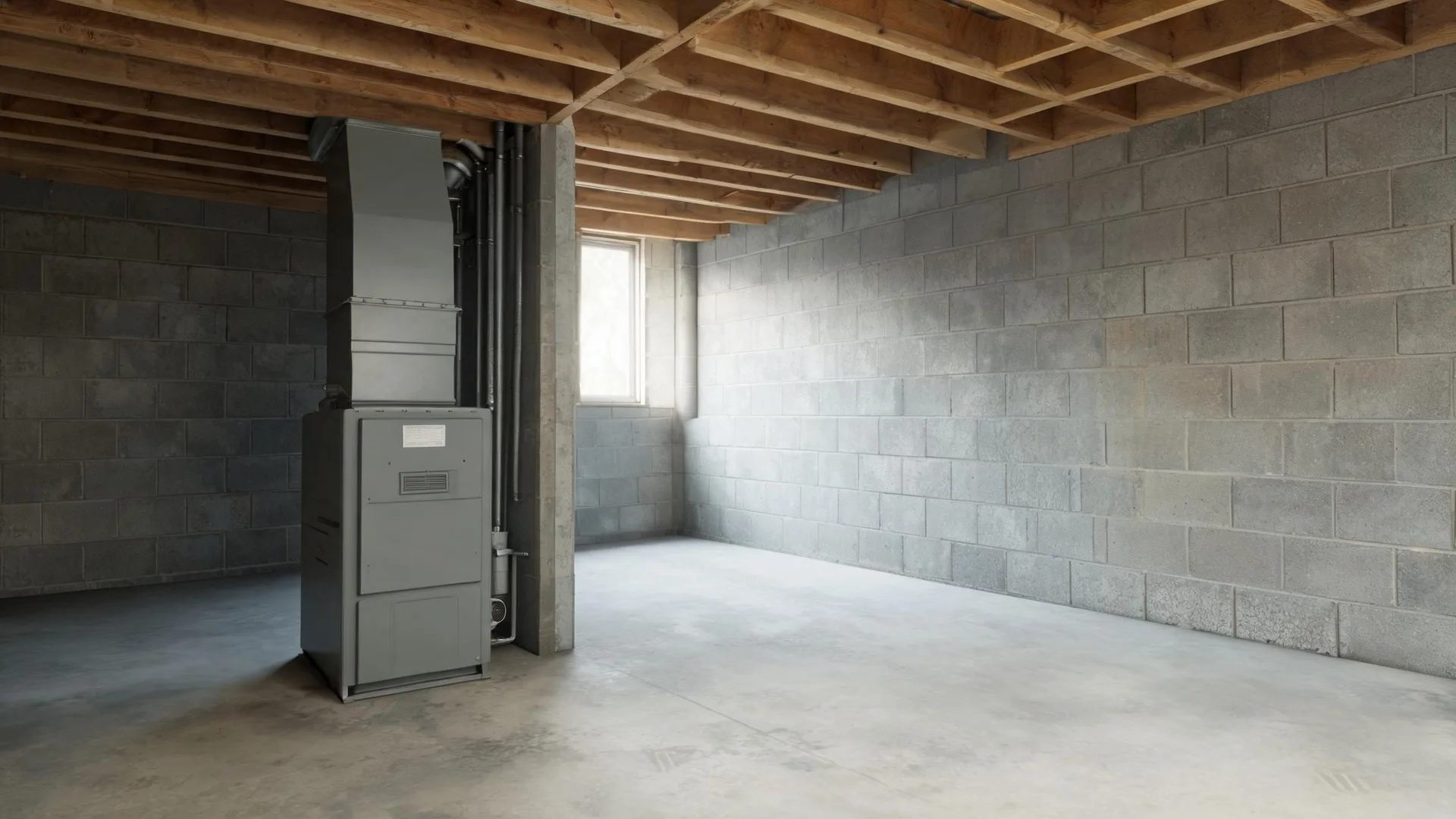
A gray high-efficiency gas furnace installed in an unfinished basement, surrounded by gas lines, a condensate drain, and sheet-metal ductwork.

This furnace has to be sized for the winters it's actually going to see

This furnace will run nine months of the year, into nights that average 11 degrees. That's the load it's sized against. A unit that's undersized will run close to constant once the real cold sets in, and one that's oversized will cycle on and off and wear its parts faster doing it. Either way shows up sooner here than it would somewhere milder. Get the sizing done on a load calculation for your house, not a guess based on the old furnace or the square footage alone, and don't let the lowest bid be the one that skipped that step.

The rating only counts fuel that gets burned

An efficiency rating tells you how much of the fuel a furnace burns turns into heat in your house instead of going out the flue. It says nothing about how big a furnace you need or how often it has to run. A high rating on an undersized furnace still leaves you cold on the coldest nights.
Compare it to the furnace you have now

Older furnaces lose a lot more heat up the flue than new ones do. If a contractor quotes you a rating, ask what your current furnace is rated at and what the gap actually means for fuel burned over a season. Furnaces with the same rating can still be built differently inside, so ask what's driving the number before you decide on it alone.

The price of a furnace install comes down to more than the unit sitting in the basement. Ductwork is usually the biggest variable. If the existing ducts are the wrong size for the new furnace, or leak at the joints, or don't reach a room they should, fixing that costs more than swapping the furnace itself. Venting matters too. A higher efficiency furnace vents differently than an older one, sometimes through a wall instead of a chimney, and that can mean new pipe and a new termination point. The job also includes getting combustion air to the unit and condensate away from it, since high efficiency furnaces produce water that has to drain somewhere. None of that shows up until someone is actually in your basement looking at what's there, which is why contractors can walk out with different numbers for what looks like the same job.

The old furnace comes out first. The gas or oil line gets shut down and disconnected, the vent pipe gets pulled, and that alone can take a couple hours before the new unit even gets set in place. Once it's in, the work is mostly connections. Gas or oil line, electrical, vent pipe, ductwork on both sides, and a condensate line if it's a high efficiency model. Each connection gets tested before the next one starts. Then the furnace gets fired and run through a full cycle so the technician can check the flame, the airflow, and the temperature rise against what the manufacturer specs for that model. A combustion analyzer checks what's coming out the flue, because that's what tells you the furnace is burning clean instead of spilling exhaust back into the house. Expect some noise and some time without heat while this happens, and expect someone to show you the thermostat and the filter location before they leave.