



What the cold actually does to a heat pump here
Franklin County winters average 11°F overnight through December, January and February, and the heat runs nine months a year, September through May. That is the whole question for a heat pump. Below 40°F a standard heat pump puts out less heat than its rating. Below about 35°F it usually needs backup heat to make up the difference. Your average winter night here is 11°F. Every night that falls to freezing or below, and that is about 155 of them a year, is already past both marks.
So for more than half the nights you're heating, a standard heat pump is not working at full strength and is likely leaning on backup heat to hold the house at temperature. That backup is almost always electric resistance heat, the most expensive way to make heat there is. None of that shows up in the $2.92 running-cost figure, which assumes no backup heat at all. Run enough nights on backup and your real cost climbs above that number.
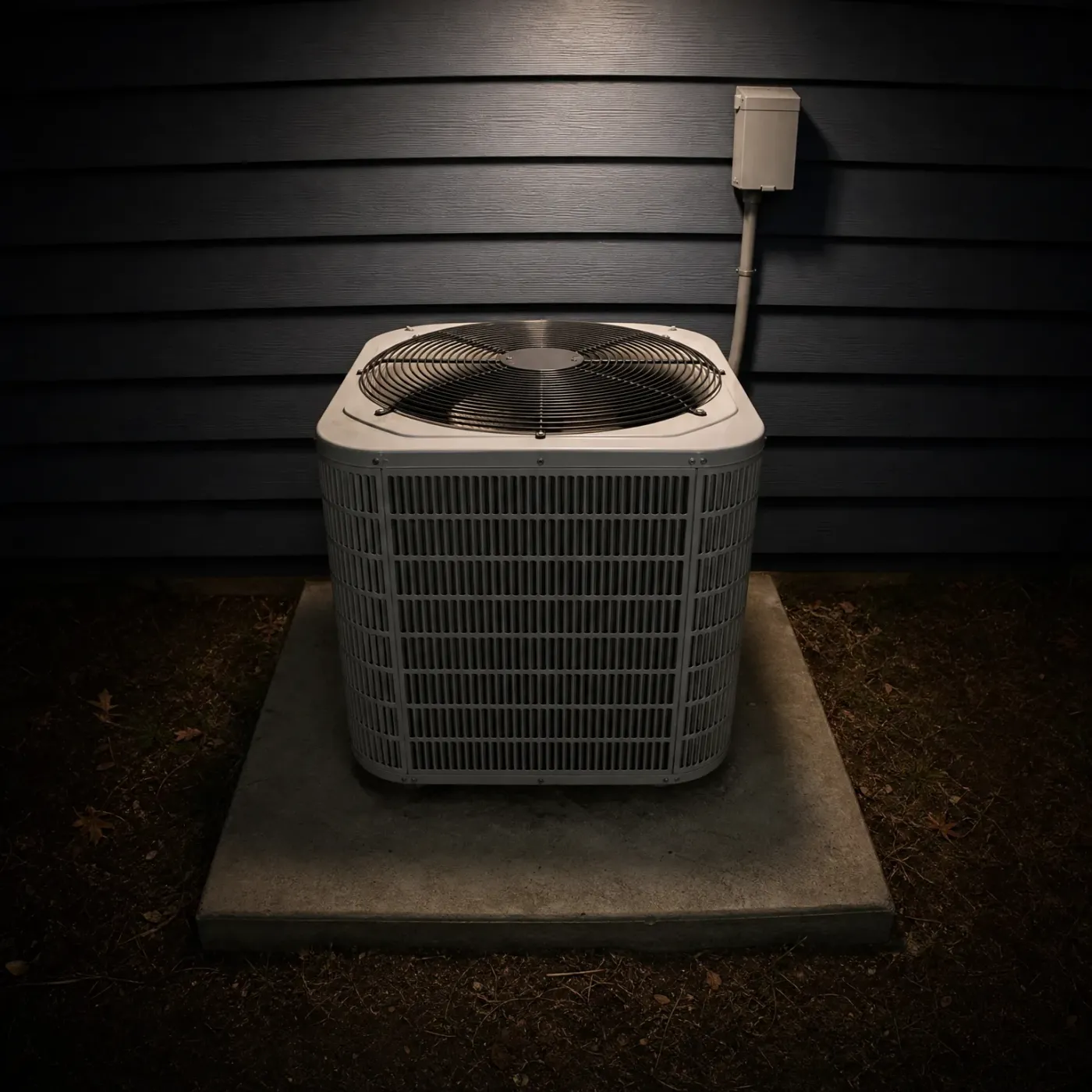
A cold-climate heat pump changes this. To earn that label a unit has to prove, in third-party testing, that it still makes at least 1.75 units of heat per unit of electricity at 5°F, and holds onto at least 70 percent of its warm-weather capacity at that temperature. Field tests of these units in occupied homes back it up: backup heat covered only a small share of the load between 0°F and 35°F, and the units ran on backup alone only rarely, even below 0°F. About 25 nights a year here drop to 0°F or below. That is the stretch where a cold-climate model earns its keep and a standard one struggles most.