






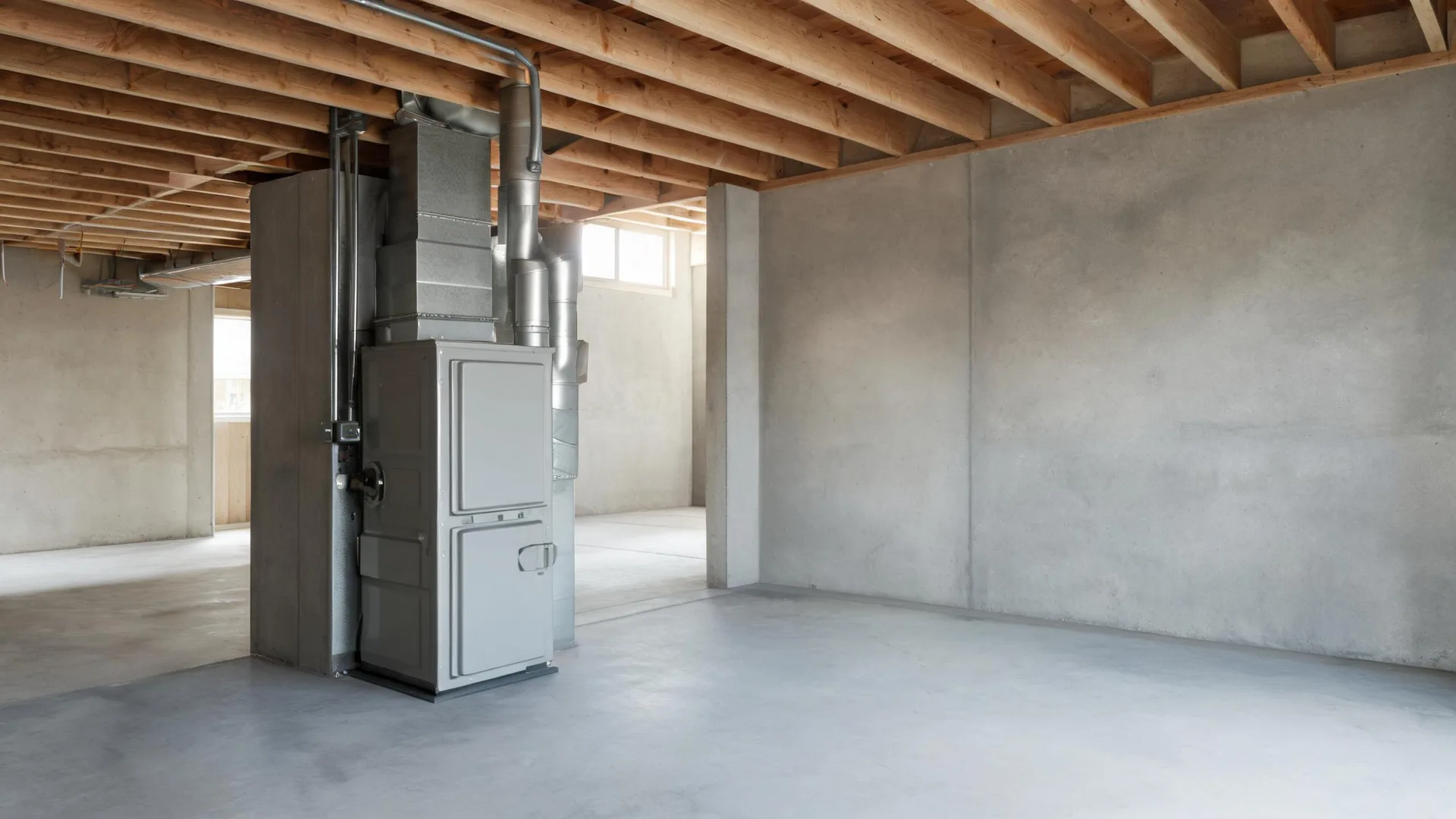
An empty unfinished basement containing a forced-air furnace with overhead ductwork, exposed ceiling joists, and a single hanging light bulb.

Furnace Installation in Bellows Falls, VT

Tell us about the job

Takes about a minute. No obligation.

New system or replacementFurnace or heatingWindham County, VT
Step 1 of 2

What ZIP code is the job in?

If your furnace runs on oil, Vermont paid $26.53 per million Btu for it in 2024. That number moves with the market every year, and it's one of the highest fuel costs in the country. A furnace that wastes less of that oil as heat matters more here than in a state where fuel is cheap. When you're comparing models, the efficiency rating on the label is telling you how much of what you pay for turns into heat in your house. Ask what fuel the new furnace will run on and how that compares to what you have now.

9 months
September through May, your furnace is on duty
14°F
the average winter night it heats against
80% AFUE
the federal minimum any new unit must meet
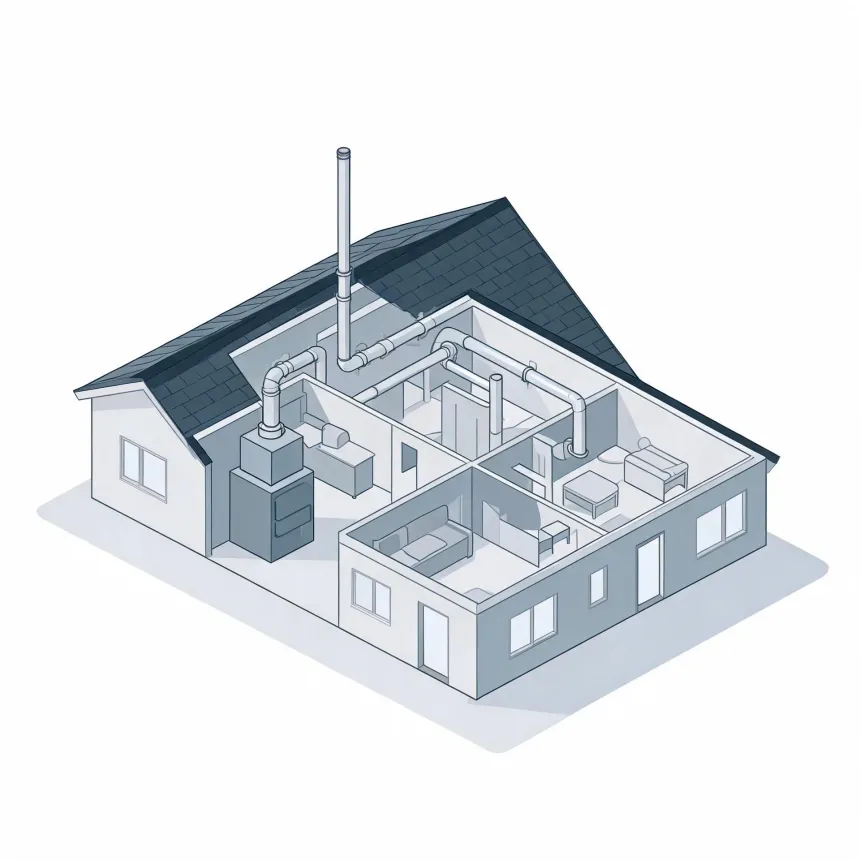
Isometric cutaway illustration of a single-story house showing interior rooms with furniture, a furnace unit connected to ductwork and a tall flue pipe extending through the roof.
Your furnace works hardest from November through March.

NOAA nClimDiv, 1991–2020 normals

Windham County logged 70 winter storms and 143 damaging wind events in the last ten years.

A furnace install should include a plan for keeping heat on when the power doesn't cooperate.

Nine months of heat a year. This furnace doesn't get a season off.

Heat runs September through May
Winter nights average 14°F
70 winter storms from 2015 to 2024
Get it done in AugustHeat starts running in September here and keeps going through May.

Oil heats just over half the homes in Windham County, more than any other fuel. Bottled or LP gas comes next at 18.6%, and gas line service barely reaches this county at 1.9%. If your house already has an oil furnace, a straight swap for another oil furnace is usually the simplest install, since the tank, the lines and the vent are already in place. Moving to a different fuel means new lines or a new tank, and that changes the scope of the job. Ask the contractor what changes in your house if you move off oil, not just what the new furnace runs on.

Efficiency pays here

Power costs more here, so an efficient system pays you back on every bill.

Find a contractor
A man in a cap, dark long-sleeved shirt and brown work pants walks up gray porch steps toward a dark blue front door, carrying a worn canvas tool bag filled with hand tools, with a potted shrub to the right.
A gas furnace with attached ductwork, gas piping, and condensate lines installed in a concrete-block basement.

A furnace built for long runs, not quick bursts

A furnace spends most of its life doing nothing dramatic, just cycling on and off as the house calls for heat. What wears it out is how well it handles the start of each cycle and how long it has to run once it's going. Compare how a model handles ignition. A hot surface igniter does the job but it's a wear part, and it fails more often when a furnace is cycling on and off constantly rather than running long and steady. Ask about the heat exchanger too. That's the part that actually transfers heat into your ductwork, and it takes the most thermal stress of anything in the cabinet, expanding and contracting every time the burner fires. A furnace sized and run well puts less stress on both of these over its life than one that's fighting an oversized or undersized match to the house. When you're comparing systems, ask what the warranty covers on the heat exchanger specifically, not just the unit as a whole, since that part outlasting the rest is what determines whether the furnace is worth repairing later or worth replacing.

A load calculation, not a guess off the old unit

Sizing a furnace means working out how much heat a house loses on the coldest day, room by room. A contractor measures the square footage, checks the windows, counts exterior walls, and looks at how much insulation is in the attic and walls. That calculation gives a number in BTUs, and the new furnace gets matched to it. Pulling the size off the furnace being replaced skips this step, and that old unit may have been wrong from the day it went in.
Oversized runs worse than undersized

A furnace too big for the house heats the air fast and shuts off again before it finishes pulling moisture out or spreading heat evenly room to room. That start stop cycle wears on the heat exchanger and the igniter faster than steady running does. A furnace sized right to the house runs longer, steadier cycles and heats more evenly, room to room, even though it looks less powerful on paper.

The furnace itself is only part of what you're paying for. Ductwork is the other piece, and it's often the one people forget to ask about. If the existing ducts are the right size and sealed well, a straight swap keeps the job simple. If they're too small, too leaky, or were sized for a different furnace, the new unit has to fight them, and no amount of spending on the furnace fixes that. Venting matters too. A higher efficiency furnace pulls more heat out of the exhaust before it leaves the house, which means that exhaust often needs a different kind of vent pipe than an older unit used, sometimes run to a different spot on the house entirely. Electrical work can factor in as well, since a new furnace may draw differently than the old one. None of this shows up by looking at the furnace sitting in the showroom. It shows up when someone looks at your house.

Installation day starts with the old furnace coming out. The contractor shuts off the gas or oil line, disconnects the vent, and separates the ductwork from the plenum before anything new goes in. Once the old unit is clear, they check the floor or platform underneath it and look at whether the duct connections need rework before the new furnace sits down. Setting the new furnace in place is the quick part. Connecting the supply and return ducts, running the vent pipe, wiring the thermostat and control board, and hooking up the fuel line take longer and matter more. Every joint gets checked for leaks before the unit ever fires, gas lines and combustion air both. The first run tells the real story. A contractor cycles the furnace through a full heating cycle, watches the flame or heating element, confirms the blower is moving air the way it should, and checks the temperature rise against what that model calls for. That last check shows whether the furnace is pulling air through the ducts properly, not just whether it turns on.