Oil runs expensive here
Fuel oil cost Vermont homes $26.53 per million Btu in 2024. If your boiler runs on oil, that price sets the floor for every winter bill no matter how well the house holds heat.
Takes about a minute. No obligation.
Fuel oil cost Vermont homes $26.53 per million Btu in 2024. If your boiler runs on oil, that price sets the floor for every winter bill no matter how well the house holds heat.
You can't change what oil costs, but a new boiler's efficiency decides how much of that oil turns into heat in your rooms instead of going up the flue. That's the number worth comparing between models.
Boilers here start running in September, nine months of the year straight through to May.
August is the window to put a new one in, before the first cold night puts you in a hurry.




Half the homes in Windsor County were built in 1973 or earlier. A boiler going into one of those houses is going into a heating system that was likely sized for an older house, old windows, maybe less insulation than what's required now. If yours is one of them, the boiler that fits isn't necessarily the one that was there before, especially if anything else has changed since, like new windows or added insulation. Sizing a boiler too big wastes oil with every cycle. The only way to know what your house needs now is to have someone work it out room by room, not guess from the age of the system you're replacing.
Nine months of heat a year, with overnight lows near 12°F through the worst of it, is a long stretch to run on a boiler that isn't sized right. The one going in now should match your house as it stands today, not the house it was built as. Get that sizing done and pick a unit built to hold up under this kind of run time.
Find a contractorA boiler's efficiency rating says how much of the fuel it burns turns into heat in your rooms, and how much goes out the flue. A higher rated boiler pulls more heat out of the same amount of oil before letting the exhaust go. That's the whole measure. It doesn't tell you how long the boiler lasts or how well it's built, just how much of what you're paying for ends up as heat instead of waste.
The efficiency rating comes from a lab test, not from your house. A boiler piped poorly, sized wrong for the space, or never balanced right will burn more oil than the rating suggests, no matter what's printed on the label. The equipment sets a ceiling. The install decides how close you get to it.
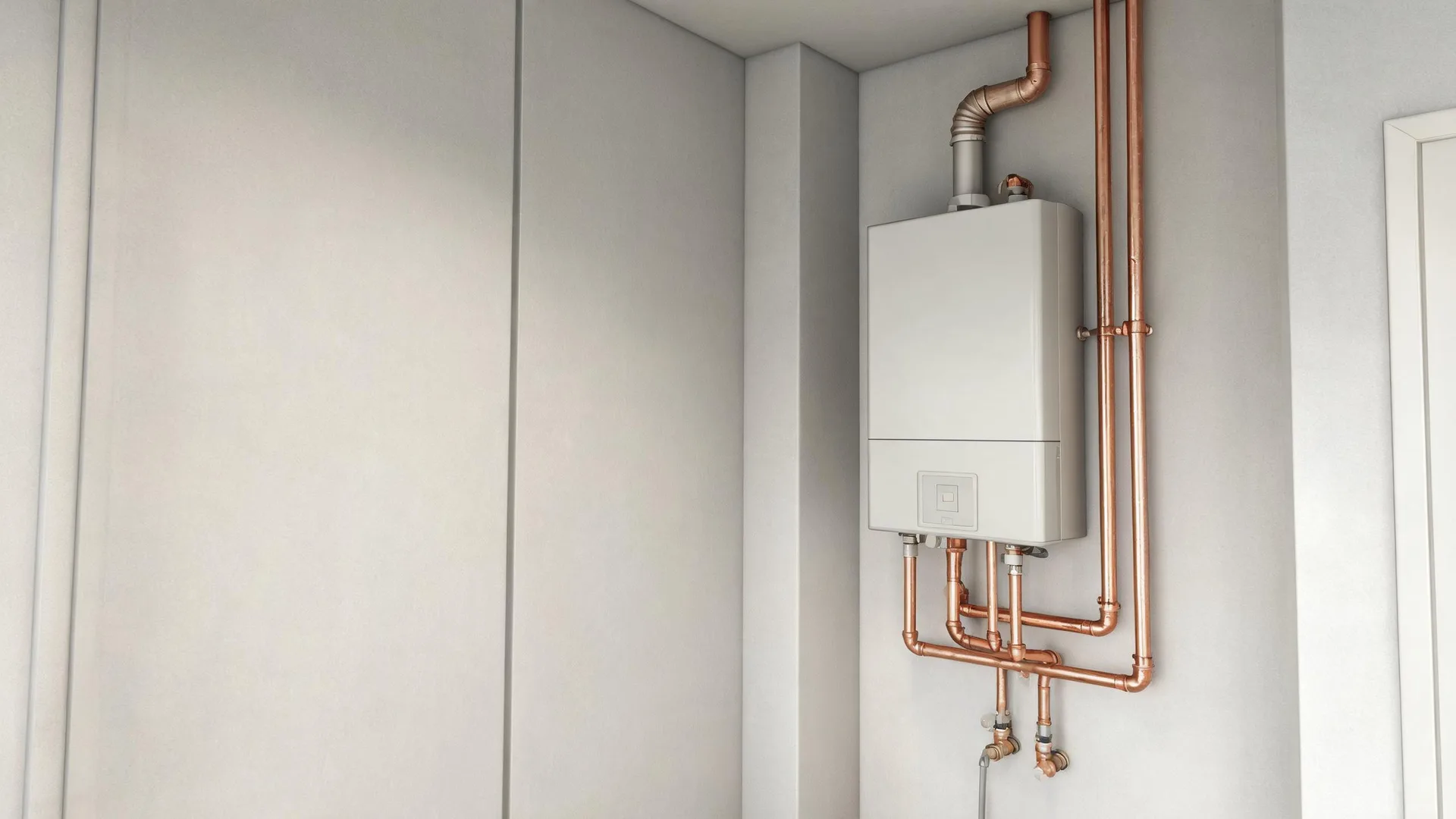
Sizing and efficiency decide what boiler goes in. What drives the cost of putting it there is different. A boiler install means running new venting most of the time, since the flue sizing changes with a different unit. It means new piping to match the boiler's connections, and often a new expansion tank, circulator pump and zone valves if the old ones don't match what the new boiler needs to run right. If the boiler is moving to a different spot in the basement or utility room, that's more pipe and more labor. Any of these can be straightforward or involved, and you won't know which until someone's looked at what's already there.
Install day starts with the old boiler coming out, and that's not a quick pull. The oil or gas line gets disconnected, the flue gets disconnected, and the water in the system gets drained. Once the old unit's out, whoever's doing the work can see what they're actually dealing with behind it, which is why sometimes the job changes scope on the spot. The new boiler goes in, gets piped to match its own fittings, gets wired, gets vented. Then it's filled, purged of air, and fired up for the first time. A good installer doesn't stop there. They'll check the burn, check the draft, bleed the zones, and make sure every radiator or baseboard loop is actually getting heat before they call it done. That last part, balancing the system room by room, is what separates a boiler that runs right from one that just runs.