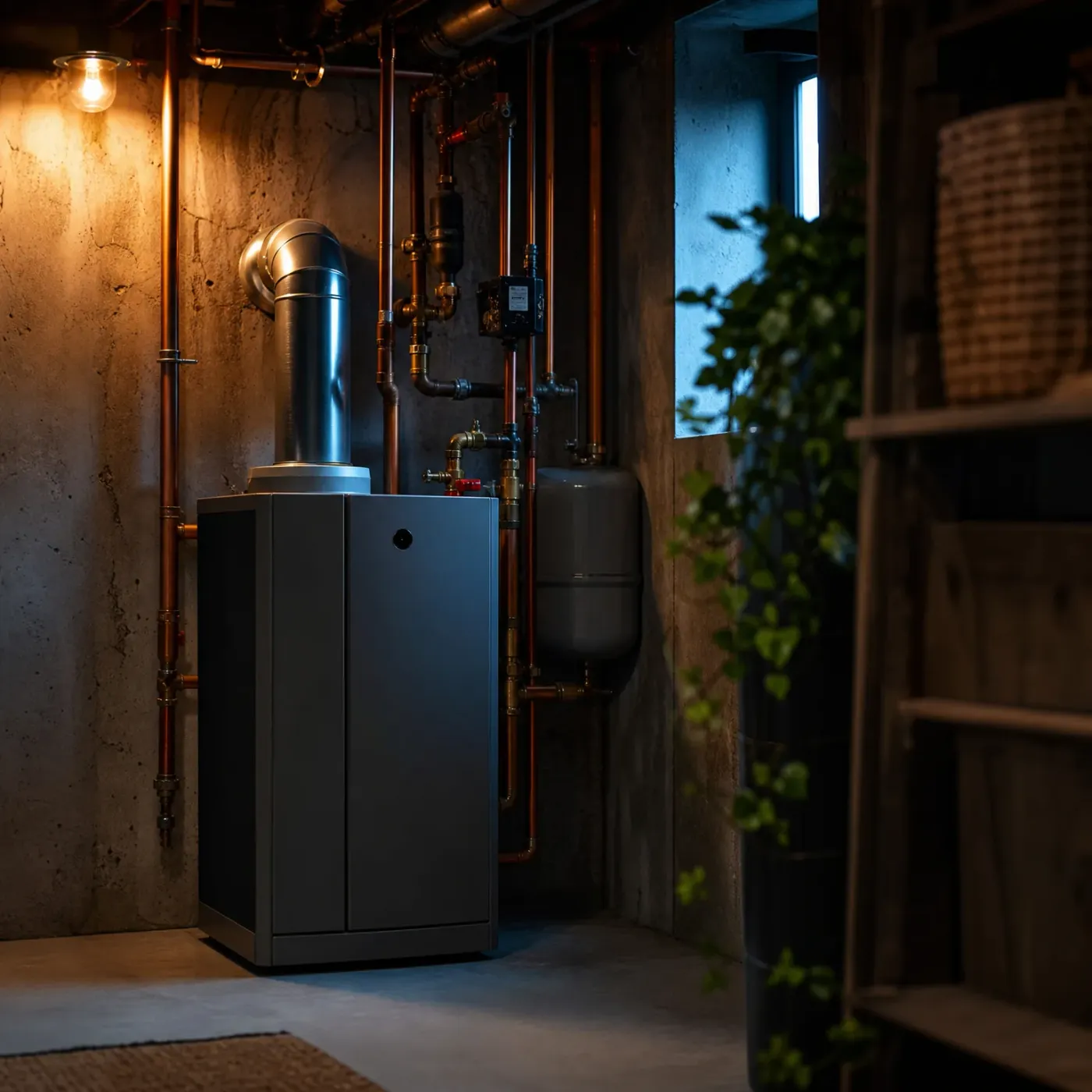
A dark grey floor-standing boiler with a metal flue stands against a concrete basement wall, surrounded by copper pipework, valves and a wall-mounted expansion tank, with ivy and a shelving unit at right.

Let someone else find the pro

Why your boiler relief valve is leaking in Vermont

A relief valve that keeps dripping usually means pressure or temperature inside your boiler is higher than it should be, or the valve itself has worn out and can't reseat. This page gets into what causes each and how a contractor sorts out which one you've got. Send the form and stop calling around for someone who works on oil boilers.

Let a pro reach out

A boiler relief valve leaks because something is pushing pressure or temperature past what the valve is built to hold, or because the valve itself has worn to where it can't shut fully anymore. Most Vermont homes run oil-fired boilers, and in a closed heating system, a waterlogged expansion tank or a backed-up feed valve will raise pressure until the relief valve opens to protect the boiler from a bigger failure. That's its job. Heat without enough circulation does the same thing from the temperature side. Once a valve has opened under pressure enough times, the seat inside it can wear or collect mineral buildup, and after that it may weep even when pressure is normal. A slow drip now is the kind of small problem worth having looked at before it becomes a boiler that won't hold pressure at all, or a valve that fails to open when it actually needs to.

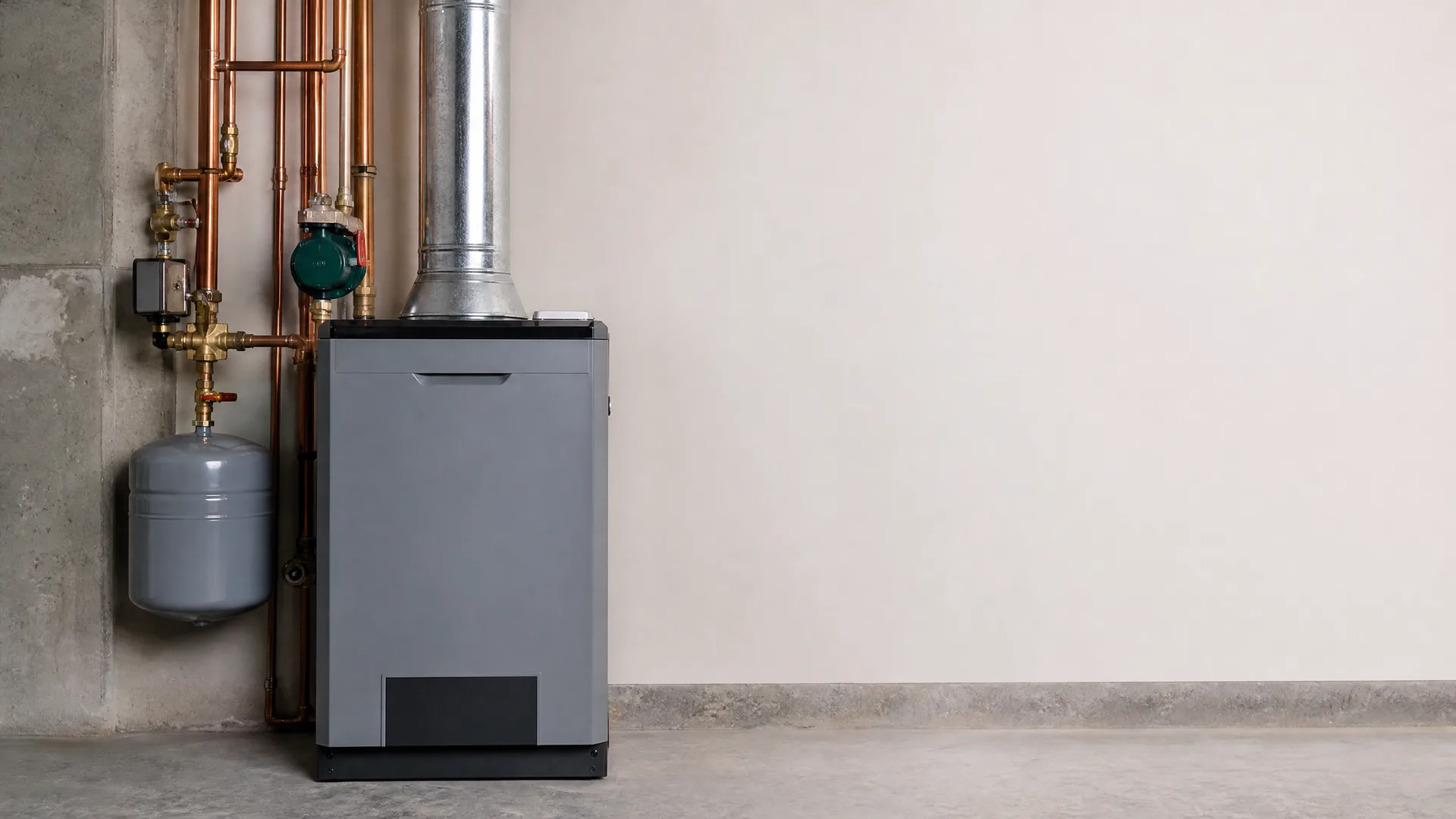
A gray floor-standing boiler with a metal flue pipe, copper piping, a circulator pump and a gray expansion tank, installed against a concrete wall.

What the valve is rated to hold

A relief valve on a residential boiler is usually set to open at 30 psi. It's not adjustable and it's not a dial you can turn down. If your system is holding pressure above that, or close to it, the valve opening is doing exactly what it's built to do. The problem is upstream of the valve, in whatever is pushing pressure that high, not in the valve itself.

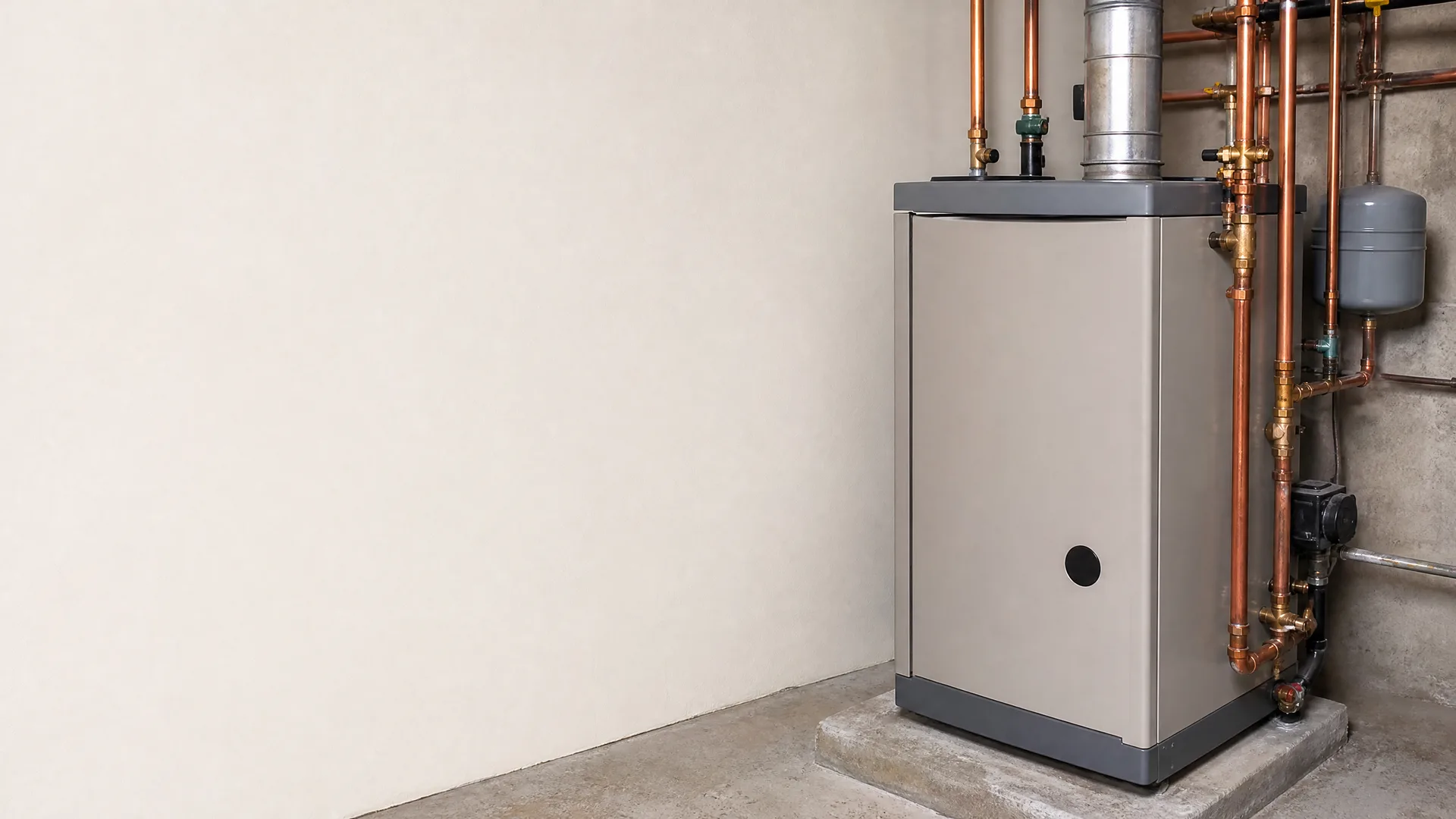
A tall grey floor-standing boiler on a concrete plinth in a corner of a room, with copper pipework, a flue, a circulator pump and an expansion vessel to its right, beside a plain cream wall.

Why oil-fired systems run hotter

Oil-fired boilers, common across Vermont, cycle water through higher temperatures than some other heat sources to get the same output. A closed heating system expands as water heats, and an expansion tank is there to absorb that. If the tank has lost its air charge or is too small for the system, there's nowhere for that expansion to go except out through the relief valve.

Is that drip under the boiler worse than it looks?

You probably noticed it first as a small puddle or a rust stain on the floor under the valve, or a thin stream running down the pipe it discharges through. Some homeowners catch it as a hiss, or the smell of hot mineral water in the utility room. It can look minor, a few drips a day, easy to wipe up and forget. But a valve that's venting is telling you the boiler is holding more pressure or heat than it should, and ignoring it doesn't make that go away. Left alone, the drip usually gets worse, the valve wears further, and the pressure problem behind it stays unfixed. With oil heat running most of the winter here, a boiler that isn't holding pressure correctly is working against itself the whole season.

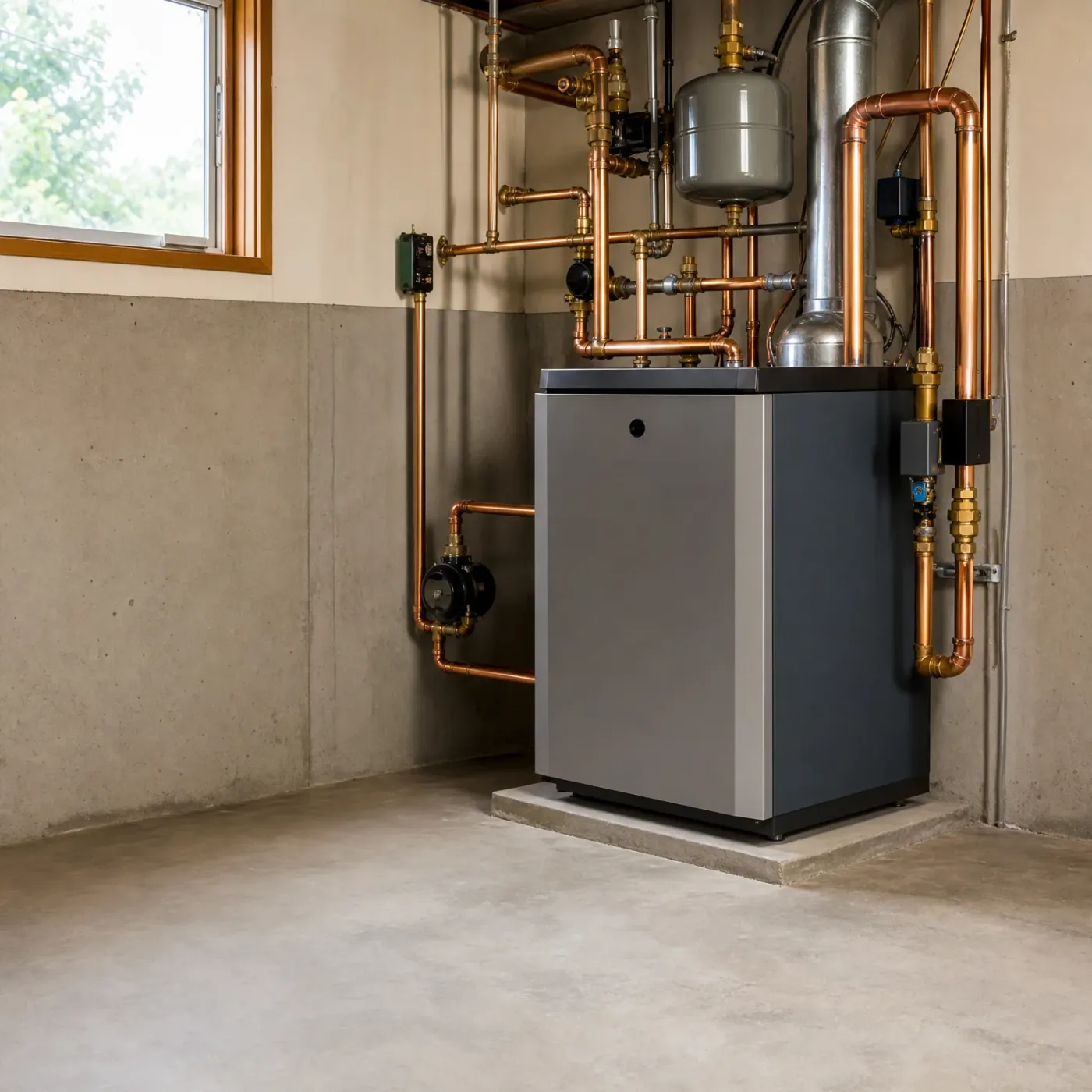
A gray floor-standing boiler on a concrete pad in a basement corner, connected to copper piping, brass valves, a circulator pump, an expansion tank, and a metal flue, with a window at upper left.

Pressure holding steady

This is what a boiler looks like when pressure stays where it belongs. The gauge sits where it should, the expansion tank is doing its job, and the relief valve stays dry. Copper lines and fittings carry heat through the house without anything forcing its way out at the seams.
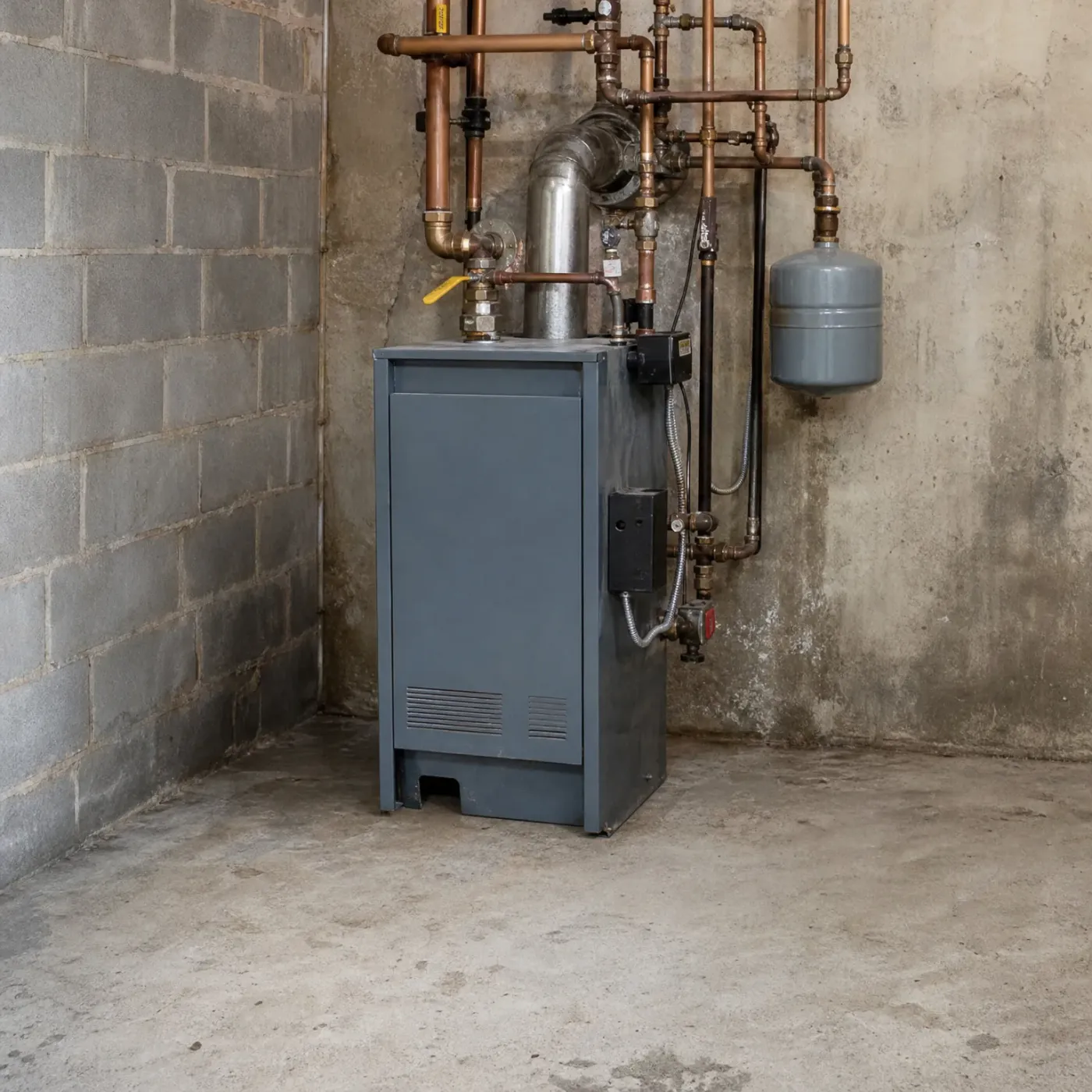

A gray floor-standing boiler in a basement corner with copper and black piping above it, a flue vent, and a gray expansion tank mounted on the concrete wall beside a concrete block wall.

Valve under strain

This is the same kind of boiler with a valve that's given up trying to reseat. Pressure or heat inside pushed past what it could hold, or wear finally caught up with it. Either way it's dripping down the pipe into the corner of the room, and it won't stop on its own.

Winter nights average 12°F statewide

On a 12°F night your boiler is running long, steady cycles to keep up, and that means more hours with pressure and temperature pushed toward the top of their range. A valve that's already worn has less room to recover between cycles before it starts weeping again.

NOAA nClimDiv 1991-2020 county normals weighted by homes

A smiling man in a gray long-sleeved shirt stands in a kitchen looking to the side, with open shelves of dishes, a white mug on the counter, a potted plant, and a view through a doorway into a living room.
A smiling bearded man in a green sweater sits at a white marble kitchen island with a mug, potted plant and bowl of fruit, in a bright white interior with open shelving and an arched doorway.
A smiling man with dark curly hair and a beard, wearing a dark green knit sweater, stands at a white marble kitchen counter with a dark blue mug, with open shelving, pendant lights and a houseplant behind him.
A smiling man in a green ribbed sweater stands behind a wooden table holding a ceramic mug of coffee in a kitchen with white subway tile, shelves of potted plants, and a bowl of fruit.

One request and it's handed off

Fill out one short form instead of calling around.

No fee to send it, and nothing to sign.

What the leak is telling you

  • A leaking relief valve means something is pushing pressure or temperature past what the valve can hold, or the valve has worn to where it can't reseat.
  • A valve rated to open at 30 psi that's weeping below that number is telling you the valve itself has failed, not the pressure.
  • Cold nights push your oil-fired boiler into longer cycles, which gives a worn valve less time to recover before it starts dripping again.
  • A puddle, a rust stain, or a hiss near the valve are all signs worth having a contractor look at before the valve fails outright.
  • Sorting out whether it's pressure, temperature, or the valve itself takes a gauge check and a look at the expansion tank, not a guess.
  • Finding a contractor who works on oil-fired boilers in Vermont, and getting them out to look at the valve, is the part this page clears out of your way.

A relief valve that keeps dripping is doing its job of reporting a problem, even if the problem turns out to be the valve itself. Pressure past 30 psi, a water temperature running too high, a waterlogged expansion tank, or a valve seat too worn to reseat all land on the floor the same way, as a puddle or a rust stain under the boiler. The only way to know which one you have is to check the gauge, check the tank, and watch what the valve does over a few cycles. Cold snaps make the job more urgent, not less, since longer burner cycles push pressure and temperature higher more often and give a worn valve less chance to dry out between drips.

None of that requires guessing on your end. It requires a contractor who works on oil-fired boilers, has a gauge in hand, and can tell you within a visit whether you're looking at a pressure problem, a temperature problem, or a valve that needs replacing. Finding that contractor is usually the slow part: searching around, calling a few numbers, explaining the drip and the rust stain all over again to each one, then waiting to see who actually answers and who can get out to look at it. Sending this page's form means you stop doing that part. Once it's in, the search is no longer yours to run, and you're waiting on a contractor instead of waiting on your own phone calls.

At dusk, a dark board-and-batten house with a standing-seam metal roof and lit entry walkway of stone pavers, with two large outdoor heat pump units on a stone-walled pad at right and trees and hills in the background.

Boiler Repair

Done looking for a boiler pro

RepairBoilerVermont
Step 1 of 2

What ZIP code is the job in?

  • A ceramic vase holding leafy green branches and a shallow wooden bowl sit on a wooden window ledge beside a sunlit window, with a cream upholstered chair and knit throw in the foreground.
    • Tell a local repair pro what your boiler is doing.
    • Describe your boiler job, and a local pro who handles it gets in touch.
  • Sunlit living room corner with a beige upholstered sofa, a round wooden side table holding a ceramic vase of olive branches, linen curtains at a window, a floor vent in the baseboard, and a woven jute rug on hardwood flooring.
    • Get the boiler repair search off your mind today.
    • Once you send the form, finding a pro is off your list.
  • A wooden side table with a single drawer holds a shallow carved wood bowl and a white ceramic vase of green eucalyptus stems, beside a window and an upholstered chair draped with a cream knit throw.
    • Skip searching for a boiler pro and answer a few questions instead.
    • One form replaces the calls you'd make to find a boiler pro.
  • Corner of a house with horizontal siding, a white-framed window and stone veneer base, beside a covered entry with wooden steps, a potted plant, mulched beds of green shrubs and a flagstone path.
    • Your request goes to one pro, not a list of companies.
    • The pro who reaches out is licensed in Vermont.








