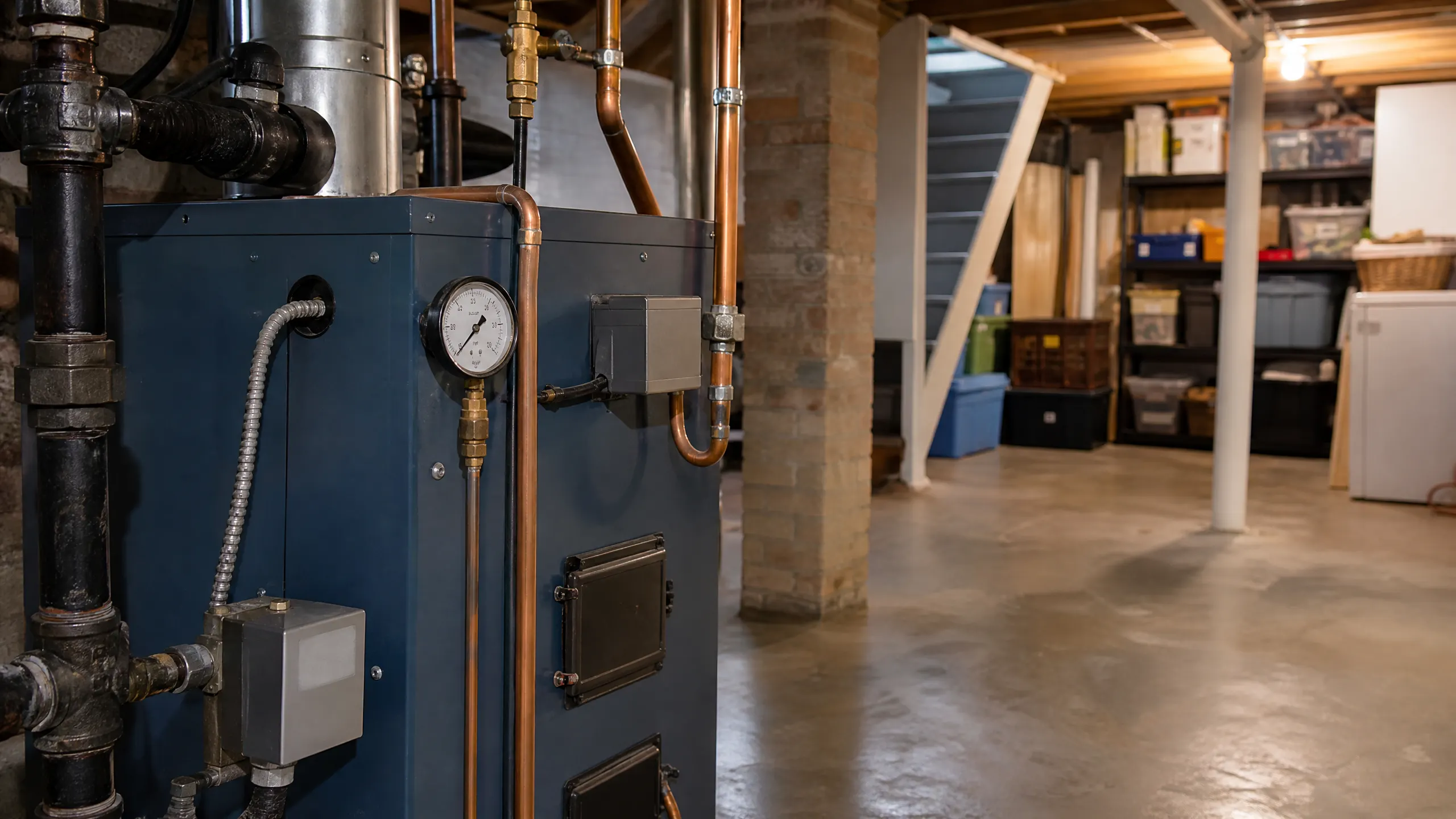




A blue boiler with copper pipes and a pressure gauge mounted on its front panel, installed in an unfinished basement used for storage.

Boiler Installation in West Burke, VT

Tell us about the job

Takes about a minute. No obligation.

New system or replacementBoilerCaledonia County, VT
Step 1 of 2

What ZIP code is the job in?

Fuel oil ran $26.53 per million Btu in Vermont last year. If your boiler runs on oil, that price lands on every gallon the burner fires, all winter. A new boiler that uses less fuel to put out the same heat keeps more of that cost out of your pocket. Ask what AFUE rating a unit carries before you settle on one, since that number tells you how much of each gallon actually turns into heat in your house.

Heat goes on in September here and runs through May.

Put in the new boiler in August, before the cold asks anything of it.

Nine months of heating a year means this boiler earns its keep

Heat runs September through May
Winter nights average 9°F
Climate zone 6A
West Burke is an old-house townHalf the homes in Caledonia County were built in 1973 or earlier.

Fuel oil or kerosene heats 46.5% of occupied homes in Caledonia County, more than any other fuel. Bottled or LP gas comes next at 23%. Utility gas barely reaches this county, at 1.2%, so a gas boiler usually means a propane tank on the property, not a line from the street. If your old boiler ran on oil, putting in another oil-fired unit means the tank, the fill pipe and the vent are already there. Switching fuels for a new installation means adding what oil heat never needed, so ask what that changes about where the new boiler can go.

The right size boiler, nothing more

Caledonia County sees its share of winter storms and wind, and 21% of Vermont households lost power for a day or more last year. None of that changes what boiler belongs in a West Burke home. A properly sized, standard-efficiency unit handles what this place asks of it. Put the money into the AFUE rating, not into oversizing for weather it was never going to see.

Find a contractor

Draining and disconnecting comes first

The old boiler has to be drained, its gas or oil line disconnected, and the flue and venting pulled before anything new goes in. If it's oil, the tank and fill line get checked too, since those may carry over to the new unit or need to come out with it.
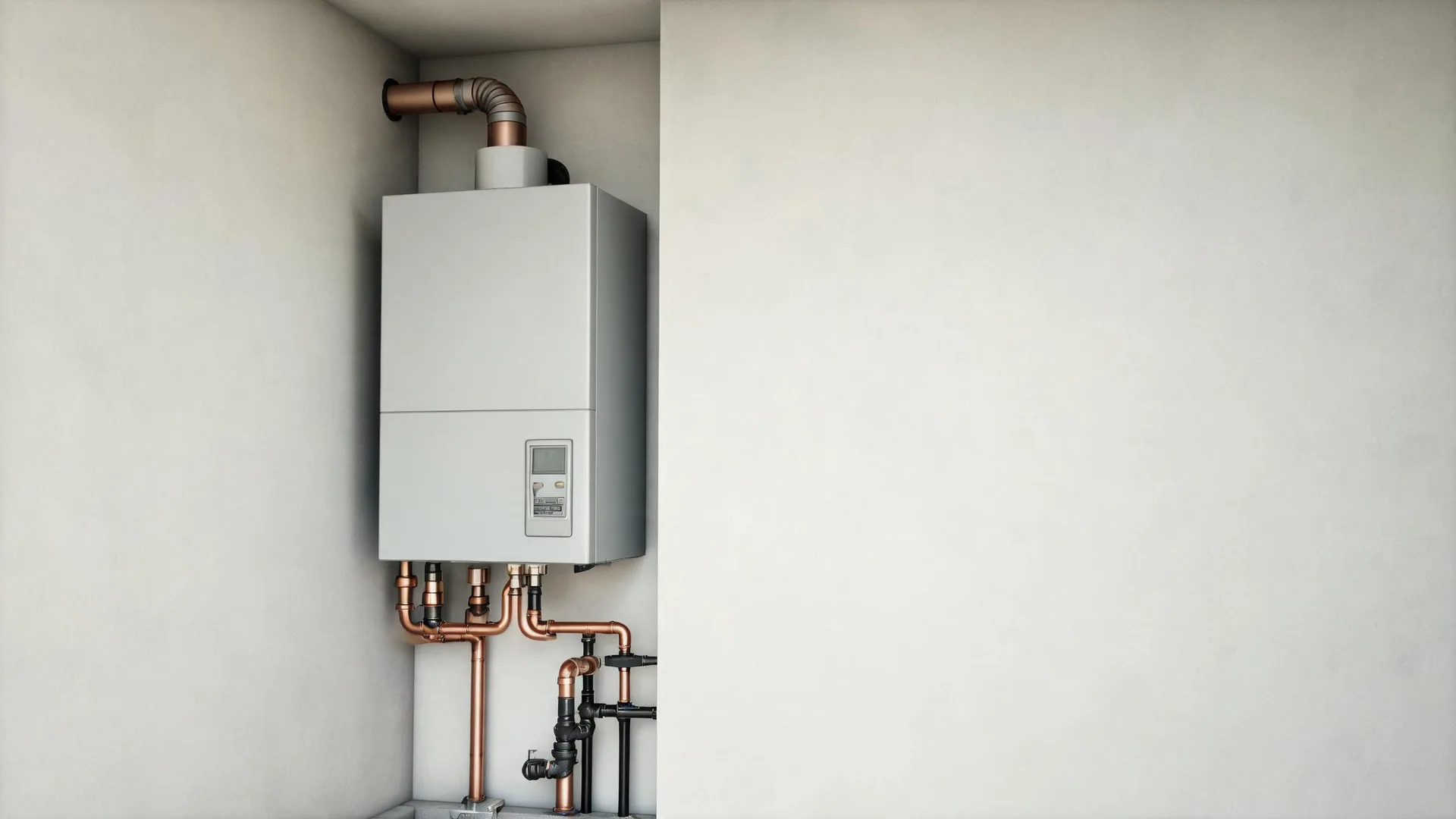
The boiler itself gets hauled off

A boiler is mostly cast iron or steel, and scrap haulers take them for the metal. What's left behind is the spot it sat in, usually bare and showing wear on the floor or wall around it, worth a look before the new one gets set in the same place.

The AFUE number on the label tells you how much of each gallon or therm turns into heat in the house instead of going out the flue. A boiler rated higher wastes less fuel doing the same job as one rated lower. That rating is measured under set conditions in a lab, so the boiler you install won't hit that exact number every day, but it tells you how the unit performs against others on the shelf next to it. Cast iron boilers and modern condensing units reach different ranges partly because of how they're built, so the rating also hints at the technology inside, not just a grade on a curve. A higher rated unit sometimes asks for different venting than an older style, so the number on the label can affect more than the fuel bill.

Installation day starts with the old boiler already gone and the space cleared. The new unit gets set in place and leveled, since a boiler that sits even isn't going to circulate water the way it should. From there the water piping, the gas or oil line, and the venting each get tied in and checked on their own before anything gets fired. The electrical gets wired in, including the thermostat and any safety controls that shut the burner down if something runs wrong. Once everything is connected, the system gets filled with water and purged of air, because trapped air in the lines causes noise and cold spots down the line. Only after that does the tech fire the boiler and watch it run through a full cycle, checking the flame, the pressure and the temperature rise before calling the job done.