Nine months of heat a year
Boilers in Vergennes run from September through May, with overnight lows averaging 12°F in December, January and February. That is most of the year asking a lot of the same system.
Takes about a minute. No obligation.
Boilers in Vergennes run from September through May, with overnight lows averaging 12°F in December, January and February. That is most of the year asking a lot of the same system.
A boiler sized for a milder climate will run longer and harder through a Vergennes winter than the spec sheet assumes. Get the sizing right for this place, not a national average, and ask what happens to heat if the power goes out during one of the area's winter storms.
A boiler too big for the house will short cycle, turning on and off instead of running a steady, even burn.
The right size comes from a heat loss calculation on the house, not from matching the old boiler or guessing by square footage.



Half the homes in Addison County were built in 1977 or earlier, half since. That split doesn't point toward a bigger boiler or a fancier one. A house built in the seventies and one built last year can both be matched by a standard unit sized to their actual heat loss. What matters is the calculation on the house in front of the installer, not the decade it went up. There's nothing about the age mix here that calls for going larger or paying more than the job needs.
Heat starts running in Addison County by September. A boiler installed in August goes in on your timeline, with time to size it right, instead of getting swapped out in a cold house while the old one is down.
Find a contractor
An installer drains the system, disconnects the gas or oil line, and pulls the old boiler along with its venting if the new one doesn't use the same path. Any asbestos-era insulation on old pipes gets handled separately, not just torn out.
A boiler is mostly cast iron or steel, and scrap yards take it. Most installers haul the old unit away as part of the job rather than leaving it for the homeowner to deal with.
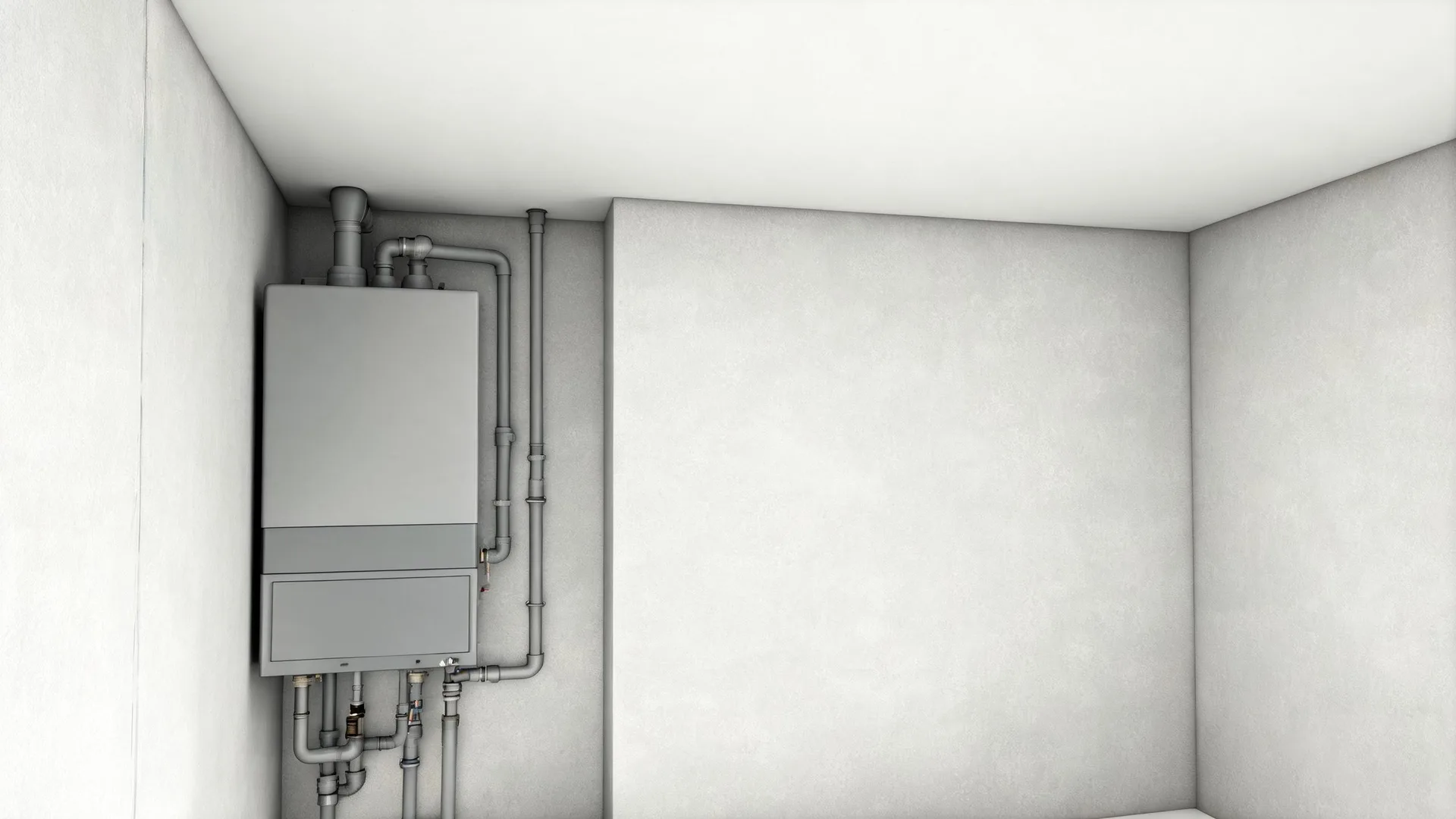
The efficiency rating on a boiler is the AFUE number, and it tells you how much of the fuel burned turns into heat in the house versus how much goes out the flue. A higher number means less fuel wasted. On a standard boiler, that heat escapes up a flue as hot gas. On a high efficiency condensing boiler, the exhaust is cooled enough to pull more heat out of it before it leaves, which is why those units vent through PVC pipe instead of a metal flue and why they produce condensate that has to drain somewhere. That rating only holds if the boiler is sized right for the house. An oversized boiler short cycles, and a boiler that short cycles never runs long enough to hit the steady state the rating assumes. The number on the label describes the machine. What you get out of it depends on the installation.
Installation day starts with the old boiler already cold, so the house has no heat while the work is underway. The installer sets the new boiler, runs or adapts the venting, and connects the gas or oil line along with the water lines feeding the heating loop. Every joint gets pressure tested before anything is fired, because a leak found after the system is closed up means opening it again. Once the piping holds pressure, the system gets filled and purged to clear air out of the lines, and the boiler is fired and brought up to temperature to check that it's venting correctly and holding steady. The controls get set last, matched to the thermostat and to how the house actually calls for heat. A job done right ends with the installer watching it run through at least one full cycle, not just lighting it and leaving.