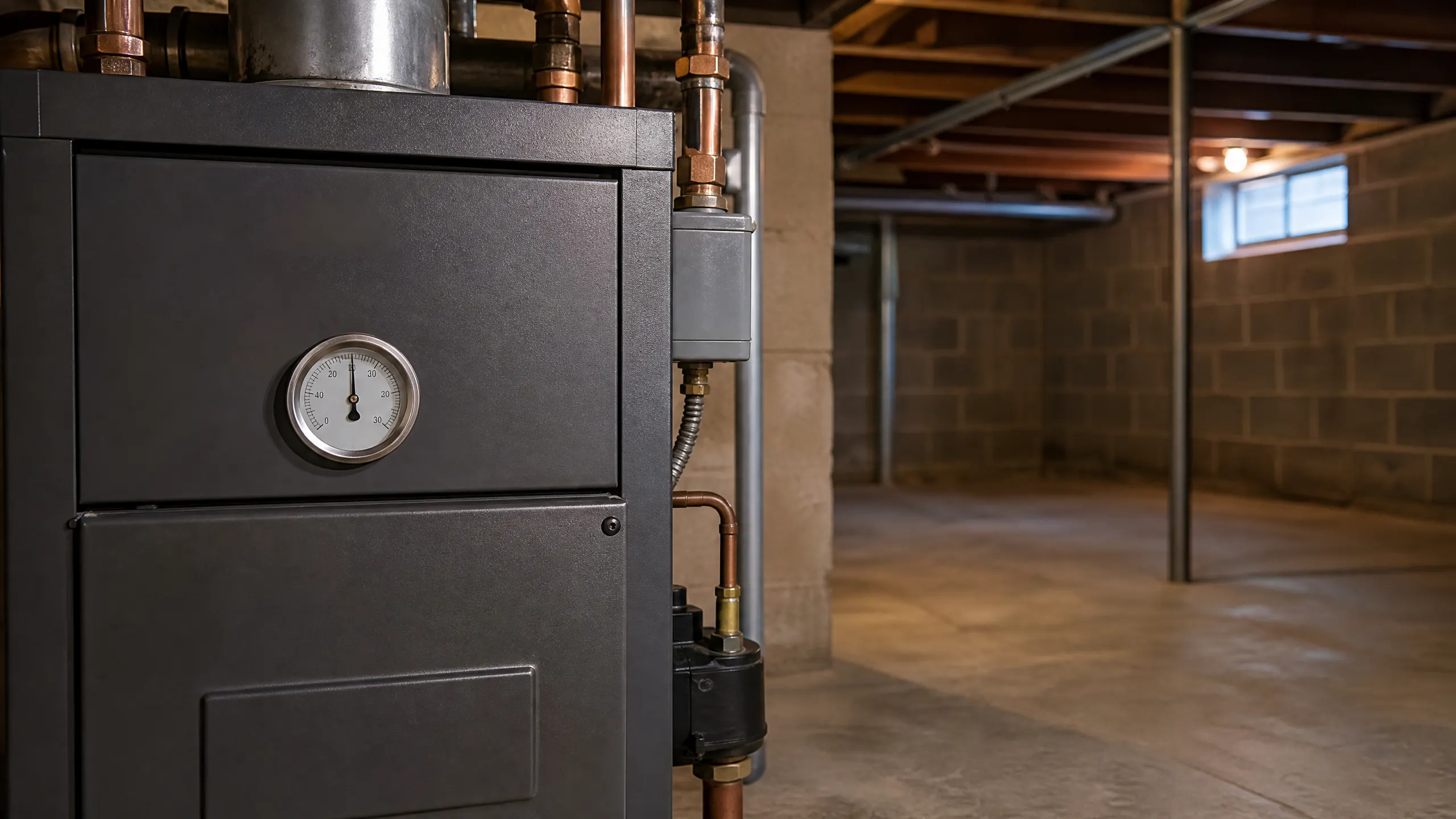




A dark metal boiler with a pressure gauge and copper pipe connections installed in an unfinished concrete basement.

Boiler Installation in St. Albans, VT

Tell us about the job

Takes about a minute. No obligation.

New system or replacementBoilerFranklin County, VT
Step 1 of 2

What ZIP code is the job in?

Fuel oil ran $26.53 per million Btu in Vermont in 2024. A boiler that wastes less of that fuel keeps more of it as heat in your house instead of out the flue. Over a Vermont winter that difference shows up on every delivery, not just one. When you're comparing boilers, ask what each one is rated to get out of that same gallon of oil. The install cost is a one-time number. What the boiler does with every gallon after that is the one you live with.

A boiler in St. Albans runs nine months a year, with overnight lows averaging 11°F in January.

Size the boiler for a January night at 11°F, not for a mild day in September.

Most homes near St. Albans heat with oil, and most boilers here replace an oil boiler already in the basement

31.1% of homes heat with fuel oil
Climate zone 6A
Heat runs September through May
Nine months of heat start in SeptemberBoilers in St. Albans run September through May. Get the new one in by August.

Ask the contractor for the AFUE rating on any boiler you're considering, oil or otherwise, and compare that number across bids before you compare the price. A higher rating means more of every gallon ends up as heat in the house instead of out the flue. If your current boiler is old, its actual output has likely dropped below its original rating, and a contractor can check that during the estimate. The rating is one line on a spec sheet, but at $26.53 per million Btu it's worth reading before you sign.

Efficiency pays here

Power costs more here, so an efficient system pays you back on every bill.

Find a contractor

The rating is measured, not promised

AFUE is tested under set conditions, the same way for every boiler, so a rating from one brand means the same thing as that rating from another. That's what makes it fair to compare across bids. Nameplate output can drift over the life of the unit, but the rating itself is a fixed, tested number from the day it leaves the factory.
Standing pilot versus electronic ignition

Some older boiler designs keep a small flame burning all the time to light the burner, which wastes fuel around the clock whether the boiler is heating or not. Modern boilers light the burner electronically, only when there's a call for heat. That difference alone can separate a lower-rated boiler from a higher-rated one on the same spec sheet.

What drives the price is mostly what the job asks of the installer, not just the box itself. Swapping one boiler for another in the same spot, using the same vent and the same pipes, is a different job than moving it, changing the vent type, or running new lines. Near-boiler piping takes time to get right, and that time is part of what you're paying for. A bigger house or one with more heating zones needs a boiler sized and piped to match, and that adds parts and labor a simpler job doesn't need. Controls matter too. A boiler with outdoor reset or several zone valves costs more to wire and set up than one running off a single thermostat. None of this shows up on the spec sheet, so ask what the quote actually includes before you compare bids side by side.

Installation day starts with the old boiler coming out, and that alone takes a few hours once the water is drained and the pipe and vent connections are opened up. The new boiler gets set in place, and the installer works through near-boiler piping, gas or oil line, venting, and the electrical connections one at a time. Venting gets checked carefully, since a boiler that drafts wrong can push combustion gases where they don't belong. Once it's hooked up, the system gets filled with water and purged of air, because trapped air in the lines causes noise and uneven heat later. The installer then fires the boiler, checks the burner and flame, and tests every zone to make sure each one calls for heat and gets it. Controls get programmed last, including any outdoor reset or zone wiring, and the installer should walk through the thermostat and basic upkeep before packing up.