





White colonial-style houses with lit windows photographed at dusk along a tree-lined street.

Boiler Installation in North Bennington, VT

Tell us about the job

Takes about a minute. No obligation.

New system or replacementBoilerBennington County, VT
Step 1 of 2

What ZIP code is the job in?

Fuel oil ran $26.53 per million Btu in Vermont in 2024. That's the state average, and it's what a boiler burns through if yours runs on oil. A new boiler that converts more of that fuel into heat for your house, instead of losing it out the flue, keeps more of each gallon working for you. If your current boiler is old, ask whoever installs the new one what efficiency rating it carries and how that compares to what you have now. The difference shows up on every delivery, not just the first one.

A boiler sized off square footage alone can be wrong for the house it's heating.

The right size comes from a heat loss calculation, room by room, not a guess at the door.

Nine months of heat means a boiler with no good month to fail in

Heat runs September through May
Winter nights average 13°F
42 winter storms from 2015 to 2024
Built for nine months of heat, not twoOvernight lows average 13°F through December, January and February here.

Most homes in Bennington County run on fuel oil or kerosene, 57.3% of them. If that's your setup now, staying with a boiler is the straightforward choice. The oil tank, the fill line, the vent, all of it is already there, built for this kind of heat. Switching fuel types means new lines run, maybe a new tank, sometimes work on the vent. Replacing what's there with another boiler skips all of that.

Efficiency pays here

Power costs more here, so an efficient system pays you back on every bill.

Find a contractor
A man in a cap, dark long-sleeved shirt and brown work pants walks up porch steps toward a gray front door, carrying a worn canvas tool bag filled with hand tools.

The boiler is one part of the cost

The unit itself is only part of what gets installed. Venting, piping to each radiator or loop, the expansion tank, the circulator pump, and the controls all have to be matched to it. A straightforward swap where the new boiler fits the existing layout costs less work than one where the old piping or venting has to be changed to suit the new unit.
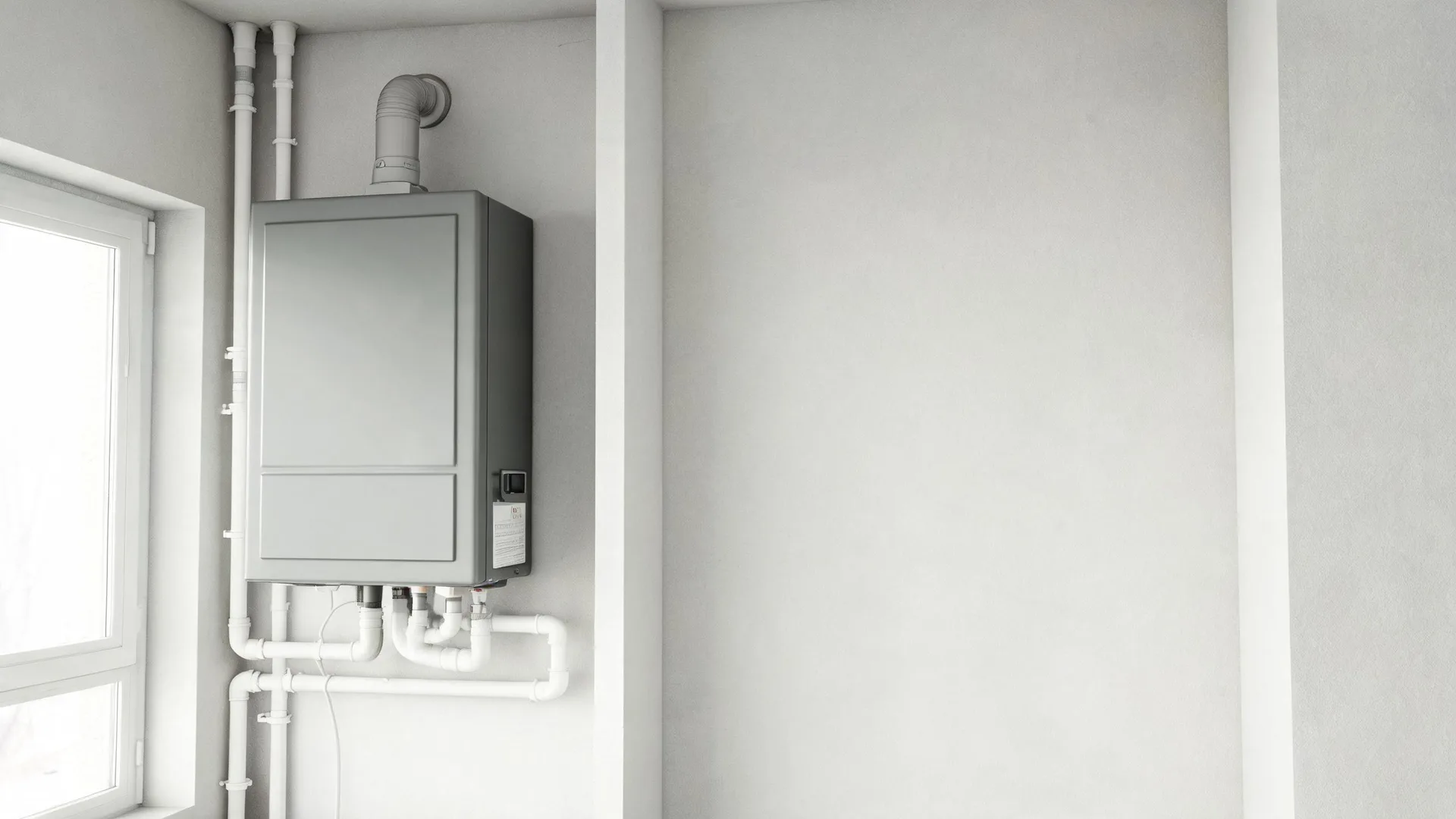
What's already there shapes the job

A boiler going in where one already ran usually reuses the chimney or vent, the gas or oil line, and the pipes running to each room. A boiler going in new, or replacing a system that worked a different way, means running some or all of that from scratch. The more that has to be built rather than reused, the more labor the install takes.

When you're comparing quotes, ask each contractor what size boiler they're proposing and how they arrived at it. A heat loss calculation looks at your walls, windows and layout, not just square footage. Contractors working from the same house should land close to the same number. If one quote comes in far larger than the others, ask why. Ask what's included in the price. The circulator pump, the expansion tank, venting and controls all have to be matched to the unit, and a quote that only lists the boiler itself may be leaving work out. Ask whether the new boiler reuses your existing chimney or vent, gas or oil line, and piping, or whether some of that has to be rebuilt. That answer explains a lot of the difference between bids. Ask what warranty covers the boiler itself and what covers the labor, since those often run on separate terms.

Installation day starts with the old boiler coming out, along with whatever piping or venting won't carry over to the new one. Before anything new goes in, the contractor drains the system and disconnects the fuel line, the vent connector, and the wiring to the controls. Setting the new boiler means getting it level and in a spot that gives enough clearance for service access later. From there it's piping to the expansion tank and circulator pump, venting run to the chimney or through the wall, and wiring tied into the thermostat. Once it's all connected, the system gets filled with water and purged of air before the boiler fires for the first time. The contractor checks for leaks, sets the controls, and lets the system run through a full heating cycle to make sure every radiator or loop is getting heat before calling the job done.