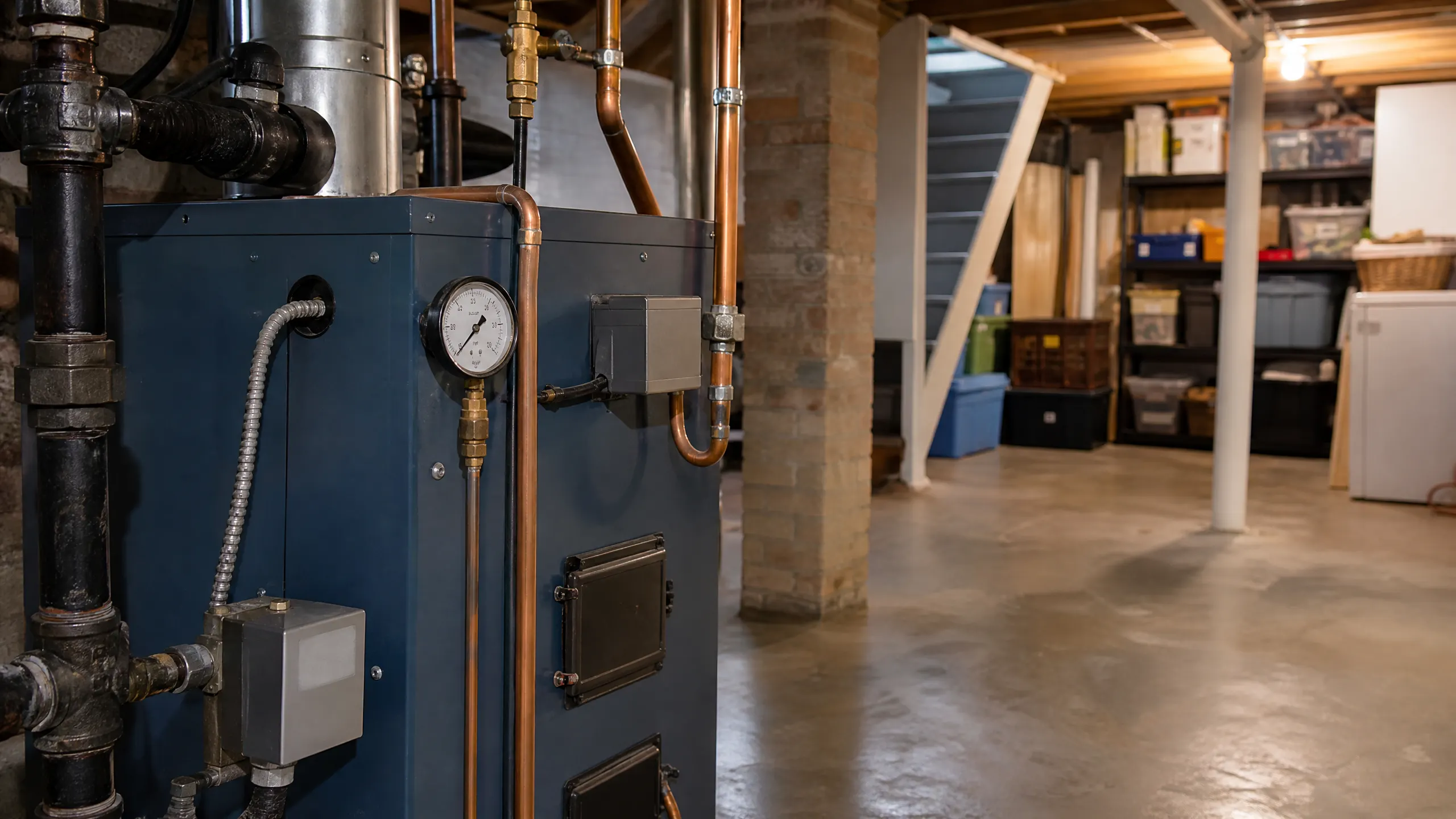




A blue boiler with copper pipes and a pressure gauge mounted on its front panel, installed in an unfinished basement used for storage.

Boiler Installation in Burlington, VT

Tell us about the job

Takes about a minute. No obligation.

New system or replacementBoilerChittenden County, VT
Step 1 of 2

What ZIP code is the job in?

Vermont homes paid $16.61 per million Btu of natural gas in 2024, one of the higher rates in the country. A boiler running on gas that costly makes efficiency worth something real on paper, not just in theory. The difference between an old boiler and a new one shows up every month it runs, and in Burlington that's most of the year. When you're comparing boilers for installation, the efficiency rating on the label is where that monthly bill starts.

Gas heats 54.5% of homes in Chittenden County, more than any other fuel.

Most boiler installations in Burlington are a gas boiler replacing another gas boiler.

Boiler installed in August is ready before September heat starts

Heat runs September through May
Winter nights average 12°F
53 winter storms from 2015 to 2024
Here, a boiler's AFUE rating is moneyGas ran $16.61 per million Btu in Vermont last year.

A boiler installed here runs from September through May, nine months of the year. Overnight lows average 12°F through December, January and February, and the boiler is what stands between that cold and a warm house. Chittenden County has seen its share of winter storms too, heavy snow and ice that can knock out power for hours. A boiler sized right for this house keeps up on the coldest nights without short cycling, and that matters more here than somewhere it only runs a few weeks a year. The right size for your house depends on the house itself, not the unit that happens to be in stock.

A new boiler here has to meet zone 6A's efficiency minimum

Any gas boiler installed in Chittenden County now has to hit 84 percent AFUE. That's the floor here, part of zone 6A's energy code, not a feature to compare between quotes. A federal tax credit is available on top of that for qualifying high-efficiency equipment. Worth asking which models on your list clear both marks.

Find a contractor

A boiler sized by square footage alone is a guess

The right size for a boiler comes from a heat loss calculation, room by room, accounting for window area, wall construction, ceiling height and how much of the house faces the wind. Houses the same size on paper can need different sized boilers once that math is done. A contractor doing this right measures your house. One who quotes a size over the phone is guessing.
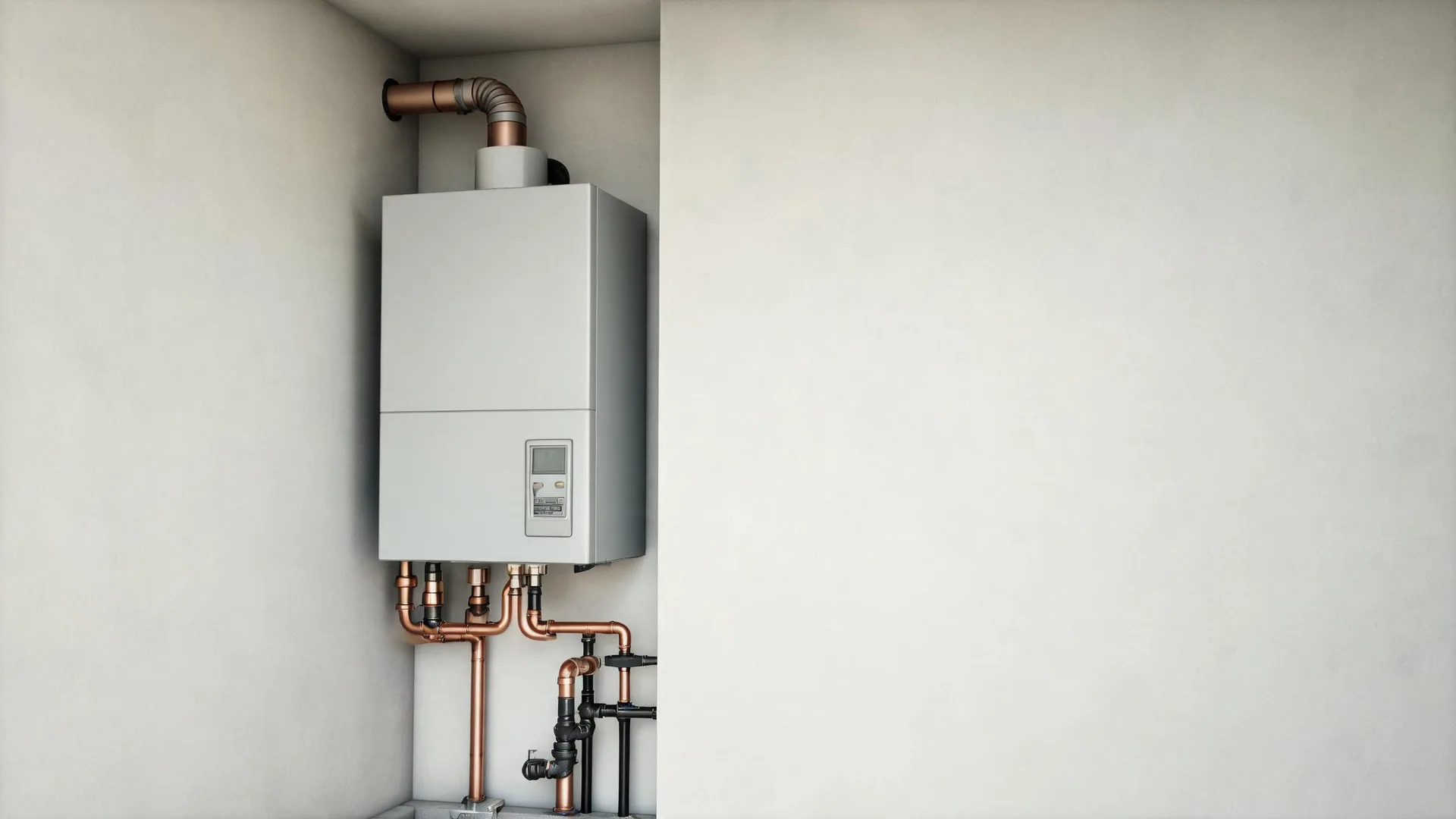
Oversized is its own problem, not a safety margin

A boiler too big for the house heats the water fast, shuts off, then fires again soon after. That short cycling wears the burner and the ignition system harder than steady runtime does, and the house never settles into an even temperature. Bigger isn't a cushion here. It's a boiler working against itself all winter.

AFUE is the share of fuel that turns into heat for the house. The rest goes out the flue as exhaust. A higher rated boiler keeps more of what it burns and sends less up the pipe, and that gap holds whether the house is calling for a little heat or running flat out on the coldest night. A boiler doesn't lose efficiency as it ages the way a car loses fuel economy. It runs near its rated AFUE for as long as it runs, as long as it gets serviced. The rating on the label is what you're buying. It isn't a number that drifts once the unit is installed.

The old boiler comes out first. The system gets drained, the gas line and flue get disconnected, and the near boiler piping comes apart before the new unit ever comes through the door. Setting the new one means leveling it, tying into the existing pipes where they line up, and remaking the joints where they don't. The flue gets run to match what that boiler needs, not just reused because it's there. Before anything fires, the gas line gets pressure tested. The system then gets filled and purged of air, because air trapped in the lines causes knocking and uneven heat once it's running. Last comes commissioning. The contractor fires the boiler, checks the gas pressure, checks the combustion, and sets the controls to answer to your thermostat. A boiler that's hooked up but never commissioned properly tends to show its problems the first cold week it works hard.