




A single-story white house with dark gray shingled roof and black window shutters, set behind a mown lawn with blurred green foliage in the foreground and large deciduous trees behind.

Boiler Installation in Bellows Falls, VT

Tell us about the job

Takes about a minute. No obligation.

New system or replacementBoilerWindham County, VT
Step 1 of 2

What ZIP code is the job in?

Oil ran $26.53 per million Btu across Vermont in 2024. That's the number a boiler's efficiency rating works against, year after year. An old boiler loses a good share of every gallon up the flue before it ever heats water. A new one with a tighter combustion system keeps more of what you pay for. At oil prices like these, that difference shows up on the bill, not just on paper.

Fuel oil heats more than half the homes in Windham County.

A boiler replacement here is usually swapping an oil boiler for another one, not switching fuels.

Older or newer, a standard boiler fits the house

Half the homes here were built by 1974
Heat runs September through May
Winter nights average 14°F
A boiler that runs nine months a yearHeat is on here from September through May, with overnight lows averaging 14°F in January.

When a boiler is on the way out, the AFUE rating on the new one is worth asking about directly. That number tells you how much of each gallon turns into heat for the house instead of going up the flue. A contractor sizing a replacement can walk through the options at different ratings and what each one means for a Bellows Falls winter. Ask them to show the rating on the nameplate, not just quote it. At $26.53 per million Btu, a few points of efficiency is the kind of difference worth settling before the install, not after the first bill.

Get a new boiler in before September

Heat starts running here in September. Replacing a boiler in August means it's sized, installed and tested before it has to carry the house through a Vermont winter, instead of getting picked under pressure on the first cold night.

Find a contractor
A man in a cap and dark jacket, seen from behind, carries a canvas tool bag up porch steps toward a dark blue front door of a gray-sided house.

The rating is a lab number, not a promise

AFUE is measured burning fuel under set conditions, not inside a particular house. A boiler rated high gets close to that number when the burner is tuned right and the venting is sized correctly. Skip either one and the real efficiency sits below what's stamped on the nameplate, no matter how good the rating looked on paper.
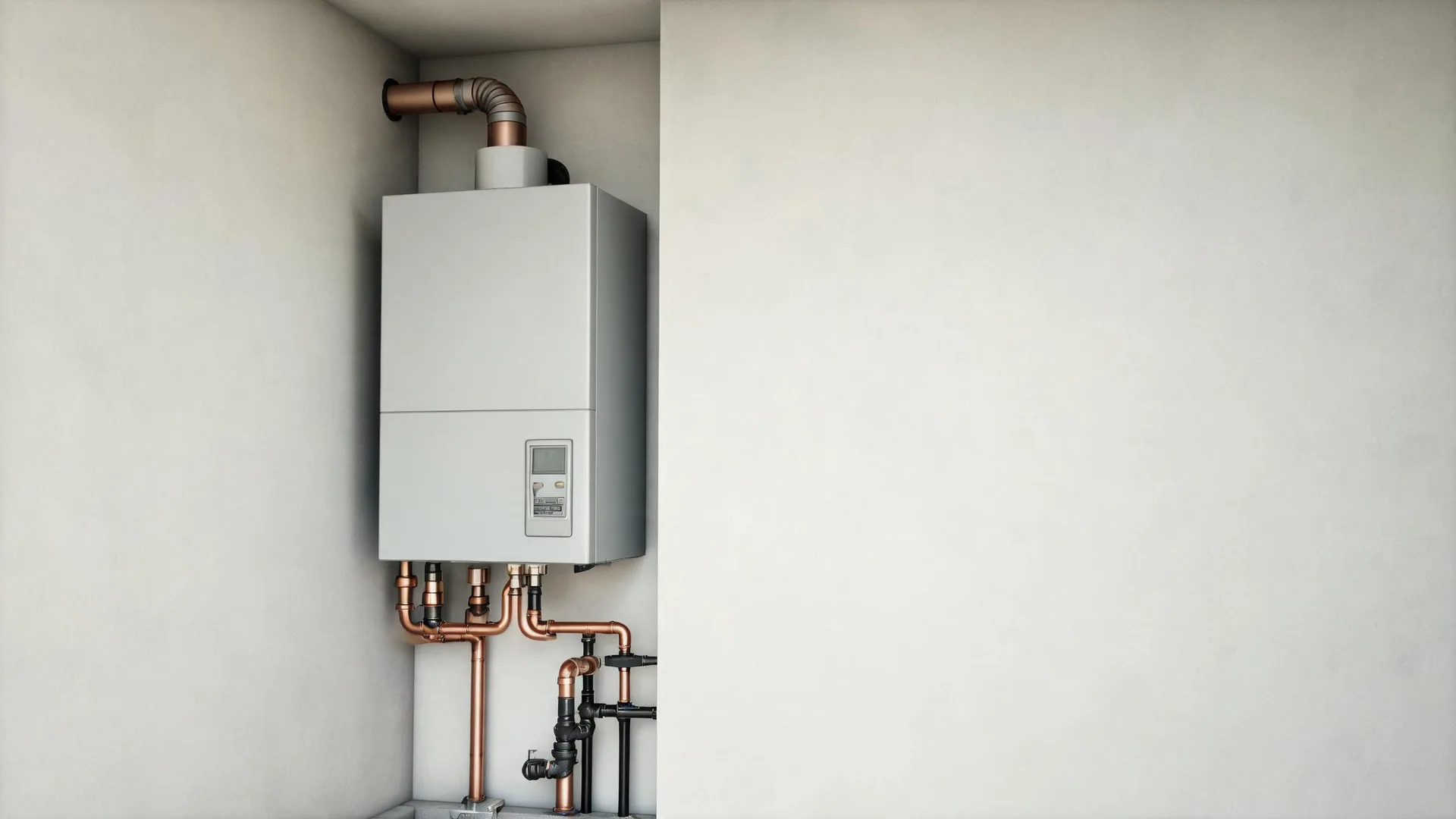
It only grades the burn, not the whole system

AFUE tells you how much of the fuel becomes heat. It says nothing about how well that heat gets to the rooms that need it. A boiler with a high rating still depends on the piping and radiators or baseboards carrying its output through the house. Those are a separate conversation from the number on the label.

What a boiler installation costs comes down to more than the unit itself. Pulling the old boiler and setting the new one is only part of the job. The piping has to match up, and if the new boiler is a different size or style than the old one, some of that piping gets reworked. Venting matters too. A more efficient boiler often vents differently than an old one, sometimes through a wall instead of a chimney, and that's a different install than swapping like for like. The controls and zoning get looked at as well, since a new boiler needs to talk to the thermostats and zone valves already in the house, or new ones go in to replace parts that won't work with it. None of this shows up until someone's actually in the basement looking at what's there.

Installation starts with the old boiler coming out, and that part takes longer than people expect. The water gets drained, the piping gets disconnected, and the unit itself has to be muscled out of the basement or mechanical room, which sometimes means cutting it apart if it came in before a doorway got narrowed or a wall went up. The new boiler goes in next, set on its pad or platform and leveled before anything gets connected. Piping and venting get tied in, then the gas or oil line gets hooked up and checked for leaks. Controls and zone wiring get connected and tested zone by zone. Before anyone leaves, the system gets fired, run through its cycle, and checked for correct pressure, temperature rise, and clean combustion. A boiler isn't left running until it's actually heating the house the way it's supposed to.