Oil runs expensive here
Vermont homes paid $26.53 per million Btu for fuel oil in 2024. A boiler that wastes heat burns through oil at that price every time it fires.
Takes about a minute. No obligation.
Vermont homes paid $26.53 per million Btu for fuel oil in 2024. A boiler that wastes heat burns through oil at that price every time it fires.
At that cost per Btu, the difference between a mid-efficiency boiler and a high-efficiency one shows up on every delivery. Ask what AFUE rating a new boiler carries before you decide.
Boilers in Alburgh start their season in September.
Get the new boiler in during August, while there's no rush to have heat working.



Fuel oil or kerosene heats 45% of the homes in Grand Isle County, the most of any fuel here. Bottled or LP gas comes next at 29.9%. Utility gas barely reaches this county at 0.8%, so a gas-fired boiler usually means running on propane instead, not the pipeline. If your old boiler burned oil, a new oil-fired boiler keeps the same delivery setup and the same tank. Switching fuels on a boiler replacement means more than swapping the unit itself, so it's worth asking a contractor what changes with the fuel line before you decide.
Alburgh falls under zone 6A, a cold and humid climate zone in the 2021 energy code. Any new boiler installed here has to be built to handle that. If it's gas-fired, the federal minimum is 84 percent AFUE. A federal tax credit is available on qualifying high-efficiency equipment, worth asking about while you're comparing units.
Find a contractor
A contractor shuts off the fuel line and water supply, drains the system, and disconnects the boiler from the near-boiler piping, the flue, and the electrical. If it's oil-fired, the tank gets disconnected too, and an abandoned tank usually needs to be pumped out and either removed or filled in place, depending on local rules.
The boiler itself gets hauled off, usually for scrap since the cast iron and copper inside have value. The chimney liner or flue connection often gets reused or needs resizing for the new unit, since a high-efficiency boiler vents differently than an old one. Existing baseboard, radiators, and piping usually stay, as long as they're in good shape.
Sizing drives most of the cost before any equipment gets picked. A boiler that's too big short cycles, wearing out its own parts faster, and one that's too small runs constantly trying to keep up. A proper heat loss calculation looks at the house itself, not just the old boiler's output, so the new one gets matched instead of guessed at. Venting matters too. A high-efficiency boiler vents through PVC pipe out a sidewall, while an older style needs a chimney, and changing from one to the other means new venting work that a straight swap wouldn't. Zoning adds to it as well. More zones means more circulator pumps and more control wiring, and that's before the boiler itself is even in the room.
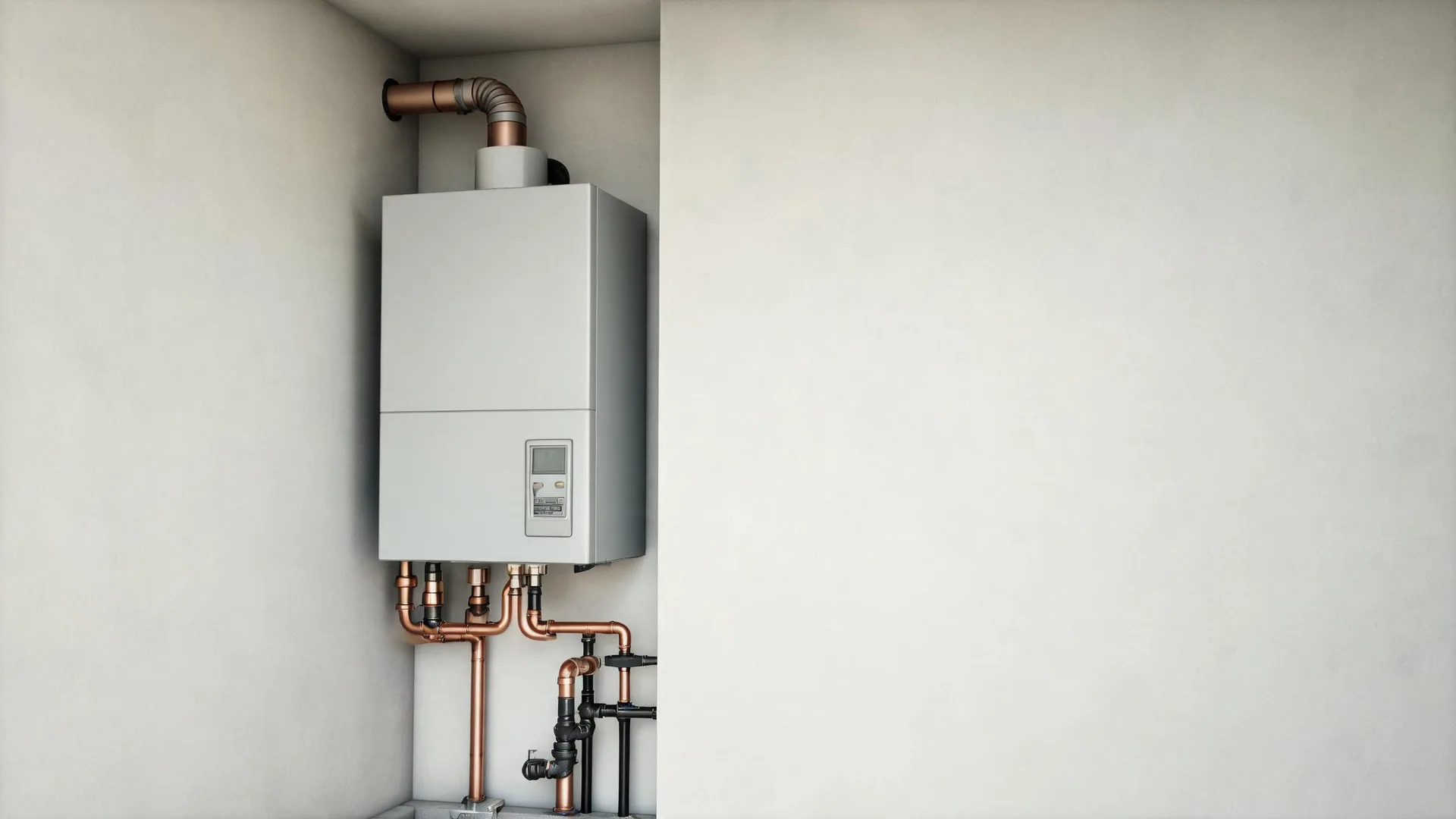
Installation day starts with the old boiler already drained and disconnected, so the work that day is building the new system in, not tearing the old one out. The boiler gets set in place and leveled first, since the piping and venting all key off that position. Near-boiler piping gets sweated or threaded together, the circulator pumps get wired in, and the flue or sidewall vent gets run and sealed. Once it's hooked to the zones, the system gets filled with water and purged of air. Trapped air in the lines causes noise and uneven heat later, so that step doesn't get rushed. The last part of the day is firing it up and checking it under real conditions. Combustion gets tested and adjusted, each zone gets checked for heat, and controls get set before anyone calls it done.