




A long white picket fence runs along a mowed grass lawn in front of a row of single-story houses with gray siding and dark shingled roofs, backed by tall leafy trees.

Furnace Repair in Woodstock, VT

Tell us about the job

Takes about a minute. No obligation.

RepairFurnace or heatingWindsor County, VT
Step 1 of 2

What ZIP code is the job in?

Furnaces in Woodstock run nine months a year, September through May. That's most of the year the burner and blower are cycling on and off. Overnight lows average 12°F through December, January and February, so the furnace isn't just running often, it's working hard to keep up on the coldest nights. That kind of use wears down an igniter or a blower motor sooner than it would somewhere milder. If yours is acting up, it's worth having someone look at what's actually causing it rather than guessing at a quick fix.

9 months
September through May, your furnace is on duty
12°F
the average winter night it heats against
18 winter storms
in ten years, the nights a failure hurts most
Isometric cutaway illustration of a house with a shingled gable roof, showing a gray furnace unit connected to overhead ductwork and a chimney flue, with simplified furniture in the rooms below.
Your furnace works hardest from November through March.

NOAA nClimDiv, 1991–2020 normals

Fuel oil ran $26.53 per million Btu in Vermont in 2024.

A furnace that's short-cycling or running too long burns through that oil for nothing.

Half the homes here were built by 1973

Half the homes here were built by 1973
Heat runs September through May
Winter nights average 12°F

August is worth a call if your furnace gave you any trouble last spring, before it has to run again. Once September comes it's on most days clear through May, and whatever was wrong before stays wrong, it just gets asked to work harder. A furnace that struggled to start before summer will have the same trouble on the first cold morning, except now the heat can't wait. Getting a weak igniter or a failing blower motor looked at in August means it gets fixed on your schedule, not on a morning you can't go without heat.

Most furnace trouble here comes down to a worn part, not the weather

Windsor County has had its share of wind and winter storms, but none of that points to anything unusual going on inside your furnace. What's wearing it down is the months it runs, not the weather outside. When an igniter or a blower motor finally gives out, it's usually the same failure a tech sees in any home that runs its furnace this hard. Worth having someone diagnose it properly rather than replacing parts and hoping.

Find a contractor
A gas furnace with attached ductwork, gas piping, and condensate lines installed in a concrete-block basement.

The wear adds up before it breaks down

Nine months of heat means an igniter or blower motor rarely fails out of nowhere. It's usually the last stretch of wear that started weeks or months back. If your furnace has been slow to start, short-cycling, or making a noise it didn't used to make, that's the part asking for a diagnosis now instead of a repair later.

A cracked heat exchanger gets worse every cycle

Heat exchangers crack from repeated expansion and contraction as the metal heats up and cools down. Once a crack starts, every cycle flexes it a little further. Left alone, a hairline crack opens wider until it's letting combustion gases leak into the air the blower moves through the house.
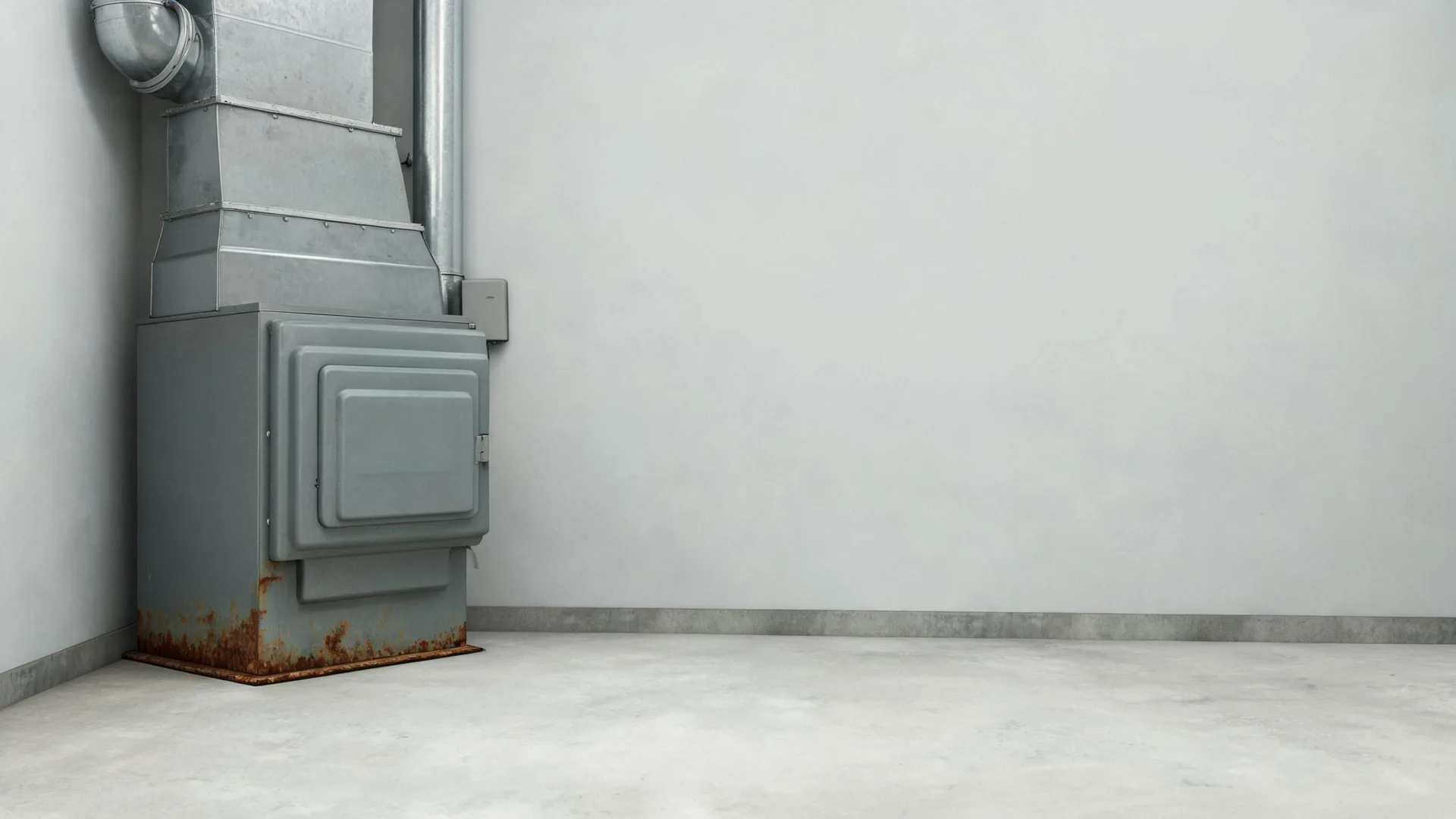
A failing limit switch will eventually let it overheat

The limit switch shuts the burner off if the furnace gets too hot, so if it's failing intermittently, it may not catch every overheat before damage is done. A furnace that keeps running past the point it should have shut down is stressing the heat exchanger and the blower motor on top of whatever's already wrong with the switch.

Before you call, check the thermostat batteries and make sure it's set to heat, not just on. Look at the air filter, if it's gray and clogged, swap it, a blocked filter starves the burner of airflow and can trip the limit switch. Go to the furnace itself and check the switch on the wall near it or on the unit, it looks like a light switch and it's easy to bump off by accident. Check that the gas valve is turned to open. If you've got a standing pilot, see if it's lit, and if it's gone out more than once, leave it to a tech rather than relighting it again. Last, check your breaker panel, a tripped breaker will kill the blower even if the burner's getting gas.

A diagnostic visit starts with questions before any panel comes off. A tech wants to know what the furnace is doing. Does it fail to light, start and stop early, run without heating, or make a noise it didn't used to make. Then the panel comes off and the tech watches a full cycle. The igniter should glow and light the burner. The flame sensor should hold the gas valve open once it does. The blower should kick in on time, not late and not early. Voltage and amperage readings on the blower motor and inducer motor show whether a part is drawing power normally or straining to keep up. If the furnace shuts off early, the tech checks the limit switch and the heat exchanger together, since trouble in one often explains trouble in the other. The point is to find which part is actually failing, not to swap parts until one happens to fix it.