




A row of similar gray-sided gabled houses behind a tall wooden picket fence, with mown grass in the foreground and large leafy trees behind.

Furnace Repair in Vergennes, VT

Tell us about the job

Takes about a minute. No obligation.

RepairFurnace or heatingAddison County, VT
Step 1 of 2

What ZIP code is the job in?

Your furnace in Vergennes runs about nine months out of the year, September through May. That's most of the calendar spent cycling on and off, heating a house against overnight lows that average 12°F through December, January and February. A furnace working that many hours wears parts down faster than one that only kicks on for a few cold snaps. Winter storms hit this area often, and the system has to push harder right when a weak igniter or a cracked heat exchanger matters most. If something's acting up now, there's usually a reason tied to that workload. Getting it looked at properly means the fix addresses what's actually wearing out, not just the symptom you noticed.

9 months
September through May, your furnace is on duty
12°F
the average winter night it heats against
55 winter storms
in ten years, the nights a failure hurts most
Isometric cutaway illustration of a small house showing a furnace unit connected to ductwork running through the interior and attic, with a chimney on the shingled roof and simple furniture in the rooms.
Your furnace works hardest from November through March.

NOAA nClimDiv, 1991–2020 normals

Furnaces in Addison County start running in September.

The weeks right after start-up are when a weak part already worn from last winter gives out.

Heat that runs September to May costs more to leave broken

Heat runs September through May
Winter nights average 12°F
55 winter storms from 2015 to 2024

Half the homes in Addison County were built in 1977 or earlier, half in 1977 or later. That split doesn't point to any one kind of furnace trouble. An older house might have the original ductwork or a system installed decades ago. A newer one might not. What breaks on a furnace breaks the same way regardless. An igniter wears out. A flame sensor gets coated. A blower motor loses strength. Age of the house isn't the thing to go by here. If your system came with the house, that's worth knowing when the contractor asks, but it won't tell you what's wrong on its own.

Get it diagnosed properly

Your furnace works hard here, and that's usually what's behind the problem. Have it diagnosed properly so the fix lasts.

Find a contractor
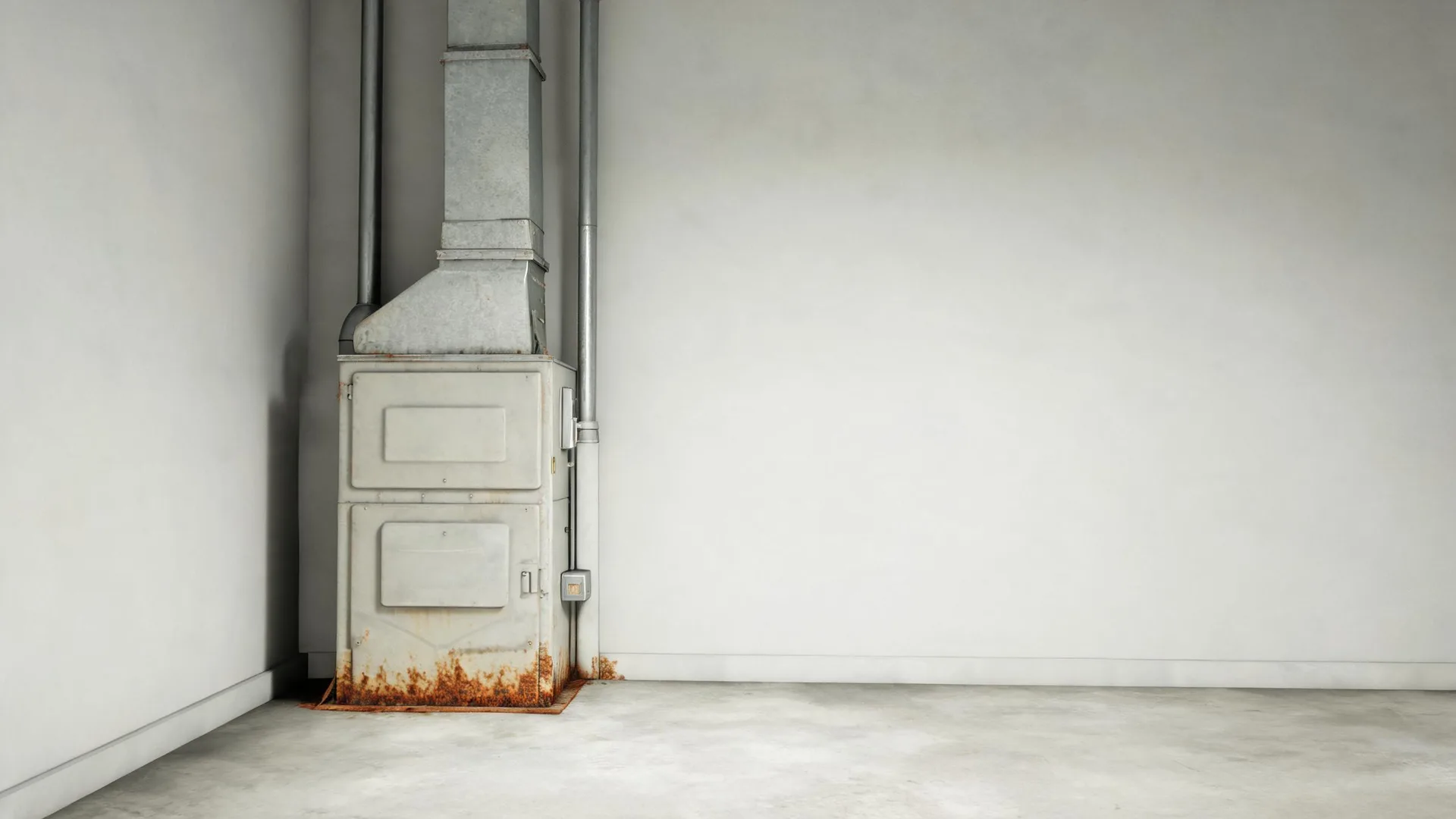
A gray gas furnace with attached ductwork and piping installed in an unfinished concrete basement.

Nine months of runtime, diagnosed right

Nine months of runtime a year is a lot of cycling on and off for any furnace. When something acts up on a system working that schedule, the cause is usually sitting behind the symptom, not in it. A contractor checking a furnace like this should be looking at what nine months of runtime does to an igniter or a heat exchanger, not just resetting what tripped. Ask what they found worn, not just what they fixed.

What you'll actually notice first

Short cycling, where the furnace fires up and shuts off again before the house warms, usually means a flame sensor or limit switch is telling it to stop early. A burner that won't light, or lights and then drops out, points to the igniter or the gas valve. Cold air blowing when it should be warm often means the pilot or igniter failed but the blower kept going anyway. Banging or popping from the ducts when it starts up is usually a sign of a dirty burner or a blower that's out of balance.
What's worth a same-day call

A burning or scorched smell that doesn't fade after the first few minutes, a yellow or flickering burner flame instead of steady blue, or soot around the furnace cabinet all point to incomplete combustion, and that's not something to wait on. Any smell of gas means stop and get it checked before running the system again. A cracked heat exchanger won't always announce itself with a smell, but if the furnace is short cycling along with any of these signs, that's reason enough to get it looked at right away rather than wait for it to get worse.

A furnace with a bad part doesn't stay at that one problem if you keep running it. A cracked heat exchanger gets worse under heat stress, and every cycle flexes the crack a little further. A flame sensor coated with residue reads weaker each time it fires, so the furnace that shut off once a day starts shutting off every hour. A blower motor losing strength has to work harder to push the same air, and that strain is what burns it out early. Ignoring a yellow flame or a short cycle doesn't give the part time to recover, because furnace parts don't recover. They wear in one direction. The longer it runs in a bad state, the more it drags healthy parts down with it, which is why a same-day issue left alone turns into a bigger repair instead of staying a small one.

Once something's clearly wrong, the next question is whether to fix it or replace it, and age is only part of that answer. A furnace built around one bad part, a failed igniter, a cracked heat exchanger, a dead control board, is usually worth repairing if the rest of the system is sound. What changes the math is a furnace that keeps coming back with a different failure every season, because that's a sign the whole system is wearing out at once, not just one piece of it. A heat exchanger crack is the one that tips the decision on its own, since that's the part that keeps the burner flame separated from the air moving through your house, and it isn't something to patch. Ask what else is showing wear nearby, not just what failed this time. A contractor who opens the cabinet and checks the exchanger, the blower, and the controls together can tell you whether you're fixing a furnace or just delaying the next breakdown.