






A bare concrete basement containing a gray gas furnace with metal ductwork and a vertical flue pipe, lit by a single hanging bulb.

Furnace Repair in Newbury, VT

Tell us about the job

Takes about a minute. No obligation.

RepairFurnace or heatingOrange County, VT
Step 1 of 2

What ZIP code is the job in?

Furnaces in Orange County run nine months out of the year, September through May. That's most of the calendar spent cycling on and off, heating a house against overnight lows that average 11°F in December, January and February. A furnace built for occasional use somewhere warmer would have an easier life. This one doesn't get that. The igniter, the blower motor, the pressure switch, all of them see more hours and harder conditions here than in most of the country, which is usually why something starts acting up sooner than you'd expect.

9 months
September through May, your furnace is on duty
11°F
the average winter night it heats against
38 winter storms
in ten years, the nights a failure hurts most
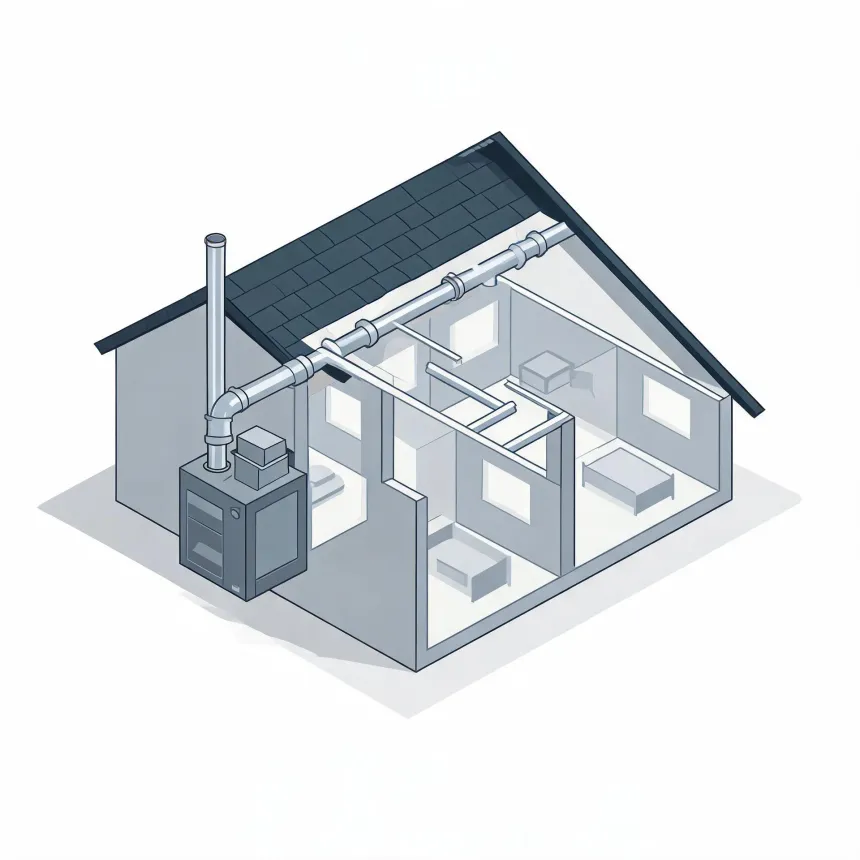
Isometric cutaway illustration of a small house showing interior rooms, ductwork running through the attic, and a furnace unit with a vertical flue pipe on the exterior wall.
Your furnace works hardest from November through March.

NOAA nClimDiv, 1991–2020 normals

A furnace acting up doesn't tell you what's wrong before someone's hands are on it.

A tech checks the igniter, the flame sensor, the pressure switch and the flue before touching anything else.

Half these homes are old enough to explain most furnace calls

Half the homes here were built by 1978
Heat runs September through May
Winter nights average 11°F
Nine months of heat, starting in SeptemberFurnaces in Orange County run September through May. August is the last easy month to check one.

A lot of homes up here still run on oil heat, and Vermont oil ran $26.53 per million Btu in 2024. That's not a cheap fuel to begin with, so a furnace that's short-cycling or running longer than it should is burning through it fast. A clogged nozzle, a dirty filter, a bad limit switch, any of these make the furnace work harder to put out the same heat. You end up paying oil prices for heat that's leaking up the flue or just not making it into the house. Worth getting looked at before another cold stretch runs the bill up further.

A furnace running since September is due a real diagnosis

With this much runtime behind it, a furnace acting up is worth having someone actually check rather than guess at. Get the cause found now and the fix holds for the rest of the season.

Find a contractor
A person in a dark long-sleeve shirt and tan work pants, seen from behind, carries a canvas tool bag while stepping up porch stairs toward a dark blue front door.
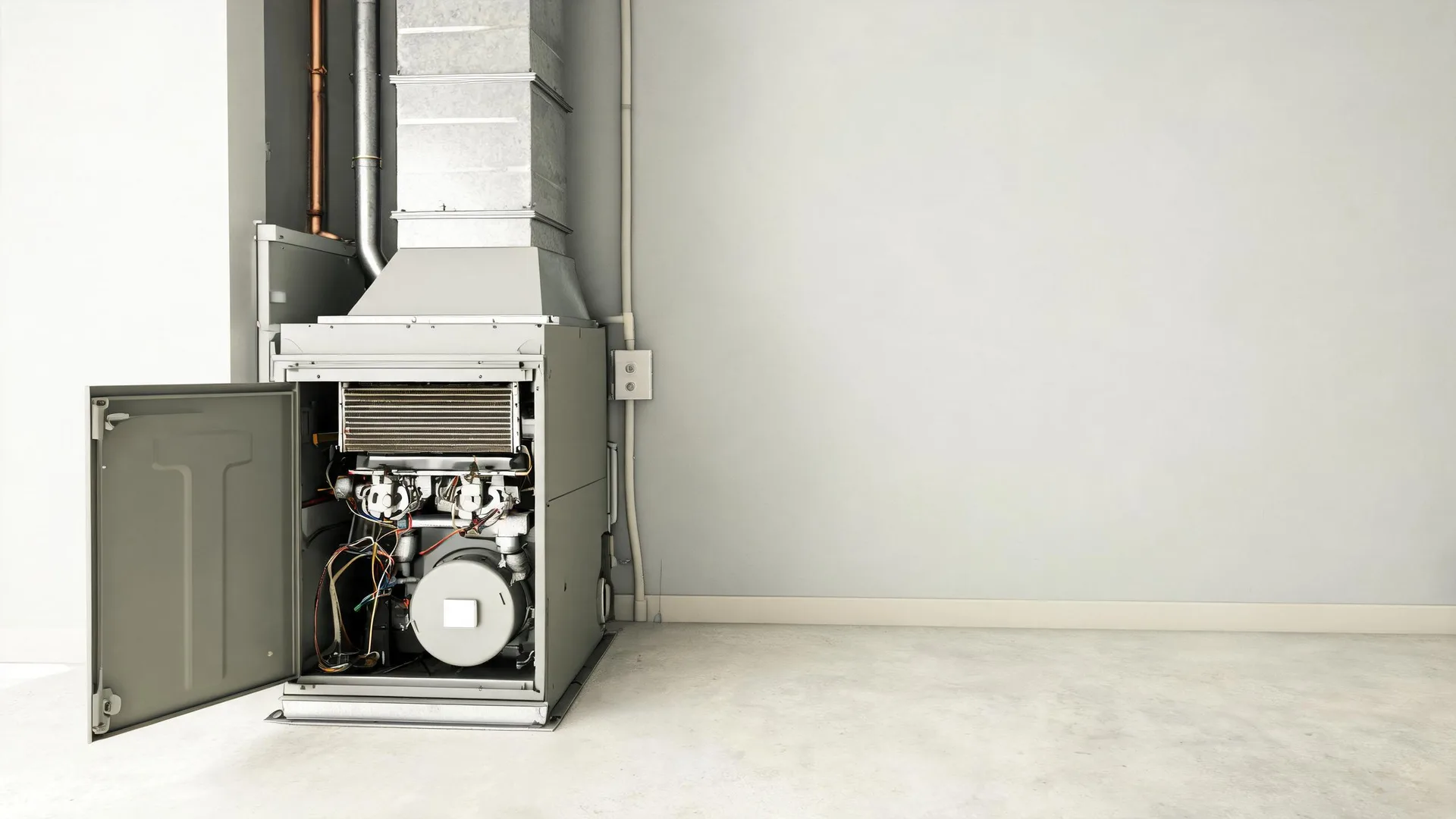
A gray gas furnace with attached ductwork and piping installed in an unfinished concrete basement.

The parts that wear out first

Most failures come down to a handful of parts, and they fail for the same reason every time. The igniter switches on and off every cycle, thousands of times a season, and eventually it just stops getting hot enough to light the gas. The flame sensor picks up a coating of soot over the months and starts reporting no flame even when one's burning right in front of it, so the furnace shuts itself down as a safety measure. A pressure switch gets stuck from dust or debris and the furnace won't start at all, reading it as a blocked flue. Blower motor bearings wear down from the constant cycling, and you'll usually hear that before the motor quits for good. None of this points to anything done wrong. It's what happens to moving parts that open, close, spark and spin all season long.

The furnace won't stop running, or won't start at all

A furnace that short-cycles, turning on and off in quick bursts instead of settling into a steady run, is usually reacting to a safety switch tripping somewhere in the sequence. One that won't fire up at all, just clicking without catching, is often the igniter failing to get hot enough or a flame sensor reporting no flame. Either way the furnace is telling you something specific, not just acting old.
What you hear matters as much as what you don't

A grinding or squealing sound points to blower motor bearings on their way out, and that's worth catching before the motor seizes and stops moving air altogether. A furnace that's gone quiet when it should be running, no click, no hum, nothing, has usually lost power to the control board or tripped a limit switch. Either one is a reason to get it looked at before the next cold stretch, not after.

Before anyone comes out, there's a few things worth checking yourself. Look at the thermostat first, make sure it's set to heat and the set temperature is actually above room temperature. Check the furnace switch, the one that looks like a light switch on or near the unit, and make sure it hasn't been bumped off. Go to the breaker panel and see if the furnace breaker tripped. If it's an older unit with a standing pilot, check whether the pilot light is actually lit. Replace the air filter if it's visibly dirty, a clogged filter can choke off airflow enough to trip a safety switch and shut the whole thing down. None of this involves opening the cabinet or touching the burner assembly. If the furnace still won't run after that, the problem is past what you can see from outside the unit.

A furnace worth fixing is usually one failing in a single spot, an igniter, a flame sensor, a pressure switch, while the heat exchanger and the rest of the cabinet are still sound. That's most calls. One part quits, a tech replaces it, the furnace runs like it did before. Replacement starts looking like the better answer when the failures stack up, one part fixed this year and another going next, because that pattern usually means the whole unit is aging out at once, not just the part in front of you. The other thing that matters is the heat exchanger itself. That's the one component that isn't really repaired, since a cracked exchanger means the whole furnace gets replaced rather than patched. Short of that, most of what breaks on a furnace is a part, not a verdict on the furnace.