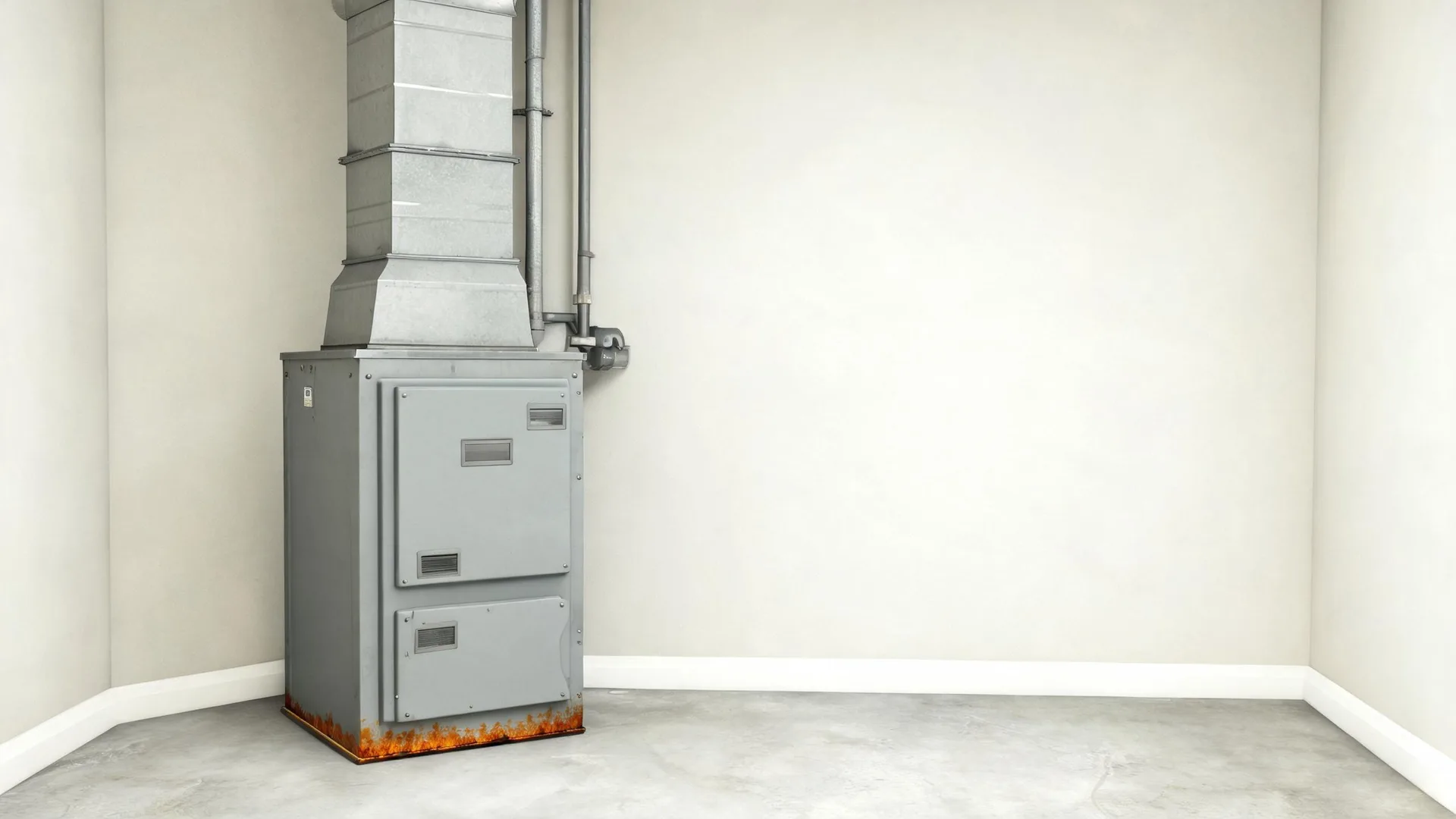
Nine months of heat a year
Furnaces in Lamoille County run from September through May. That's most of the year asking a lot of the igniter, the blower motor, and every moving part in between.
Takes about a minute. No obligation.
Furnaces in Lamoille County run from September through May. That's most of the year asking a lot of the igniter, the blower motor, and every moving part in between.
Overnight lows average 10°F through December, January and February. On those nights your furnace runs longer and harder to hold temperature, and that's when a worn part finally gives out.

NOAA nClimDiv, 1991–2020 normals
Vermont homes paid $26.53 per million Btu for fuel oil in 2024.
A furnace that's short-cycling or running constantly burns through that faster, so a repair put off here costs you more each month it waits.




Before you call anyone, check the thermostat is set to heat and the temperature set above room temperature, not just display lit. Go to the furnace and look for a light in the little window on the control board. A steady light usually means it's fine. A flashing light is a code, and most panels have a sticker inside the door that tells you what the pattern means. Check that the filter isn't packed with dust. A clogged filter starves the furnace of airflow and can cause it to shut itself off as a safety measure. Last, check the breaker for the furnace hasn't tripped, and if you have a gas furnace, that the gas valve on the line is turned to on. If the furnace runs but the air coming out feels cool for more than a few minutes, or you smell gas anywhere near it, stop checking and get someone out.
When a part finally gives out after nine months of steady work, guessing at the fix rarely holds. Have it looked at properly so whatever's repaired now gets you through the rest of the season.
Find a contractor
If your furnace came with the house, there's a good chance it's not that old. A furnace built within the last couple decades still has plenty of working life in it, and a repair now is money spent on a system worth keeping. Worth asking when yours was installed before you assume the worst.
A furnace that fires up, runs a few minutes, then quits and starts again is stressing the igniter and the blower motor every time it cycles. Each start is a small shock to those parts. Keep that pattern going and you're looking at a failed igniter or a blower that won't start at all.
If the furnace runs but what comes out the vents feels lukewarm or cold, something between the burner and the ductwork isn't transferring heat right. It could be a dirty flame sensor, a failing igniter, or a blower spinning at the wrong speed. None of those get better by waiting.
A cracked heat exchanger is the clearest case of a small problem turning into a dangerous one if the furnace keeps running. Once it cracks, every cycle flexes that metal further, and the crack opens wider each time it heats and cools. Left alone, it goes from a hairline gap to something that lets exhaust gas mix with the air your furnace blows through the house. A failing igniter works the same way on a smaller scale. One that's weak might still light the burner most of the time, but it's drawing more current to do it, and that shortens what's left of its life with every start. A blower motor running on a bad bearing will keep turning right up until it seizes, and it usually picks the coldest night to do it. None of these fail faster because you ran the furnace once more. They fail faster because each cycle adds to damage that's already started, and that damage doesn't undo itself when the furnace shuts off.
A diagnostic visit starts before any panel comes off. A tech asks what the furnace is doing, when it started, and whether anything changed right before, a thermostat swap, a filter change, a breaker that tripped. Then it's the flame itself. A gas furnace should burn blue and steady, with no yellow tipping or flickering. Readings come next. Static pressure in the ducts. Temperature rise across the heat exchanger. Amp draw on the blower motor. Each one points somewhere specific, a restricted return, a weak igniter, a motor pulling more current than it should. The gas valve and venting get checked too, since a furnace can run fine and still not be venting exhaust the way it needs to. By the end the tech isn't guessing. They've found the one thing actually causing this.