Nine months of heat
Furnaces in Washington County run from September through May. That's most of the year, not just the cold snaps around January.
Takes about a minute. No obligation.
Furnaces in Washington County run from September through May. That's most of the year, not just the cold snaps around January.
Winter overnight lows here average 10°F. A furnace built to cycle on and off all day instead runs long stretches to hold the house steady, and that strain is usually what's behind a breakdown.
NOAA nClimDiv, 1991–2020 normals
A cracked heat exchanger gets worse every hour the furnace keeps firing.
Shutting it down when something smells off is what keeps a repair from turning into a full replacement.



August is when a lot of these furnaces fire up for the first time since spring. That first run finds whatever was already wearing thin, a failing igniter, a cracked heat exchanger, a blower motor that was starting to go. By September the furnace is running every day, and it keeps running that way clear through May, so a weak part doesn't get a quiet stretch to fail in. It fails during the months it's needed most. Getting a furnace looked at in August, before the season leans on it, is what catches that part while it's still a repair and not a breakdown midwinter.
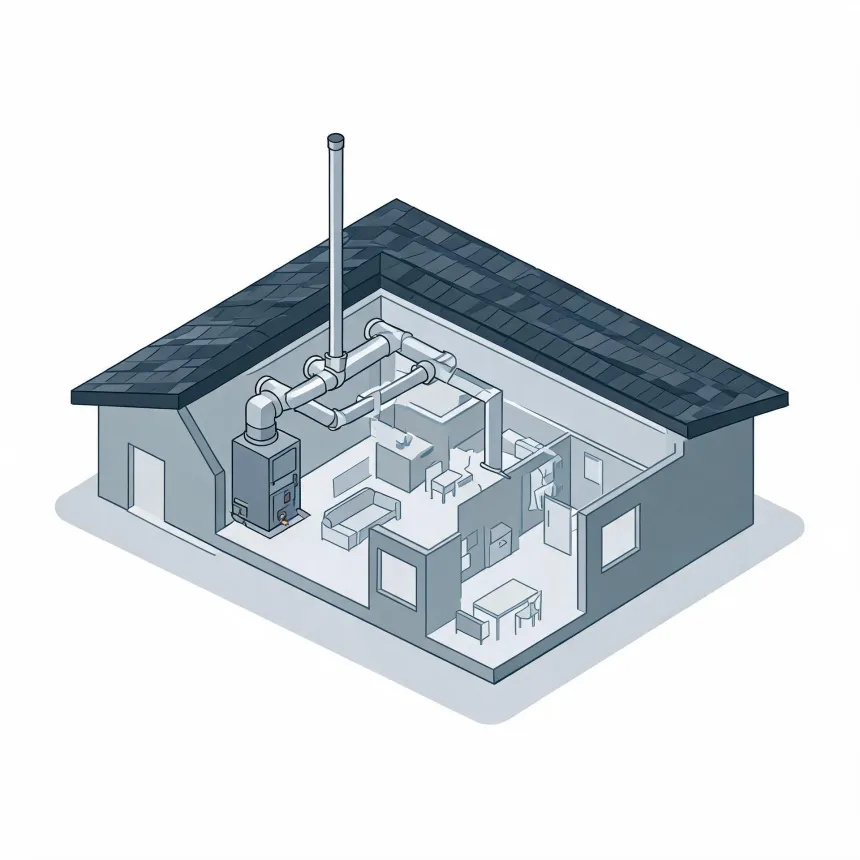
Half the homes in Washington County were built in 1973 or earlier. If your furnace came with the house, it could be carrying that same age. A repair can still be the right call, but it's worth asking the contractor how much life is left in the unit before putting money into it.
Find a contractorNine months of running long stretches instead of short cycles wears parts down faster than the calendar suggests. If this furnace is struggling, that's the likely cause, not a one-time fluke. A technician can tell you which part is worn and whether it's still worth fixing before it fails outright.
Check that the thermostat is set to heat and the setting is above room temperature. Look at the furnace switch, the one that looks like a light switch near the unit, and make sure it's on. Check the filter and swap it if it's gray or clogged, a blocked filter starves the burner of air. If the furnace has a standing pilot, see if it's lit. Check the breaker for the furnace hasn't tripped. These take a minute and rule out the simplest causes.
Don't take the burner compartment apart or reach past the access panel into the blower. Don't try to relight a pilot if you smell gas first, get out and let a technician handle it. If the furnace is making a burning smell, shutting off, or tripping the breaker repeatedly, turn it off at the switch and wait for a technician instead of resetting it again. Repeated resets on a real fault just mean it fails again, sometimes worse.
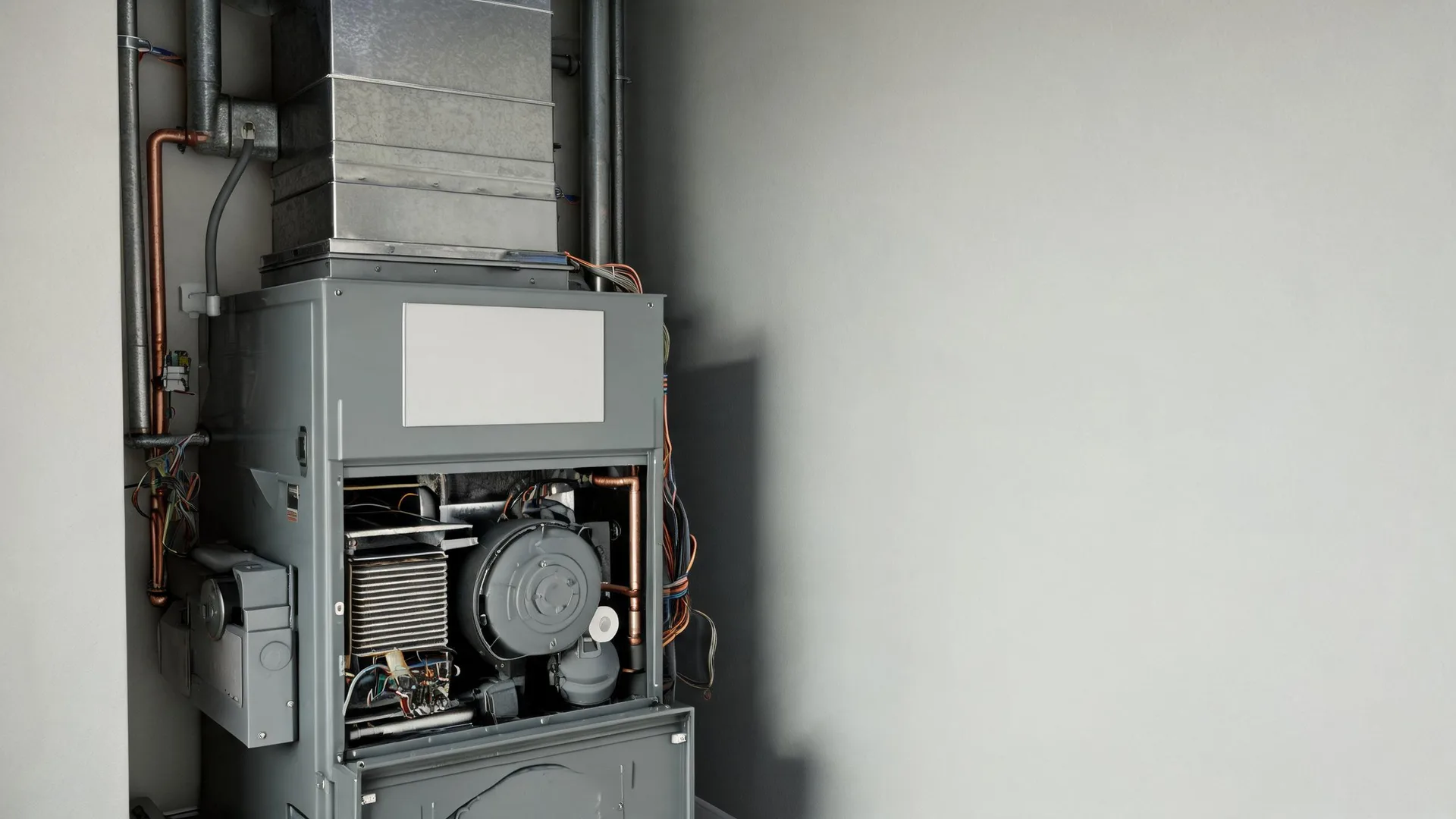
Most furnace failures trace back to a handful of parts, and they tend to go in the same order every time. The igniter is usually first. It heats up and cools down every time the furnace cycles, and that repeated stress is what wears it out, not old age sitting idle. A flame sensor goes next in a lot of cases, coated over with residue until it can't tell the control board the burner is lit, so the furnace shuts itself down as a safety measure. Blower motors fail from simple wear, the bearings give out after enough running hours. A cracked heat exchanger is the one that matters most, because it's a safety issue and not just a comfort one, and it's usually found during a routine check rather than announced by any obvious symptom. None of these fail because a furnace is old. They fail because a worn part finally reaches its limit.
A diagnostic visit starts with questions, not tools. The technician asks what the furnace was doing before it quit, a burning smell, short cycling, no heat at all, because that points to where to look first. Then the panels come off and the burner and heat exchanger get a visual check for scorch marks, rust, or a crack. The flame sensor usually gets pulled and cleaned or tested, since a dirty one can mimic a lot of other problems. The blower motor's amp draw gets checked against its rating, which catches a motor straining before it seizes outright. The gas valve, pressure switch, and igniter get tested in sequence, because the furnace fires in a specific order and a fault anywhere in that order stops the whole thing from lighting. By the end the technician knows which part is failing and whether the furnace is safe to run until the part comes in.