





A two-story red brick house with black shutters and a dark roof sits on a mown lawn behind a dry-stacked stone retaining wall, framed by large deciduous trees under an overcast sky.

Furnace Installation in Newport, VT

Tell us about the job

Takes about a minute. No obligation.

New system or replacementFurnace or heatingOrleans County, VT
Step 1 of 2

What ZIP code is the job in?

Oil ran $26.53 per million Btu in Vermont last year. That number is the same whether your furnace is old and straining or new and tuned to burn clean. A furnace losing heat up the flue burns through more oil to hit the same temperature on your thermostat, and you pay for every bit of it. The installer sizing your new system should walk you through the AFUE rating and what it means for an oil furnace running through a Newport winter. Get that rating right and it shows up on your fuel bill for as long as the furnace runs.

9 months
September through May, your furnace is on duty
9°F
the average winter night it heats against
80% AFUE
the federal minimum any new unit must meet
Isometric cutaway illustration of a small gabled house showing a furnace with flue pipe and ductwork connecting to interior rooms containing a sofa, bed, and cabinets.
Your furnace works hardest from November through March.

NOAA nClimDiv, 1991–2020 normals

More than half the homes in Orleans County heat with fuel oil.

An oil furnace replacement here is the common job, not a special case.

Nine months of heat a year. Get the new furnace in before September.

Heat runs September through May
Winter nights average 9°F
Climate zone 6A

Ask the installer for the AFUE number in writing before you sign anything, not just the brand and model. Two furnaces can carry the same price tag and burn oil at different rates once they're hooked up to your ducts. If the furnace you're replacing has been running a long time, a new one with a higher AFUE rating will burn less oil to hit the same temperature on your thermostat. That difference shows up on every fuel bill for as long as the new furnace runs.

A standard furnace, sized right, is all this job needs

Half the homes in Orleans County were built in 1978 or earlier, half in 1978 or later. Either way, a standard size and a standard AFUE rating is the right call here. Nothing about this county calls for bigger equipment or a special system. Get the sizing and the AFUE rating right and the furnace is set for as long as it runs.

Find a contractor
A man in a dark shirt and khaki pants, seen from behind, carries a worn leather bag as he climbs wooden porch steps toward a dark front door, with a potted shrub beside the entry.
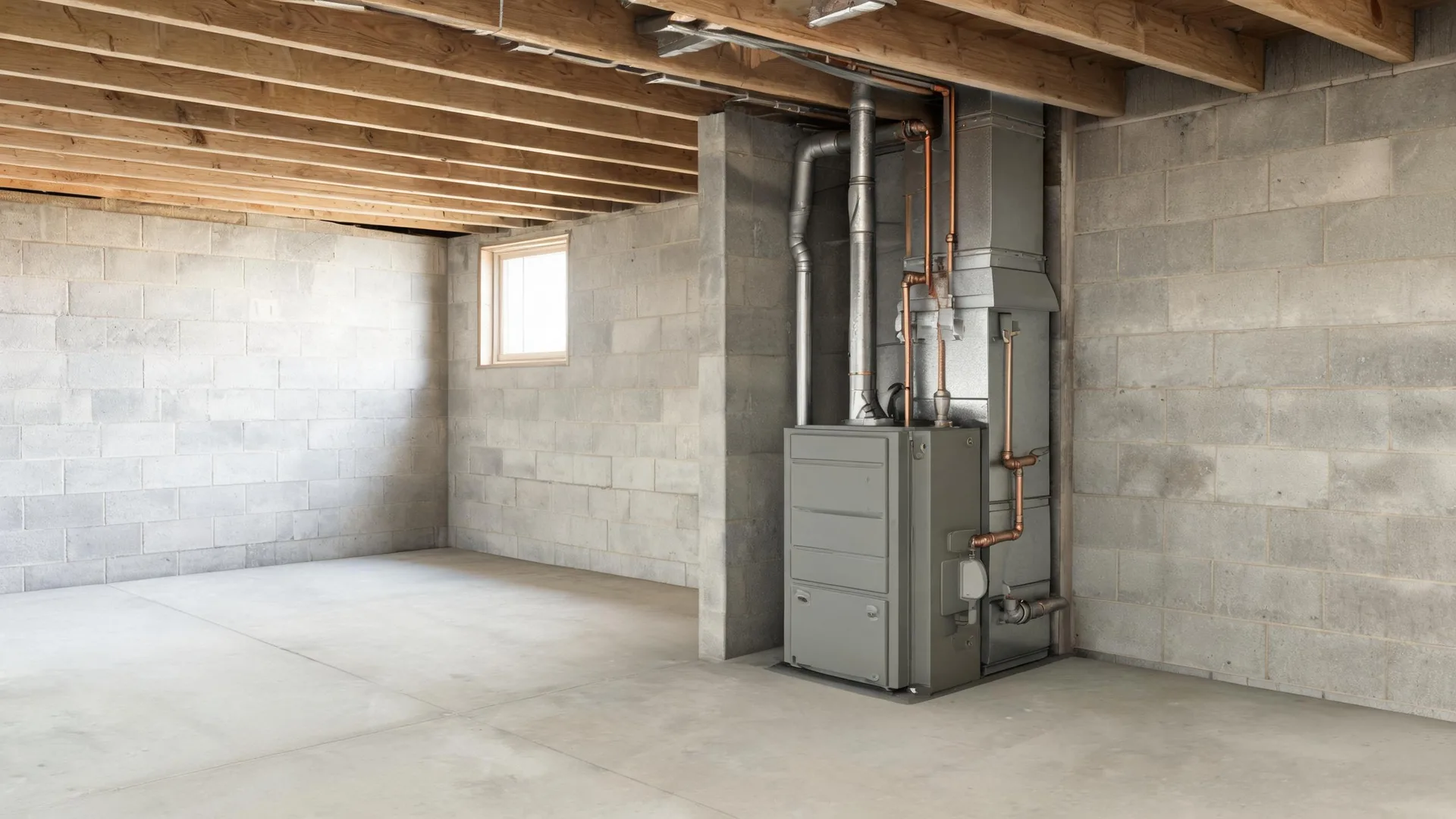
A gray residential gas furnace installed in an unfinished basement, surrounded by ductwork, a metal flue pipe, and a gas supply line.

Nine months a year, every year

Nine months of heat a year is a long stretch for any furnace, and nine winters at an overnight average of 9°F means it's rarely coasting. It's building up to temperature and holding it there, day into night, from September through May. A furnace sized right for your house handles that load without strain. One sized wrong, too big or too small, works harder than it should for all nine months, every year it runs.

Sizing the job, not the furnace

A furnace install starts with a load calculation, not a model number. The installer has to work out how much heat the house loses through its walls, windows, and roof before any ductwork gets touched. That number drives the size of the furnace and the size of the ducts needed to move that much air. Skip the calculation or rush it and the furnace on the spec sheet stops matching the ductwork it has to run through.
What's already there versus what has to change

If the vent pipe, the fuel line, and the ductwork already fit a furnace in that spot, the installer is connecting to what exists. If the old ducts are too narrow for a higher-output furnace, or the venting needs to be redone to match the new unit, that work gets added to the job. None of it shows up until someone opens the chase and looks, which is why the same furnace can mean very different work from one house to the next.

The old furnace does not get left behind. Whoever installs the new one has to disconnect the oil line, the flue connection, and the duct trunk, then physically remove the unit from the space. If it is vented through a chimney, that chimney may need to be relined or capped once the old furnace is gone, since a chimney sized for an old atmospheric furnace is not necessarily right for what replaces it. The oil tank is a separate question from the furnace itself. If the tank stays, it gets reconnected to the new unit. An old furnace still holds oil in the line and sometimes in the burner assembly, and that gets drained as part of the teardown, not left to leak once the unit is disconnected.

Installation day starts with the old furnace coming out and ends with the new one running, usually within the same day, though a flue reline or duct rework can stretch it longer. The installer will set the new furnace, connect the oil line, tie into the flue, and seal the duct trunk to it. Once it's hooked up, the burner gets fired and adjusted so it burns clean rather than running rich or sooty. Static pressure gets checked in the ductwork, because a furnace pushing air through ducts that are too narrow will run harder than the AFUE rating suggests it should. The installer should also test the safety controls, the limit switch and the draft, before calling the job done. Walk through the thermostat settings and the filter location with whoever is doing the install, so you know what maintaining it looks like going forward.