






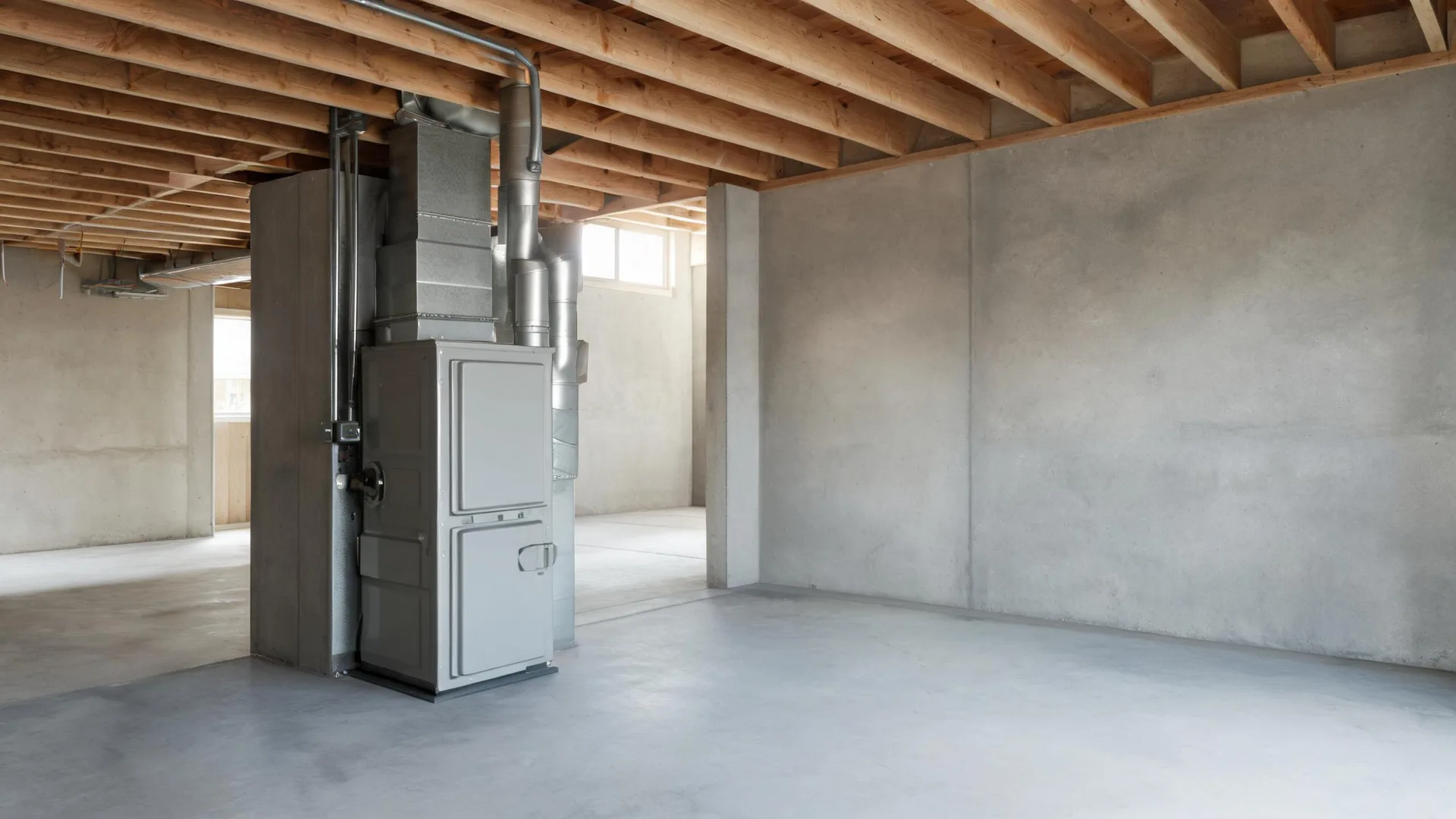
An empty unfinished basement containing a forced-air furnace with overhead ductwork, exposed ceiling joists, and a single hanging light bulb.

Furnace Installation in Barre, VT

Tell us about the job

Takes about a minute. No obligation.

New system or replacementFurnace or heatingWashington County, VT
Step 1 of 2

What ZIP code is the job in?

Fuel oil ran $26.53 per million Btu across Vermont homes in 2024. If your furnace runs on oil, that cost sits on top of every gallon you buy. Efficiency can't make it go away, but it can soften it. A furnace that turns more of that fuel into heat instead of exhaust is the lever you have. Ask about that when you compare installs. Look past the price of the unit to how much of what you burn ends up heating the house.

9 months
September through May, your furnace is on duty
10°F
the average winter night it heats against
80% AFUE
the federal minimum any new unit must meet
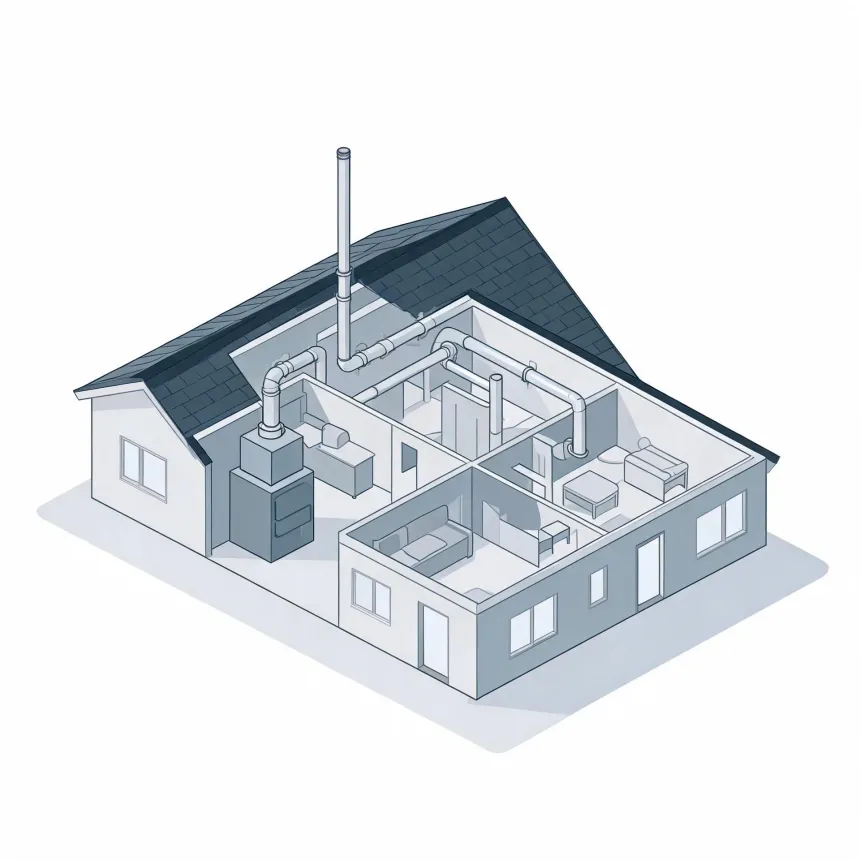
Isometric cutaway illustration of a single-story house showing interior rooms with furniture, a furnace unit connected to ductwork and a tall flue pipe extending through the roof.
Your furnace works hardest from November through March.

NOAA nClimDiv, 1991–2020 normals

Winter storms hit Washington County 38 times between 2015 and 2024.

A standard furnace install, sized and installed right, handles that without needing anything extra.

Nine months of heat a year means installing before September pays off

Heat runs September through May
Winter nights average 10°F
Climate zone 6A
Oil costs more here, so efficiency is where you win it backFuel oil ran $26.53 per million Btu across Vermont in 2024. Ask what rating the new furnace carries before you compare prices.

Oil heats 44.2% of homes in Washington County, more than any other fuel, and LP gas heats another 27.1%. Utility gas barely reaches this county at 2.6%, so a gas furnace usually means a propane tank on the property, not a line from the street. If your current furnace runs on oil, replacing it with another oil furnace keeps the venting and the fuel line you already have. Switching fuels on an install means new venting, a new tank or line, and a contractor who can size the swap correctly. For most homes here, matching what's already in the house is the simpler path.

Size the new furnace for the house you have, not the average one

Half the homes in Washington County were built in 1973 or earlier. A furnace installed in a house that age has to be sized for the walls, windows and ductwork already there, not for a generic floor plan. Get that sizing right and the install fits the house you actually have.

Find a contractor
A man in a cap, dark long-sleeved shirt and brown work pants walks up gray porch steps toward a dark blue front door, carrying a worn canvas tool bag filled with hand tools, with a potted shrub to the right.
A gas furnace with attached ductwork, gas piping, and condensate lines installed in a concrete-block basement.

Size for the cold snap, not the mild week

Nine months of heat and overnight lows averaging 10°F take their toll on a furnace year after year. When you size a new install, don't just match what's failing now. Have the contractor size it for the coldest stretch, not an average day, and ask what happens at the low end before you sign off.

A load calculation, not a square footage chart

Sizing a furnace right means a contractor works out how much heat the house actually loses through its walls, windows, ceiling and air leaks, room by room. That's a load calculation. It accounts for how the house is actually built, not a rule of thumb based on floor space. A house with more window area or less insulation needs a different furnace than one its same size without those things.
Oversized runs worse than it sounds

A furnace that's too big heats the house fast, shuts off, and starts again soon after. That short cycling keeps the heat exchanger from ever running at a steady temperature. Rooms near the thermostat get warm while far rooms lag behind. An undersized furnace has the opposite problem. It runs long and still can't keep up on the coldest nights. Right sized is the one that runs long steady cycles and warms the whole house evenly.

A few things push the price of a furnace install up or down, and most of it isn't the furnace itself. Ductwork is the big one. If the existing ducts are the right size and in good shape, a contractor can connect to them and move on. If they're undersized, leaky, or routed wrong for the new unit, that's additional work before the furnace even gets set. Venting matters too. A higher efficiency furnace vents differently than an older one, sometimes through a wall instead of a chimney, and that's new material and labor, not just a swap. The gas or oil line gets checked and sized for the new unit's demand. Electrical hookup, a new thermostat, and whether the old furnace needs to come out through a tight basement stairway or a tricky spot all factor in. The furnace itself varies by how much heat it needs to put out and how efficiently it does that, but installation is where the real differences between quotes usually come from.

Installation day starts with the old furnace coming out. That alone can take a while if it's wedged into a tight spot or needs to be cut down to fit through a doorway. Once it's out, the contractor runs new venting if the replacement needs it, connects the gas or oil line, and sets the new unit on its pad or stand. Ductwork gets tied into the new unit next, with whatever transitions or sealing it calls for. Then come the electrical connections and the thermostat wiring that controls the whole system. Before anyone leaves, the furnace gets fired up and checked. The flame or ignition gets looked at, along with the temperature rise through the plenum and whether every room is actually getting air. A gas or oil furnace also gets tested for proper venting before the job is called done. Each step depends on the one before it holding up right, which is why it takes a full day.