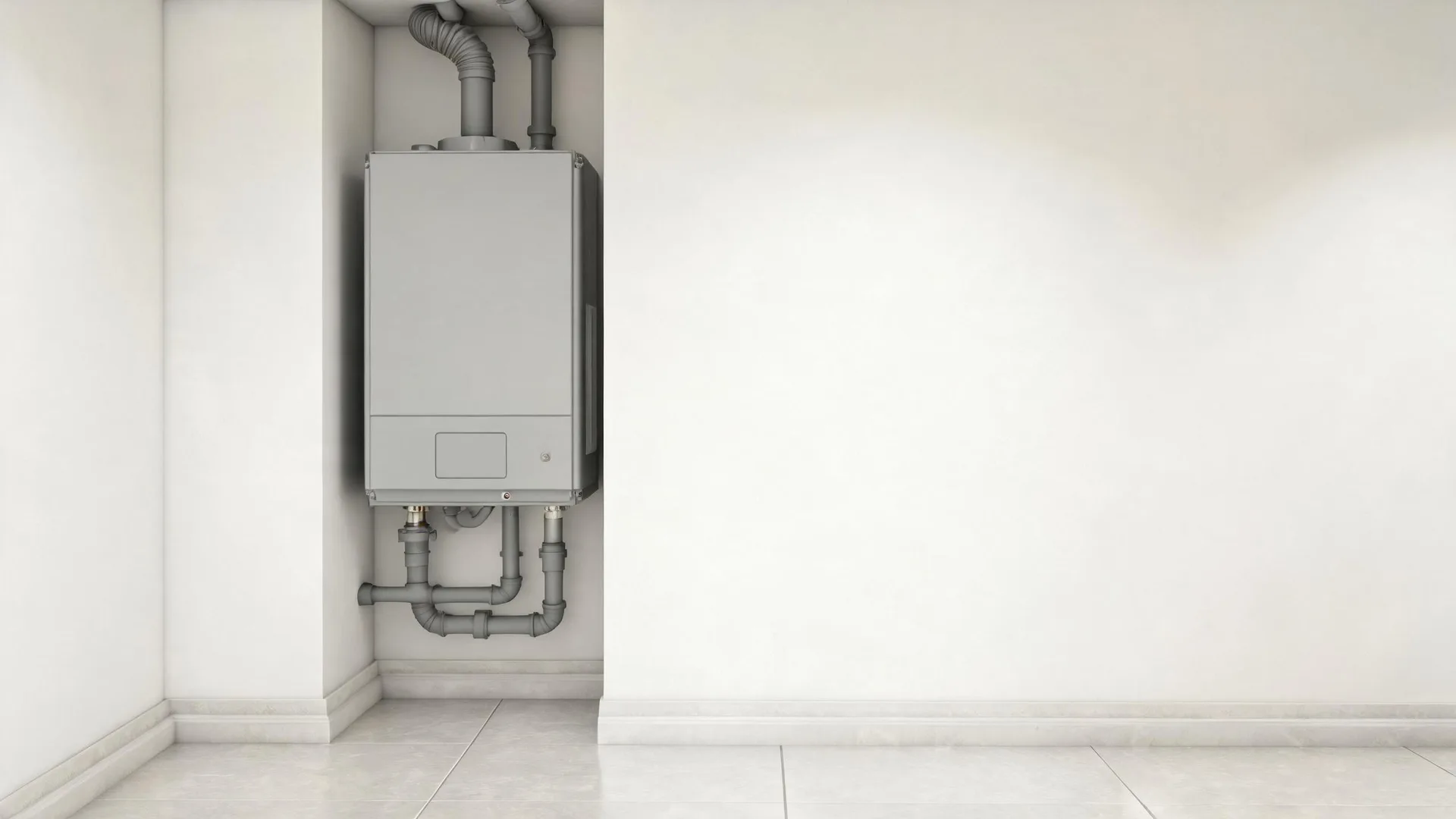
Nine months of heat a year
Boilers in Caledonia County run from September through May. That's most of the year asking the same pump, valves and burner to hold up, with only a short break each summer to recover.
Takes about a minute. No obligation.
Boilers in Caledonia County run from September through May. That's most of the year asking the same pump, valves and burner to hold up, with only a short break each summer to recover.
Overnight lows average 9°F here across December, January and February. A boiler working against that kind of cold runs longer and harder to keep up, and that wear catches up with a part eventually.
A boiler rarely fails all at once. A zone valve sticks, an igniter weakens, a circulator pump loses its bearings.
Catch a worn part early and the fix is swapping that part, not a cold house while you wait.




Half the homes in Caledonia County were built in 1973 or earlier. If your boiler came with a house that age, it may be the original unit or close to it. Boilers can run for decades, but every part has a limit, and one that has heated a house for that long is closer to it than people expect. Before paying for a major repair, ask the tech straight out how much life is likely left in the unit. Sometimes a worn part is just a worn part. Sometimes it's the first of several, and that changes what's worth fixing.
Whatever's acting up in your boiler right now, get it looked at by someone who'll check the whole system, not just swap the part that failed. A pump or valve that's worn from this kind of season often isn't alone.
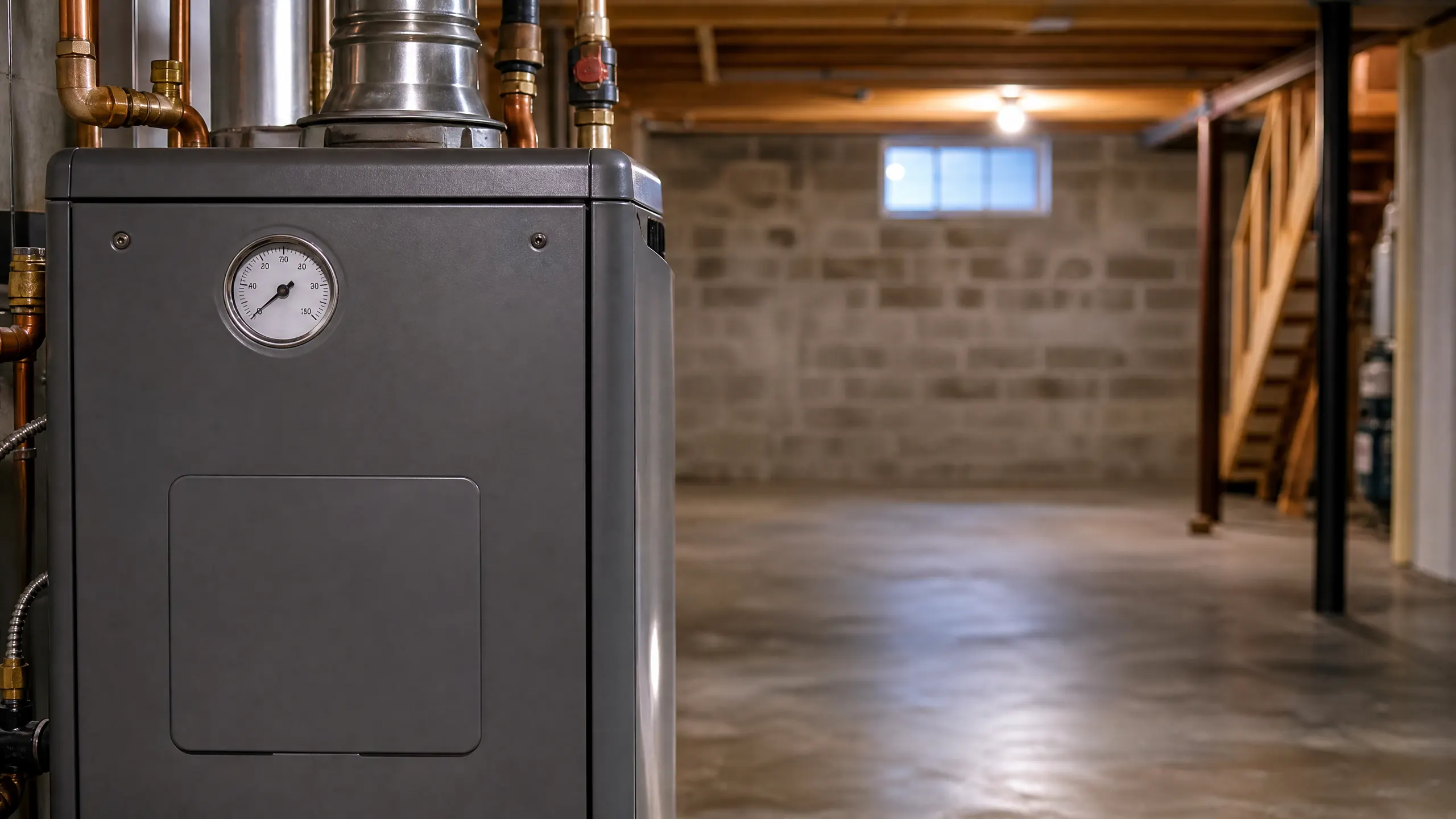
Find a contractorLook at the pressure gauge on the front of the boiler. It has a marked range showing where the needle should sit when the system is cold, and if it's below that range the system is low on water. Check that the thermostat has power and is set to call for heat. Look at the boiler for a blinking light or a code on the panel. Most boilers show one, and it points to what's tripping. None of this calls for opening a panel or touching a valve.
Water pooling under the boiler means a leak somewhere in the system, and left alone that only gets worse. A burning or oil smell, soot around the burner, or a yellow flame instead of blue all point to a combustion problem, and that's not something to keep running. If the reset button trips more than once, stop resetting it and leave it off. A homeowner can spot each of these, but fixing them is a job for someone who knows the system.
A boiler that's struggling still has to make heat, so it leans on whatever part is already weak to get there. A circulator pump with worn bearings keeps turning because the system needs it to, and that's exactly what wears a bearing out the rest of the way. A cracked heat exchanger stays under the same pressure and heat cycles that cracked it in the first place. Low water pressure left alone means the pump is pulling air along with water, and that air wears the pump faster than water ever would. None of these fix themselves by running. They fail a little more each cycle until the part that was limping stops working at all, usually on the coldest night it's asked to work the hardest.
A repair makes sense when one part failed and the rest of the boiler is sound. A tech can check for that. Pull the igniter, test the pump, look at what's around the failed part and see whether it shows the same wear. Replacement starts to make sense when failures stack up, one part fixed this year and another going next. That pattern usually means the whole system is reaching the same point at the same time. A cracked heat exchanger is its own case. That's the part that moves heat into your water, and a crack there isn't something to patch. It's a reason to replace the unit. Age matters less than what the tech finds when the panel is open, but a boiler that needs a major part late in its life is worth asking about in full, not just the one repair in front of you.