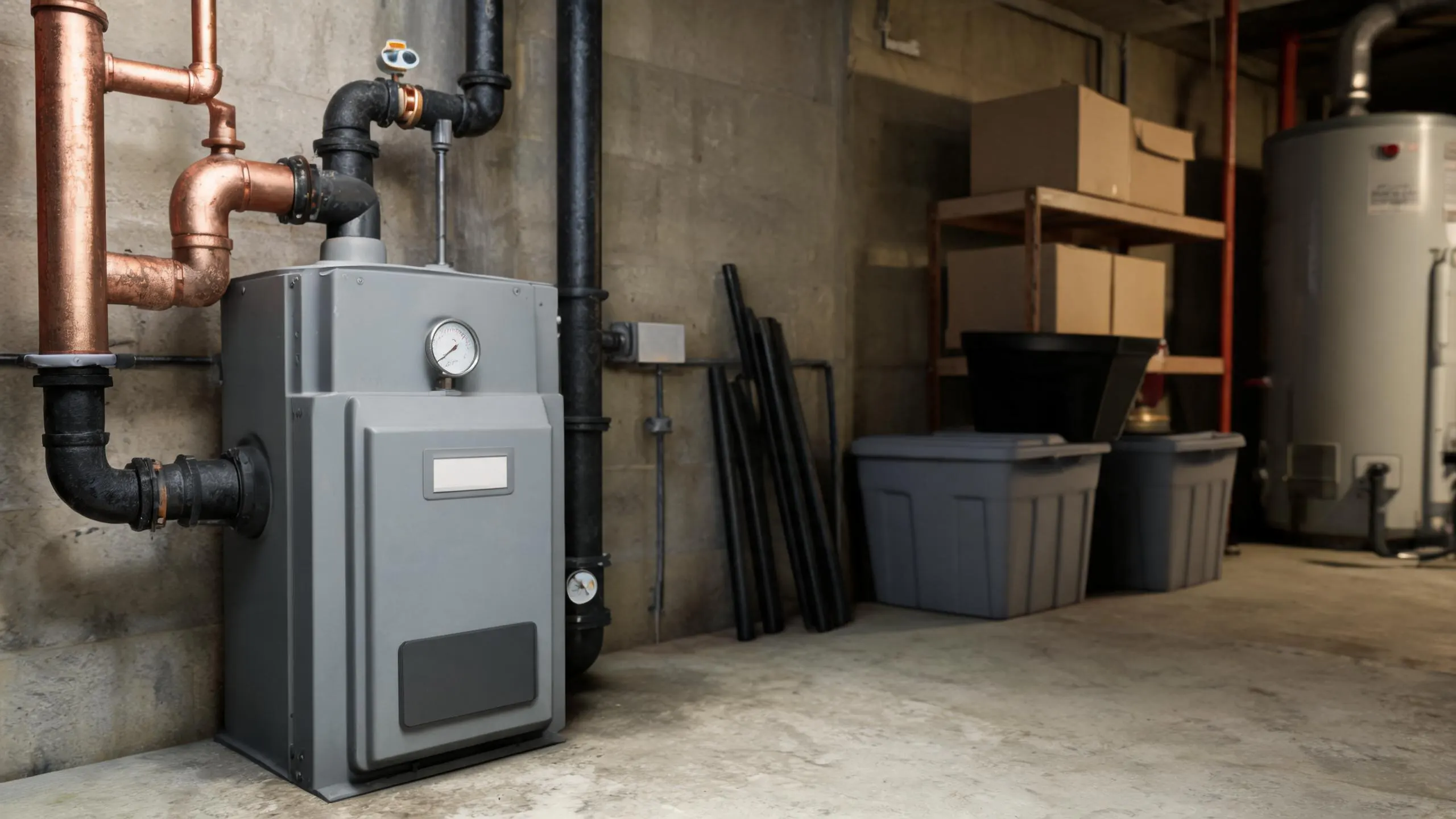


A gray boiler with copper and black iron pipe connections stands against a concrete basement wall, with a water heater and storage shelving visible in the background.

Boiler Repair in Vergennes, VT

Tell us about the job

Takes about a minute. No obligation.

RepairBoilerAddison County, VT
Step 1 of 2

What ZIP code is the job in?

Most boiler trouble comes down to a handful of parts failing, and they tend to fail in the same order. The igniter or pilot assembly goes bad and the boiler won't fire at all. A circulator pump seizes or its bearings wear out, and water stops moving through the system even though the burner still runs, so some rooms heat and others stay cold. Low water pressure will trip the pressure switch and shut things down, often from a slow leak somewhere in the piping or an expansion tank that lost its charge. Mineral buildup inside the heat exchanger is another one, and it usually announces itself with banging or kettling sounds before anything quits outright. A failed thermocouple or flame sensor will cut the burner off as a safety measure, which looks like a dead boiler but is a different problem than the boiler itself being bad. None of these mean the whole unit needs to go. They're individual parts wearing out, and the boiler usually comes right back once the right one is replaced.

Half the homes in Addison County were built in 1977 or earlier.

A boiler in a house that age has likely had parts replaced before, and the next one going isn't a sign of anything wrong with it.

Oil heat here isn't cheap to wasteFuel oil ran $26.53 per million Btu in Vermont in 2024, and a boiler running wrong burns more of it every month.

A diagnostic visit starts with questions, not tools. What were you hearing or seeing before it quit, and when did it start. That tells a tech where to look first instead of checking every part in order. From there it's usually the pressure gauge, then the burner, then whether the circulator is actually moving water, since each check rules out the next. If the burner won't fire, the question is whether it's getting fuel and spark at all, or whether a safety switch is holding it shut off on purpose. A multimeter comes out for anything electrical, checking the igniter or flame sensor for continuity rather than guessing by sight. The visit ends with the part named and the reason it failed explained, not just the boiler running again.

Get the usual fix

Nothing about this area is especially hard on it. It's most likely the usual problem with the usual fix.

Find a contractor
A man in a gray polo shirt and tan work pants carries a worn canvas tool bag up porch steps toward a closed gray front door, with a potted shrub beside the entry.

What you notice first

A boiler acting up doesn't usually go quiet overnight. You hear it before anything quits. Banging or tapping from inside the heat exchanger, a burner that clicks and tries to light but doesn't catch, rooms that used to heat evenly now running cold while others stay warm. Water on the floor near the unit, or a pressure gauge sitting lower than it used to. These are the tells. The boiler is still telling you what's wrong, you just have to catch it before it stops telling you anything.
Acting on it

A noise or a cold room is worth a call even if the boiler is still running. Most of what causes these signs is a single part wearing down, not the system failing, and a part caught early is a simple swap. Left alone, the same part can take the burner's safety switch with it, and then the boiler shuts itself off rather than run unsafe. That's a harder call to make on a cold night than a scheduled one.

Before calling, check the pressure gauge on the front of the boiler. It should read somewhere in the normal range marked on the dial, and if the needle has dropped below that, low pressure alone could be shutting the whole thing down. Check the water feed valve too and make sure it's open all the way, since a closed or partly closed valve starves the system the same as a leak would. Look for a reset button on the burner and try it once. If it trips again right away, stop there, that's telling you something is actually wrong rather than a one time stumble. Also check that nothing nearby got shut off by accident, a switch on the wall that looks like a light switch but actually kills power to the boiler, or a gas valve bumped closed. None of this fixes a bad circulator or a cracked heat exchanger, but it rules out the handful of things that look like a failed boiler and aren't.

A boiler is worth repairing almost every time a single part fails. A circulator, an igniter, a pressure switch, these are swapped on their own, and the cast iron or steel section that actually holds the water almost never needs touching. What changes that math is the heat exchanger itself cracking or leaking, because that's the part the whole boiler is built around, and replacing it costs close to what a new unit does. Age matters less than how the boiler was kept up. One that's had its water chemistry managed and its pressure kept in range can outlast a younger one that's been neglected. If a contractor says the heat exchanger is the problem, that's the conversation worth having about replacement. Anything else, let them fix the part.