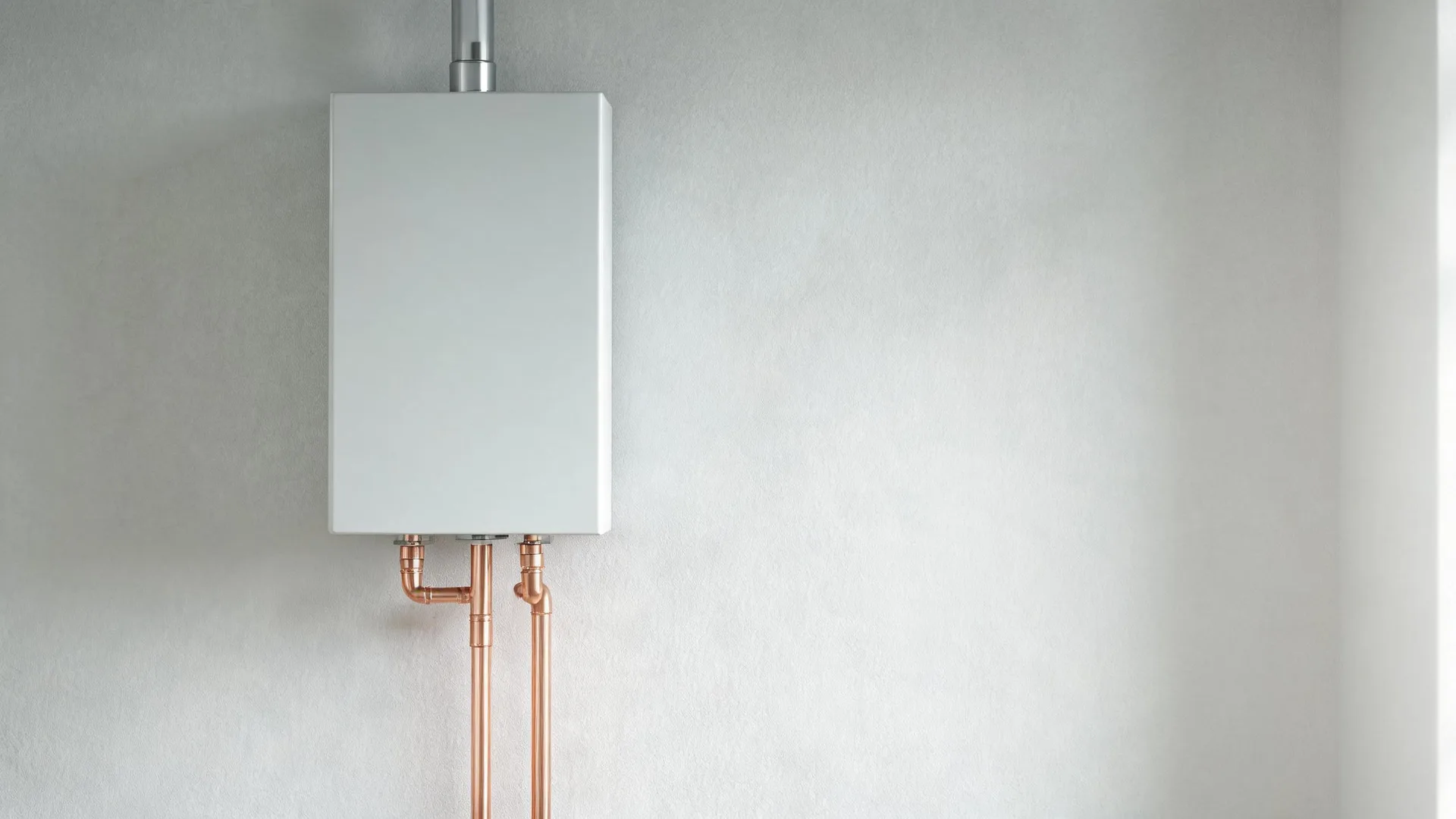
Nine months of heat a year
Boilers in St. Albans run from September through May. The overnight low averages 11°F across December, January and February. A boiler here doesn't get much of a break, and the parts inside it don't either.
Takes about a minute. No obligation.
Boilers in St. Albans run from September through May. The overnight low averages 11°F across December, January and February. A boiler here doesn't get much of a break, and the parts inside it don't either.
Franklin County saw 51 winter storms between 2015 and 2024, heavy snow, ice, blizzards. When the weather turns like that, your boiler is what stands between the cold outside and a warm house, running longer and harder to keep up.
Vermont heating oil ran $26.53 per million Btu in 2024.
A boiler running rough burns more of it every day you put off the repair.




August is worth paying attention to. Boilers in St. Albans sit idle most of the summer, and September is when yours gets asked to run again. That first real cold stretch finds whatever was already weak, a failing igniter, a pump on its way out, a thermocouple that barely passed last spring. If something was marginal going into summer, it tends to fail in the first few weeks of the season rather than the middle of it. Getting a boiler looked at in August means it gets fixed on your schedule, not during the first cold snap of the year.
A boiler that's running long hours through nine months of cold doesn't wear evenly. Something is usually already strained before it fails outright. If yours is acting up now, get it looked at and fixed properly instead of nursing it through the next storm.
Find a contractor
Water leaking from a fitting or valve carries away pressure, and a boiler losing pressure runs hotter and less evenly to make up for it. What started as a drip on the floor can end with a cracked heat exchanger, because the metal was never built to run dry in spots.
A kettling or banging sound usually means scale or sediment building up on the heat exchanger, and that buildup doesn't stop while the boiler keeps firing. Every cycle bakes it on harder, until the exchanger is restricted enough to crack or the pump has to work past what it was built for.
A boiler usually tells you something is wrong before it quits for good. Listen for a knock or gurgle when it fires, that's often trapped air or water moving where it shouldn't. Watch the pressure gauge too. A reading that keeps dropping points to a leak somewhere in the system, even if you can't see water anywhere. Short cycling, where the boiler fires up, shuts off, then fires again within a few minutes, usually means a safety control is tripping before the unit gets to run a full heating cycle. And if the radiators or baseboards are warm at one end and cold at the other, the boiler is working but not moving heat the way it should. None of these mean the boiler is done. They mean something inside it needs attention before it picks the worst night to fail.
A repair decision usually comes down to what part failed and what it sits next to. A circulator pump or a zone valve can be swapped on its own, and the rest of the boiler goes on working like nothing happened. A cracked heat exchanger is different. The exchanger is the boiler, more or less, and once it's cracked the only way forward is a new one. Age matters less than what's failing. A boiler that keeps needing a different part fixed every season is telling you the whole system is wearing out at once, not that it's unlucky. One repair on an otherwise sound boiler is just maintenance. A string of them is the boiler asking to be replaced before it picks the moment to quit for good.