Nine months of runtime
Boilers in Lamoille County fire up in September and don't stop until May. Overnight lows average 10°F through December, January and February, so the boiler is cycling on and off most of the day and night to keep up.
Takes about a minute. No obligation.
Boilers in Lamoille County fire up in September and don't stop until May. Overnight lows average 10°F through December, January and February, so the boiler is cycling on and off most of the day and night to keep up.
A boiler that runs nine months a year has a lot more hours on its igniter, pump and valves than one that only kicks on for a few cold snaps. Whatever's acting up, it's worth finding the actual cause rather than just quieting the symptom.
August is the last quiet month before boilers here start running, straight through to May.
September is when a weak igniter or valve usually gives out first, now that the boiler is firing every day.




Lamoille County sees its share of rough weather, 82 severe events over the past decade, most of it wind and winter storms rather than hail. None of that points to anything unusual going on inside a boiler. Wind and snow knock out power, and a boiler won't fire without it unless it's set up with a standing pilot. If your power's been out and the boiler stayed cold after it came back, that's worth checking before you assume the worst. Otherwise, a boiler acting up here is almost always the same thing it would be anywhere, an igniter, a valve, a pump, worn from all the hours it puts in, not from the weather outside.
Get the actual cause checked before it takes out another part. A boiler with this many hours on it won't fix itself by waiting through another cold stretch.
Find a contractorThe igniter has to light the burner every time the boiler calls for heat, and that's the part most likely to fail before anything else does. It's a thin element and it wears out from sheer cycling, not from any one bad day. A standing pilot can fail too, usually the thermocouple that senses the flame and shuts the gas off when it doesn't detect one.
The circulator pump pushes hot water through the system, and its bearings or seals wear down over years of running, which shows up as a noisy pump or one that's leaking at the seal. Zone valves and the motorized valve that controls flow can stick or stop opening fully, and when that happens parts of the system heat unevenly or not at all. These failures build slowly, so a boiler that's starting to sound different or heat unevenly is usually telling you a part is partway gone, not already dead.
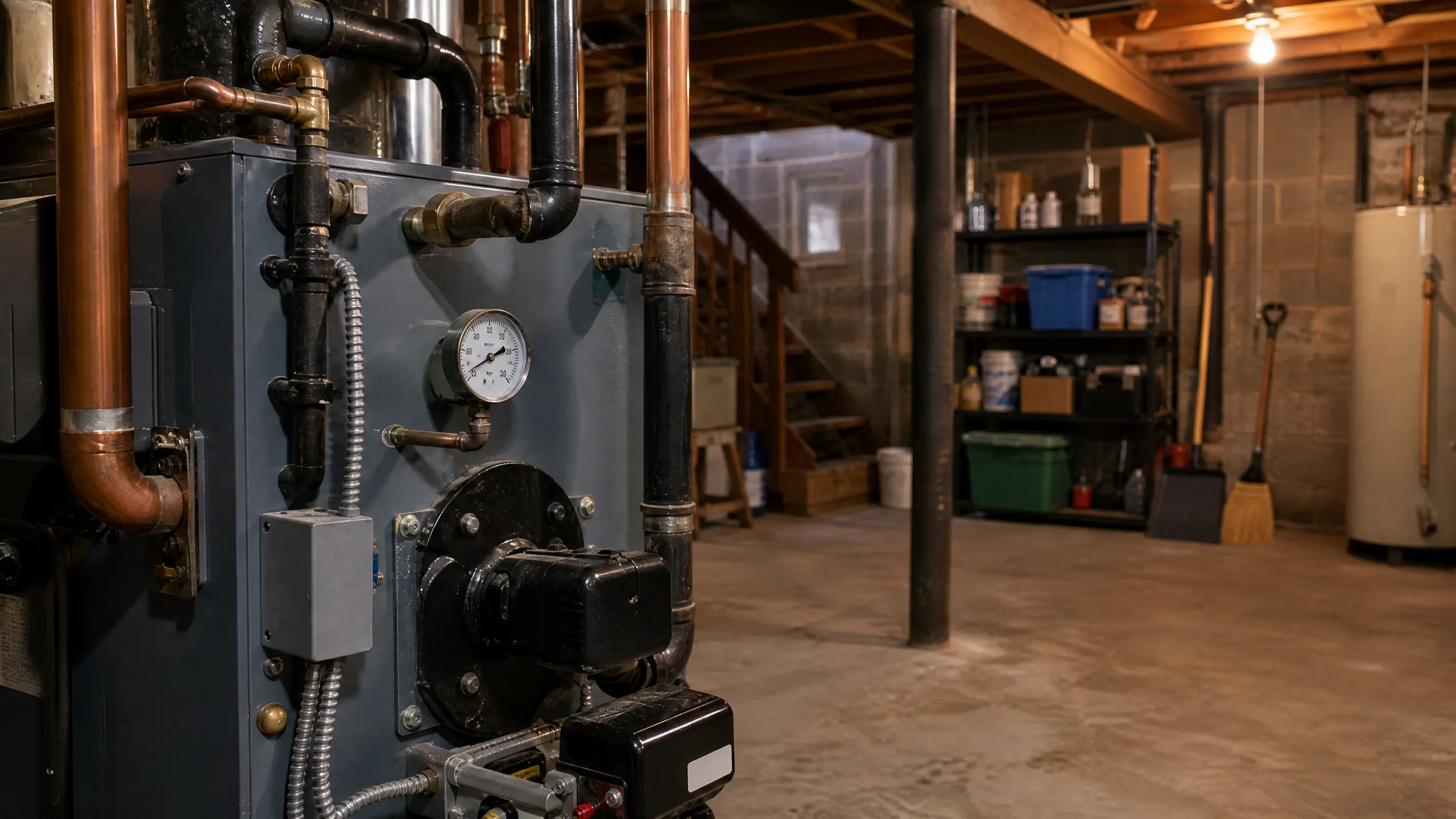
Before you call, check a few things yourself. Make sure the thermostat has power and is actually calling for heat, since a dead thermostat battery looks exactly like a boiler problem from across the room. Look at the pressure gauge on the boiler itself, most want the needle sitting in the middle of the dial, and a needle sitting low or at zero means the system has lost water. Check that nothing is blocking the vent or pushed up against the unit, since that can trip a safety switch and shut the whole thing down. If there's a reset button, pressing it once is fine, but don't keep pressing it if the boiler won't stay lit, that just floods the burner with fuel it isn't igniting. Look for anything wet on the floor around the unit. None of this tells you what's actually wrong, but it rules out the easy stuff before anyone has to come take a look.
A diagnostic visit starts with questions, not tools. A tech wants to know what the boiler's doing, when it started, and whether it's happened before. Then they'll check pressure, look for leaks, and watch it run through a cycle if it'll fire at all. A lot of faults only show up partway through the cycle, when the igniter lights but the flame sensor doesn't confirm it, or when a valve opens but doesn't seat right going the other direction. That's why a tech will often let it run instead of just inspecting it cold. If the boiler won't fire at all, they'll work backward through the safety chain, checking that power, gas, and water are actually reaching it before they touch anything inside. The goal of the visit is to find which part is failing, not just to get the heat back on for tonight.