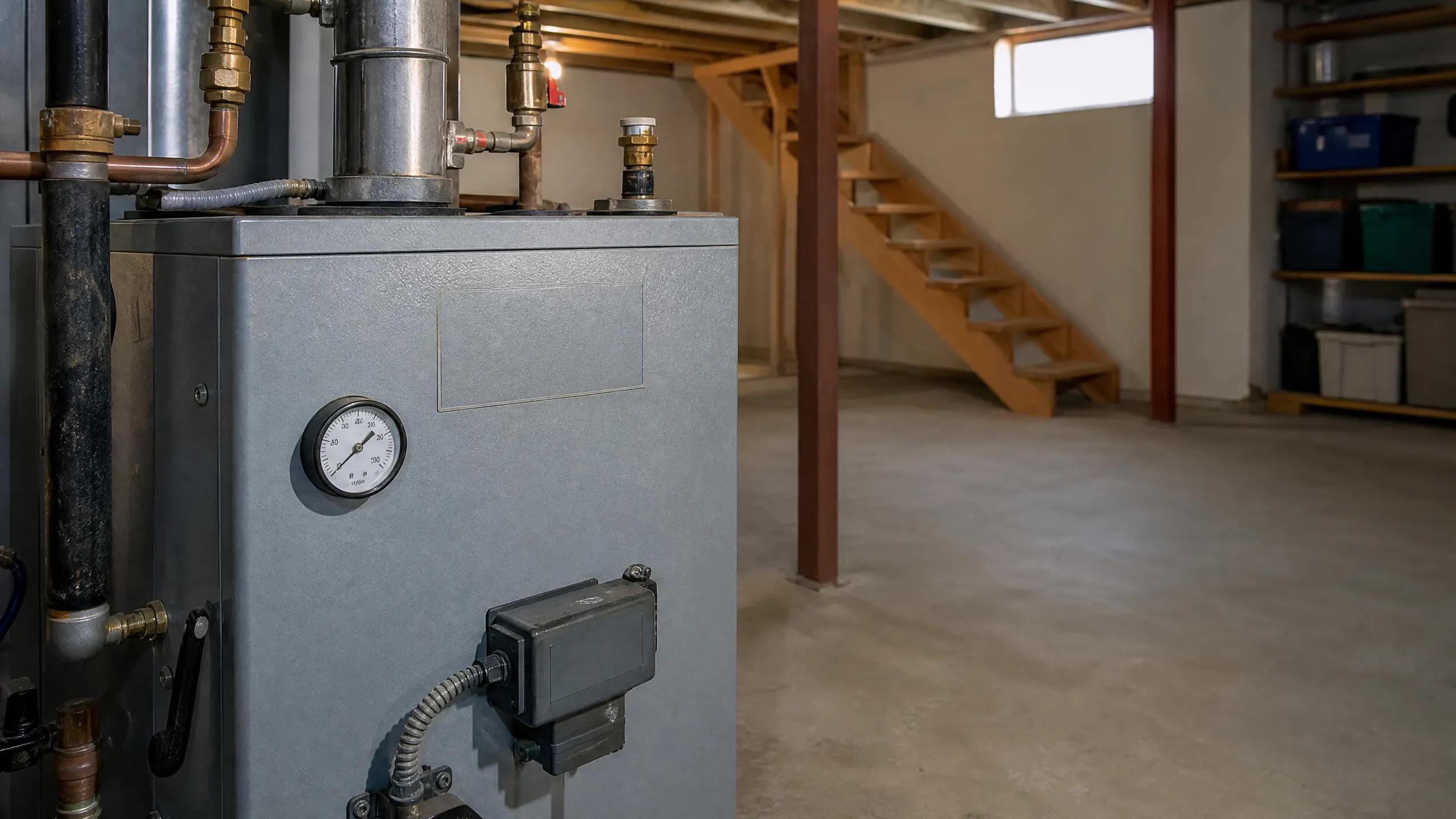




A gray boiler with copper pipes and a pressure gauge stands in an unfinished basement with wooden stairs and concrete floors.

Boiler Repair in Island Pond, VT

Tell us about the job

Takes about a minute. No obligation.

RepairBoilerEssex County, VT
Step 1 of 2

What ZIP code is the job in?

Before you call for help, there are a few things worth checking yourself. Look at the pressure gauge on the front of the boiler. If the needle has dropped into the low range, that alone can stop heat from reaching your radiators, and most boilers let you top it up yourself using the filling loop. Check that the power switch is on and that the thermostat is calling for heat. If it runs on batteries, try fresh ones before you assume something is wrong inside the unit. Radiators that are warm at the bottom but cold at the top have trapped air, and bleeding them with a radiator key is something you can do yourself. Banging or kettling sounds from the boiler are different. That points to a problem inside it, not something you can clear on your own, and it's a reason to shut it down and call for a tech rather than keep running it.

Essex County sees its share of wind and winter storms, same as most places that get cold winters.

A boiler working through weather like that wears out parts on a normal schedule, nothing more.

Heat runs September through June here, burning oil at $26.53 a million Btu, and a boiler running poorly costs you every one of those months

Heat runs September through June
Winter nights average 8°F
Climate zone 6A

Half the homes in Essex County were built in 1973 or earlier. If your boiler came with a house that old, it may not be the original unit, but it's worth asking how old it actually is before you pay for a major repair. A boiler nearing the end of its life can still be patched, but a cracked heat exchanger or a failing circulator pump on a unit that old is a different conversation than the same repair on a boiler installed five years ago. Ask the tech doing the repair how many years they'd expect to get out of it afterward. That answer should factor into whether you fix what's broken now or start pricing a replacement.

August is the month to catch a boiler before it has to work

Heat starts running in September here and goes through June, about ten months straight. Whatever is already weak in your boiler tends to show up in those first weeks, once it's back to working every day instead of sitting idle. Getting it looked at in August, before the load hits it, means it gets caught before you're depending on it.

Find a contractor
A man in a dark shirt and khaki pants, seen from behind, carries a worn leather bag as he climbs wooden porch steps toward a dark front door, with a potted shrub beside the entry.

No heat or uneven heat

A boiler that won't fire at all usually points to the ignition system, a failed pump, or a safety control that's shut it down on purpose. If some radiators heat and others stay cold, the problem is usually sludge or trapped air blocking flow to part of the system, not the boiler itself. Either way, it's worth having someone look before you assume the whole unit is failing.
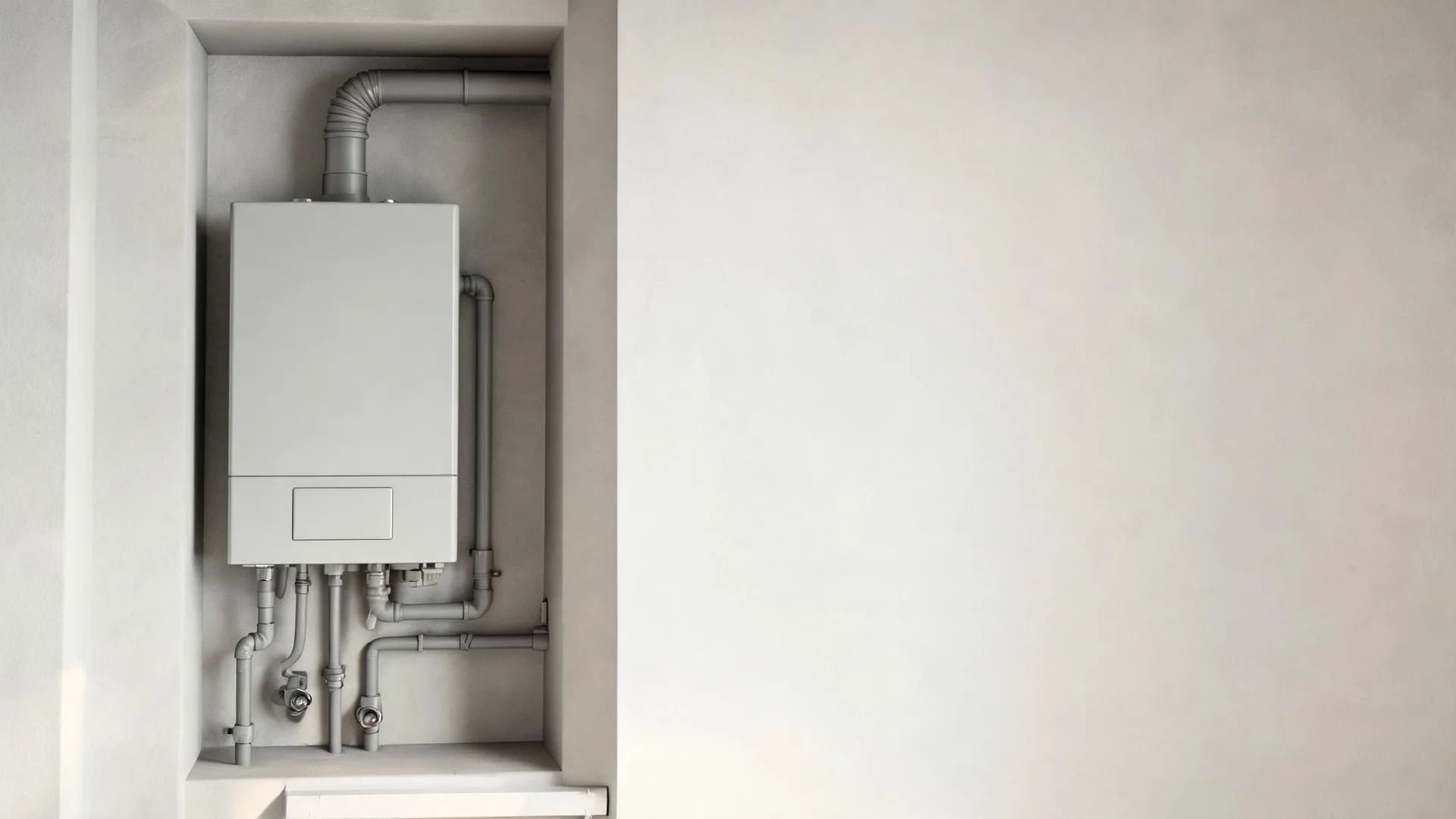
Leaks and longer run times mean something's wearing out

Water pooling near the base often traces back to a failing seal or a crack in the heat exchanger, and neither gets better on its own. A boiler that runs longer than it used to for the same amount of heat is usually losing ground to a worn part, scale buildup inside the exchanger, or a combustion problem, and that kind of strain tends to end in a breakdown if it goes unchecked.

Most boiler failures trace back to a handful of parts, not the whole unit. The circulator pump moves hot water out to the radiators, and it runs almost constantly through the cold months, so it's usually the first thing to wear out. A failed igniter or flame sensor will stop the boiler from firing at all, since the safety controls won't let it run if it can't confirm a flame. Scale and sludge build up inside the heat exchanger over years, especially in systems that haven't been flushed, and that buildup makes the boiler work harder to heat the same amount of water. Seals and gaskets dry out and crack with age, which is where most leaks start. None of these fail because the boiler had a bad year. They fail because they've been running the whole time, quietly wearing down, until one day they don't.

A repair is worth doing when it fixes one part and leaves the rest of the boiler alone. Swapping a circulator pump or a flame sensor on a unit that's otherwise sound is a normal repair, the kind every boiler needs sooner or later. It's a different decision when the part failing is the heat exchanger itself, since that's the core of the boiler and not something bolted onto it. A tech who's cagey about what's actually wrong, or who wants to replace parts one at a time hoping one of them fixes it, is guessing instead of diagnosing. Ask what failed and why, and whether that failure is isolated or a sign the rest of the unit is going the same way. A straight answer to that question tells you more than any guess about the boiler's age.