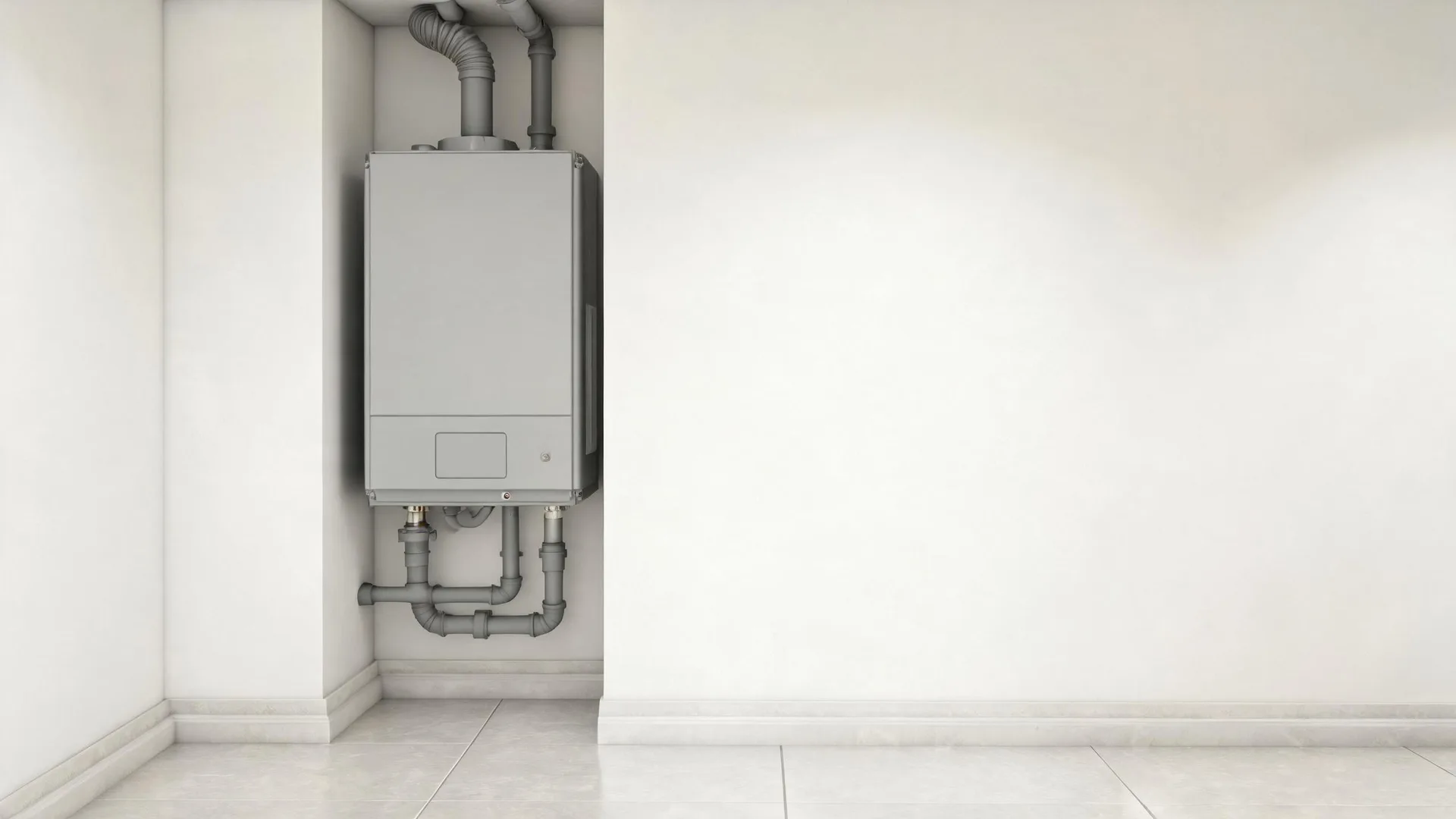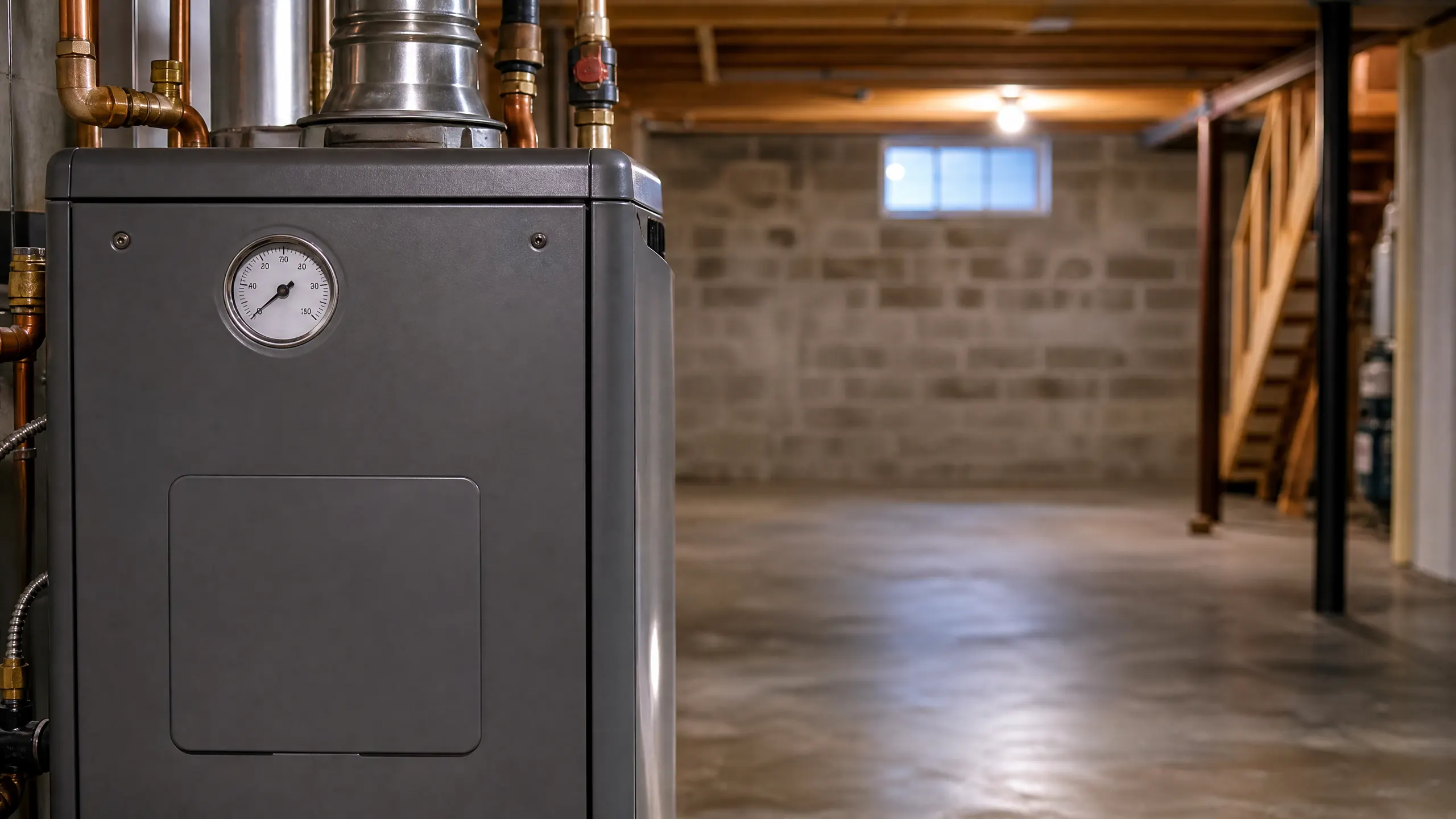
A gray residential boiler with copper pipes and a pressure gauge installed in an unfinished concrete-block basement.

Boiler Repair in Bellows Falls, VT

Tell us about the job

Takes about a minute. No obligation.

RepairBoilerWindham County, VT
Step 1 of 2

What ZIP code is the job in?

Nine months of heat a year

Boilers in Bellows Falls run from September through May, with overnight lows averaging 14°F in December, January and February. A boiler here gets little time off, and that steady demand wears on the parts long before a boiler in a milder climate would show the same problems.


What that means for a repair call

A boiler that has been running close to nine months straight is a boiler whose parts have earned their wear. A tech who knows this checks those parts first, the ones long heating seasons lean on hardest, so the fix holds instead of bringing the same call back in a month.

Vermont homes paid $26.53 per million Btu for fuel oil in 2024.

A boiler that's short-cycling or running longer than it should burns through that oil fast, and you feel it in every tank.

A boiler that sat since May gets tested the first cold night of September

Heat runs September through May
Winter nights average 14°F
70 winter storms from 2015 to 2024

Half the homes in Windham County were built in 1974 or earlier, and half in 1974 or later. That split doesn't point to any one kind of boiler problem here. An older house might still run its original cast iron radiators, or it might have had the whole system swapped out long since. A newer house isn't guaranteed a newer boiler either, since a system can be replaced anytime. What that means for the call is the same as it would be anywhere. The boiler's age and history matter more than the house's. If you know when yours was installed or last serviced, that tells a tech more than the year the house went up ever would.

Get it diagnosed properly

Your boiler works hard here, and that's usually what's behind the problem. Have it diagnosed properly so the fix lasts.

Find a contractor
A man in a dark cap, dark jacket and tan pants walks up gray porch steps toward a dark front door, carrying a worn brown leather duffel bag, with a potted shrub at left.

What you'll notice first

A boiler that's struggling usually tells you before it quits outright. Rooms that used to heat evenly now have cold spots. The boiler runs longer than it used to, or it short-cycles, kicking on and off every few minutes instead of holding a steady run. A kettling sound, a rumbling or popping from the heat exchanger, usually means scale or sediment has built up inside it. Water pooling at the base, a pressure gauge that won't hold, or a pilot light that keeps going out are all worth a call.

Why these signs matter

A short-cycling boiler burns fuel without doing its job, and the wear from constant restarts adds up faster than steady running would. A pilot that won't stay lit or a pressure gauge acting erratic can point to a failing safety control, and that's not something to leave alone. Catching a problem like this while the boiler is still heating, rather than after it quits, is usually what keeps a repair a repair instead of a replacement.

Before you call, a few things are safe to check yourself. Look at the pressure gauge first. Most boilers want to sit somewhere around the midpoint, and if the needle has dropped into the low range the system may need water added through the filling loop. If you've got a combi or a system boiler, check that the filling loop valves are fully closed afterward, since a slow drip there is a common reason pressure keeps falling. Next, check for a reset button, usually red, and give it one press if the boiler has locked out. If it fires and then locks out again, stop pressing it and call instead, since repeated resets can mask a fault that needs a tech's attention. Check that the thermostat has power and is actually calling for heat, since a dead battery or a knocked setting looks exactly like a boiler problem but isn't one. Last, look at the flue terminal outside if you can get to it safely. A blocked or frosted-over flue will shut a boiler down on purpose, and clearing it is sometimes all it takes.

A diagnostic visit starts before any panel comes off. A tech will ask what the boiler is doing, when it started, and whether anything changed right before it did. Then they check pressure, look at the flame or the ignition sequence, and pull any fault history the control board has stored. Opening the case comes next, checking the heat exchanger for scale, the pump for noise or resistance, and the wiring for anything scorched or loose. Combustion gets tested too, since the exhaust tells a tech things the flame alone won't show. By the end they should be able to point to the actual part that's failing and explain why it failed, not just that the boiler is now working again.