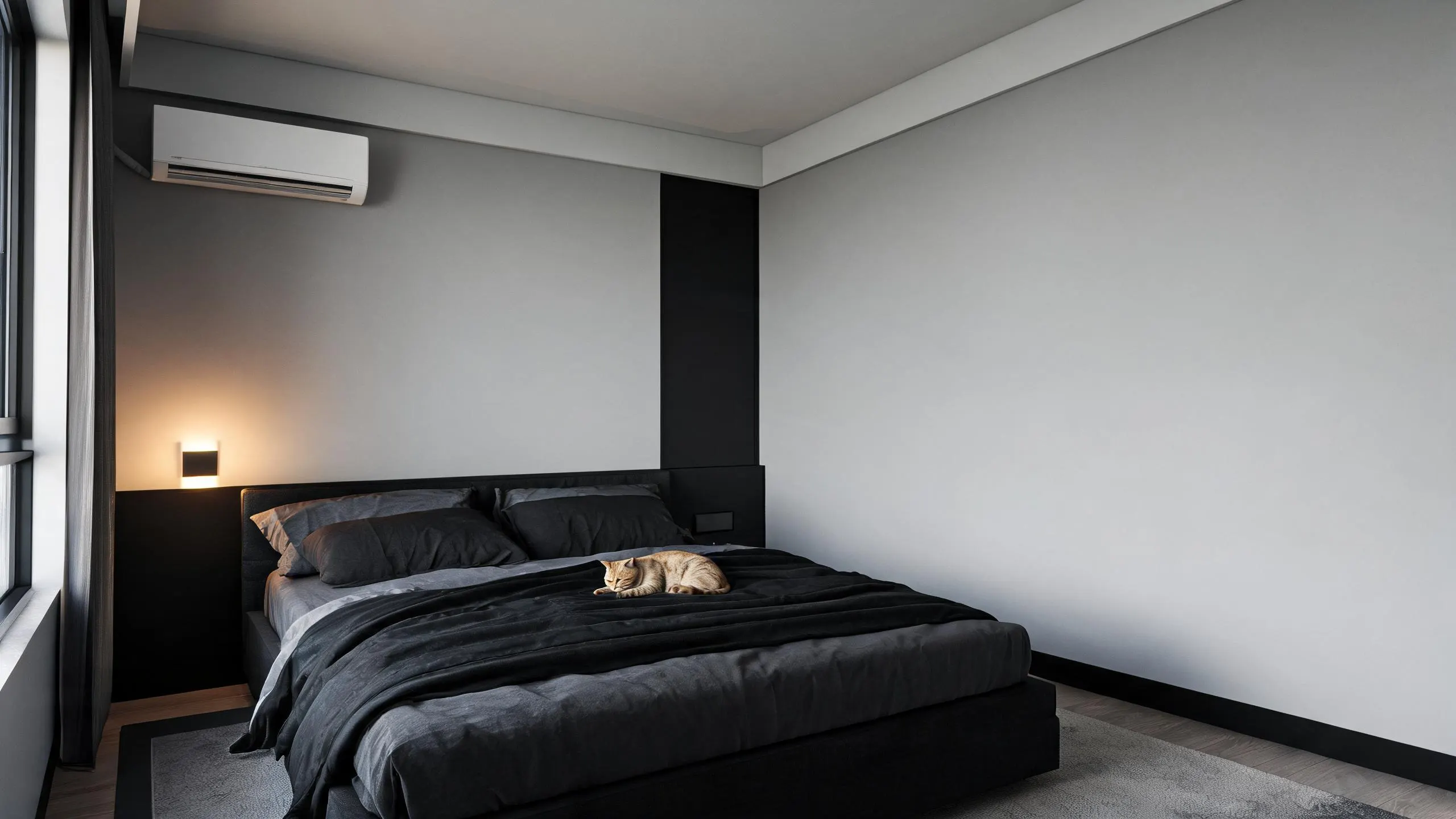




An orange cat rests on a dark grey bed in a minimalist monochrome bedroom.

Mini Split Installation in West Burke, VT

Tell us about the job

Takes about a minute. No obligation.

New system or replacementMini-splitCaledonia County, VT
Step 1 of 2

What ZIP code is the job in?

Fuel oil and kerosene heat 46.5% of homes in Caledonia County, more than any other fuel. Bottled or LP gas comes next at 23%. Very few homes here run on utility gas or straight electric heat. A mini split doesn't replace an oil furnace outright, but it changes what that furnace has to do. Run the mini split for heat on the milder days and the oil burner can sit idle, which means less oil used over the year. In summer it does the cooling that an oil system was never built for.

9 months
September through May, your system heats
9°F
the average winter night it heats against
75°F
the average summer afternoon it cools against
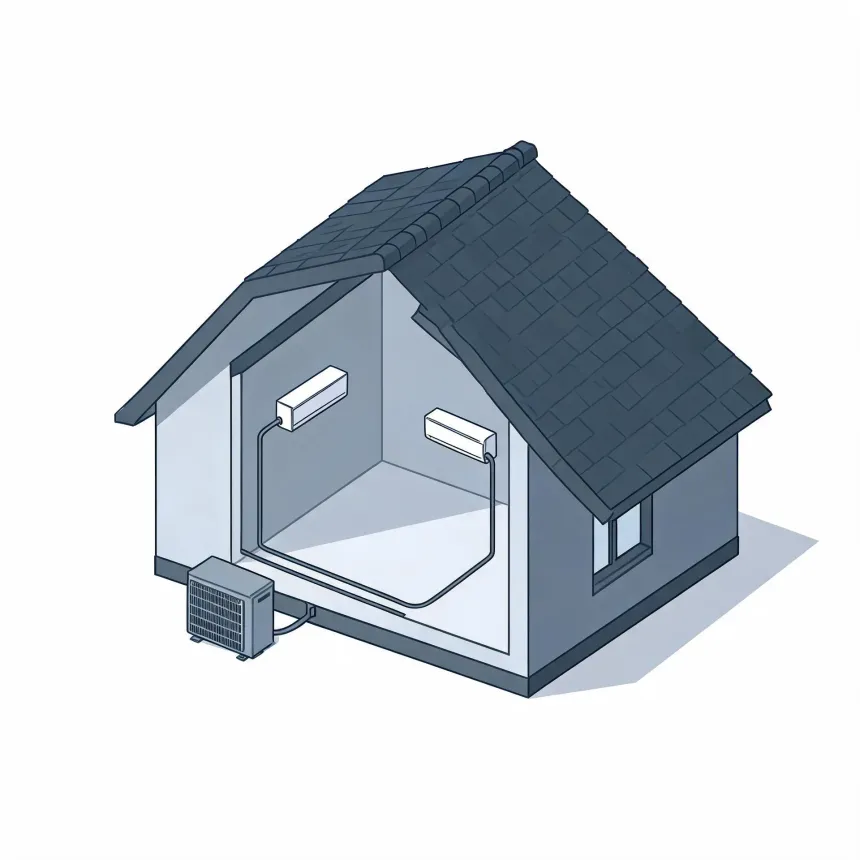
Isometric cutaway illustration of a small house with a shingled gable roof, showing two wall-mounted indoor air conditioning units connected by refrigerant lines to an outdoor condenser unit on the ground outside.

A mini split sized by square footage alone can end up wrong in both directions.

The right size comes from a load calculation that weighs insulation, window area, and ceiling height, not a chart that only asks how many square feet.

A mini split here barely has to work for its cooling

Summer afternoons average 75°F
44 damaging wind events from 2015 to 2024
10 hail events from 2015 to 2024

West Burke falls under zone 6A in the energy code, rated cold with winter running long here. Any mini split put in has to clear the federal minimums for a split-system heat pump. That means 14.3 SEER2 for cooling and 7.5 HSPF2 for heating. The standard doesn't carve out an easier class for ductless equipment, so the unit has to hit both numbers, not just one. A model that cools well but falls short on the heating side matters more in a county this cold than it would somewhere milder. Buying new also opens the door to the federal tax credit for qualifying heat pumps, on top of whatever oil it saves you over the year.

Built for the house you have, not the one on the chart

Half the homes in Caledonia County went up in 1973 or earlier. A load calculation accounts for that, a square footage chart doesn't. If you're putting in a mini split, size it to the house, not a number on a tape measure.

Find a contractor
A beige split-system air conditioner outdoor condenser unit mounted on metal wall brackets atop a stucco wall.

Weigh the heating spec heavier than the cooling one

Summer afternoons here average 75°F, and that's the high, not the usual. A mini split put in now will spend most of its life on the heating side, running through a long cold season rather than a short mild one. That's the spec worth weighing heavier when you're comparing models. Pick something rated to hold up and perform at low outdoor temperatures, not just one with a strong cooling number on the sheet.

Ask for the low-temperature capacity, not just the rating plate

Every heat pump loses capacity as the outdoor temperature drops, but not at the same rate. The spec sheet lists a capacity at a specific cold temperature, separate from the main rating. Ask to see that number and compare it against the unit's rated capacity. A smaller drop-off means the system keeps delivering heat on the coldest nights instead of leaning harder on backup heat.
Ask what happens during defrost

A heat pump has to shed frost that builds on the outdoor coil in cold weather, and it does this by briefly running in reverse. While it defrosts, it isn't heating, and some units blow cool air into the room during that cycle while others hold off. Ask how the system handles defrost, because that's the difference between a short pause you don't notice and a few minutes of cold air out of the head unit.

If the old oil furnace stays in, it doesn't retire, it becomes backup. Most installs leave it tied into the same ductwork or the same zone, ready for the nights the mini split can't keep up on its own. If it's getting pulled out instead, someone still has to deal with the oil tank, whether that means draining it, pulling it, or capping the line if it's staying put unused. An oil furnace left sitting unused for long stretches should still get looked at before it's called on for backup. Old burners can gum up with disuse the same way they do with age, and a furnace that only runs on the coldest nights still needs to light every single time.

Installation starts with the mounting plate on the wall and the line set path, since once the refrigerant lines are run and sealed, most of the rest follows from that. The installer drills through the wall for the lines, the drain, and the power wire, then sets the outdoor unit on a pad or wall brackets outside. Before the system gets charged, the lines get pulled down to a vacuum and held there, which clears out moisture and air that would otherwise keep the system from working right. Skipping that step is the kind of shortcut that doesn't show up as a problem on day one, only months later. Once it holds vacuum, the refrigerant valves open, the indoor and outdoor units get tested together, and the installer checks the temperature split at the head unit before calling it done.