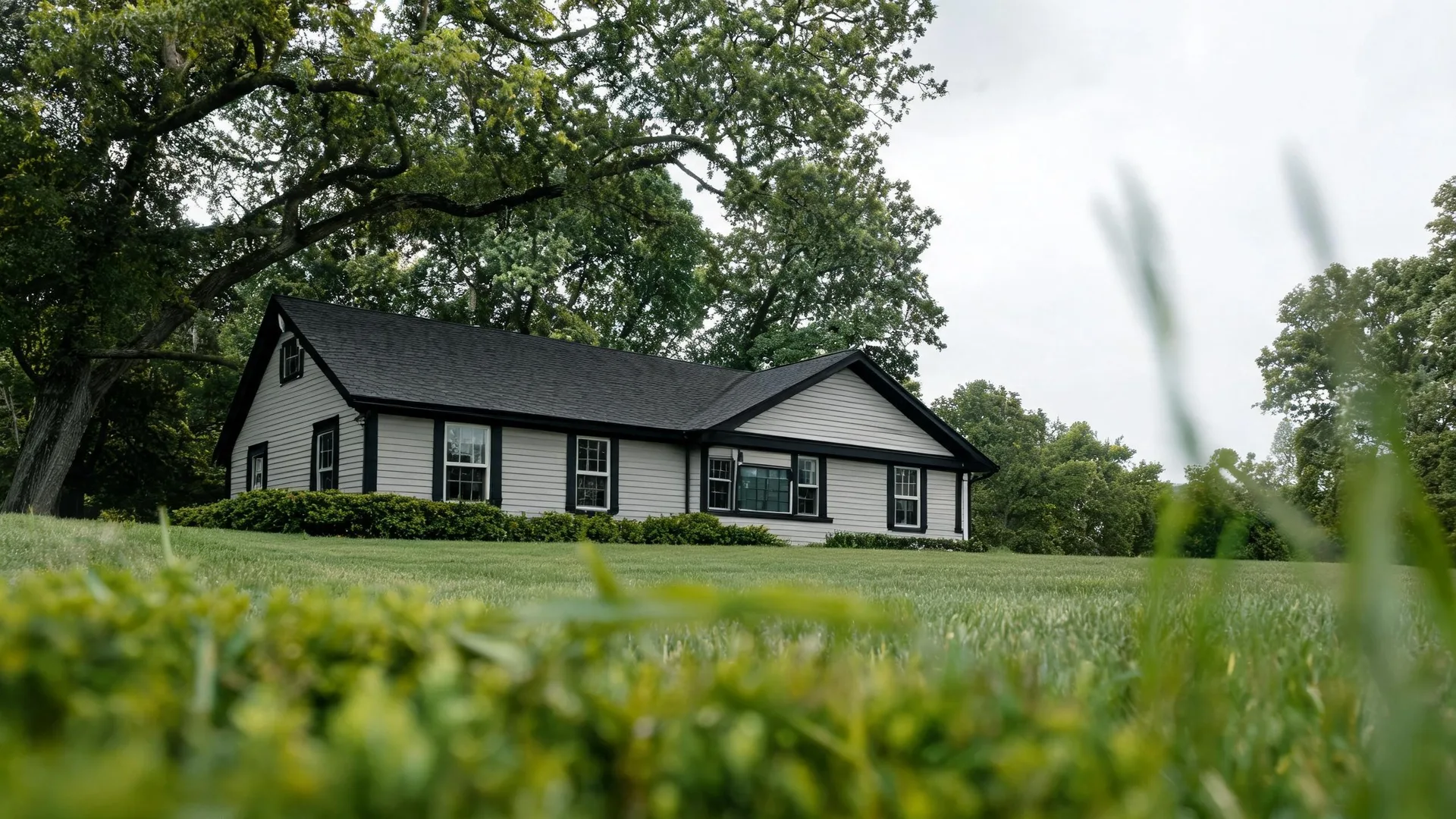





A single-story white house with black roof shingles and black window trim stands on a mown lawn, framed by large deciduous trees and blurred grass in the foreground under an overcast sky.

Mini Split Installation in Rutland, VT

Tell us about the job

Takes about a minute. No obligation.

New system or replacementMini-splitRutland County, VT
Step 1 of 2

What ZIP code is the job in?

Ask what the unit is rated to do at low outdoor temperatures, not just what it's rated to do at moderate ones. A mini split can list an impressive heating number that falls off hard once it gets cold out, and the spec sheet usually shows this if you ask for it. Ask how many indoor heads the outdoor unit is meant to run and whether it's a dedicated single zone or a multi-zone system, since that changes how it behaves if one room calls for heat while another doesn't. Ask where the line set will run and how long it needs to be, because a longer run between the outdoor compressor and the indoor head can affect performance. Ask who sizes the system and how, since a unit that's too large for the space will short cycle and one that's too small will run constantly without keeping up.

9 months
September through May, your system heats
12°F
the average winter night it heats against
77°F
the average summer afternoon it cools against
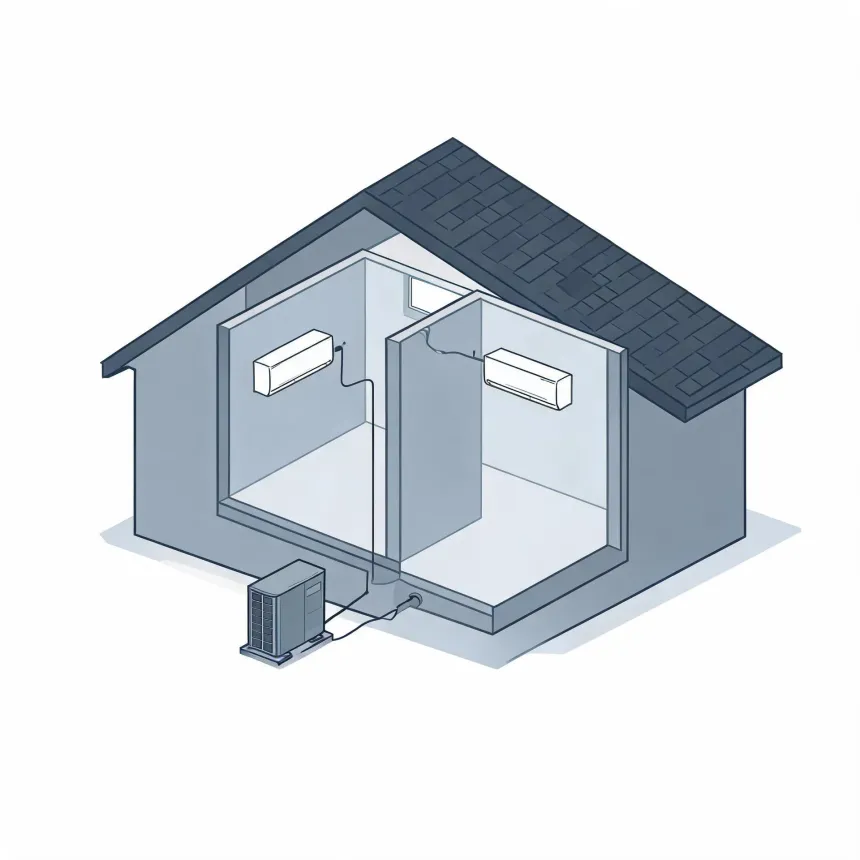
Isometric line illustration of a cutaway house with two rooms, each with a wall-mounted indoor air conditioning unit connected by lines to an outdoor condenser unit on the ground outside.

Fuel oil or kerosene heats 60.1% of homes in Rutland County, more than any other fuel.

A mini split installed here usually works alongside that oil furnace, taking over the mild months and easing the load on the rest.

Summers here don't push a system. What's coming off the mountains does.

Summer afternoons average 77°F
104 damaging wind events from 2015 to 2024
7 hail events from 2015 to 2024
Built before the rules changedHalf the homes in Rutland County went up in 1969 or earlier.

Rutland County falls in zone 6A, a cold climate zone, and that sets the floor for what can go into a home here. A ductless mini split counts as a split system under the federal standard, so any unit built from 2023 on has to hit at least 14.3 SEER2 for cooling and 7.5 HSPF2 for heating. There's no separate, lower bar for ductless. A system that clears that line also tends to open the door to the federal tax credit on offer for qualifying heat pumps, worth asking a contractor about when you're comparing models.

The right size, not the biggest one

A standard mini split sized for the room it's heating and cooling will do the job here. Vermont electricity runs 21.90 cents per kilowatthour, so it's worth asking a contractor to size the unit correctly rather than rounding up. The right size costs less to run and keeps up fine once it's matched to the space and the cold.

Find a contractor
A white outdoor air conditioner condenser unit mounted on metal wall brackets against gray horizontal siding, with a blue sky and white clouds behind it.

Barely working, most of the year

Afternoon highs here average 77°F through June, July and August. That's not a load that wears down a cooling system over the years. Most of what this unit does, it does on the heating side. So the summer rating matters less than you'd think when you're comparing models. Put the attention on how it performs in the cold instead, and let someone size it to the room rather than rounding up for a summer it won't really see.

Sizing comes from a room by room calculation

A contractor works out heat loss and heat gain for each room, not the square footage alone. Window area, wall insulation, ceiling height and how many exterior walls a room has all change the number. Rooms that look about the same size can still need different capacity if one has more glass or takes the wind straight on.
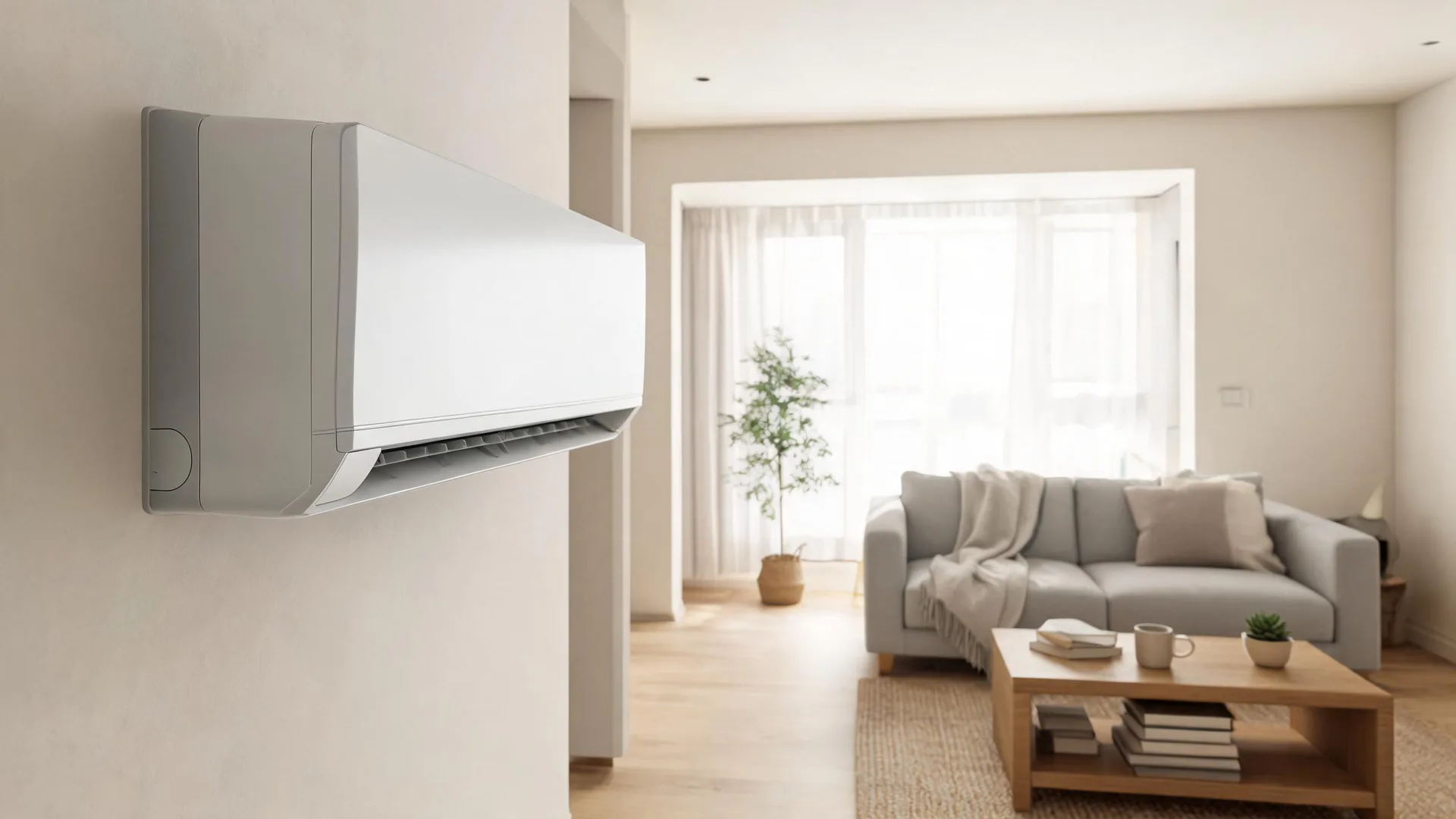
The wrong size fails in opposite ways

An oversized head blasts the room to temperature fast, then shuts off before it pulls the moisture out of the air, so the room ends up cold and clammy instead of comfortable. An undersized head never gets ahead of the load. It runs nearly all the time and still can't hold the setting on the coldest days.

If the oil furnace is staying in place, the old equipment usually just sits there doing less work, not gone. A mini split takes over the shoulder seasons and the mild days, and the furnace kicks in when it gets too cold for the heat pump to carry the load on its own. Nothing about adding a mini split requires pulling out a working furnace, and most homes keep both. If a central air system is being replaced instead, the old condenser and indoor coil come out and the line set and refrigerant get recovered properly, since that refrigerant can't just be vented. An old thermostat usually gets swapped for whatever controls the new heads. Whatever stays or goes, the new system runs on its own control and its own line set, so it doesn't inherit problems from whatever it's replacing.

Installation starts with the outdoor unit, mounted on a pad or brackets against an exterior wall, far enough from the house to let air pull through the coil. Indoor heads go up next, usually high on a wall, on a bracket that holds the unit while the line set gets connected behind it. That line set runs through a hole drilled through the wall, a small one, and gets wrapped and sealed where it passes through. Once the indoor and outdoor units are connected, the system gets evacuated with a vacuum pump to pull out moisture and air before any refrigerant moves through the lines. That step matters more than people think, since trapped air or moisture in the line set causes problems well after the install is done. After that, the system gets charged, tested in both heating and cooling, and the controls get set up and explained before anyone leaves.