





A golden retriever sleeps on a neatly made bed in a minimalist bedroom equipped with a wall-mounted air conditioning unit.

Mini Split Installation in North Bennington, VT

Tell us about the job

Takes about a minute. No obligation.

New system or replacementMini-splitBennington County, VT
Step 1 of 2

What ZIP code is the job in?

North Bennington sits in zone 6A, a cold, humid climate with winter that runs long. A ductless mini-split counts as a split system under the federal rule, same as a central heat pump. So a unit installed here has to hit 14.3 SEER2 for cooling and 7.5 HSPF2 for heating if it's new enough to fall under the current standard. That's the same bar a ducted system has to clear, ductless gets no separate pass. A federal tax credit is available on qualifying heat pump installations, worth checking against whatever system you're considering.

9 months
September through May, your system heats
13°F
the average winter night it heats against
75°F
the average summer afternoon it cools against
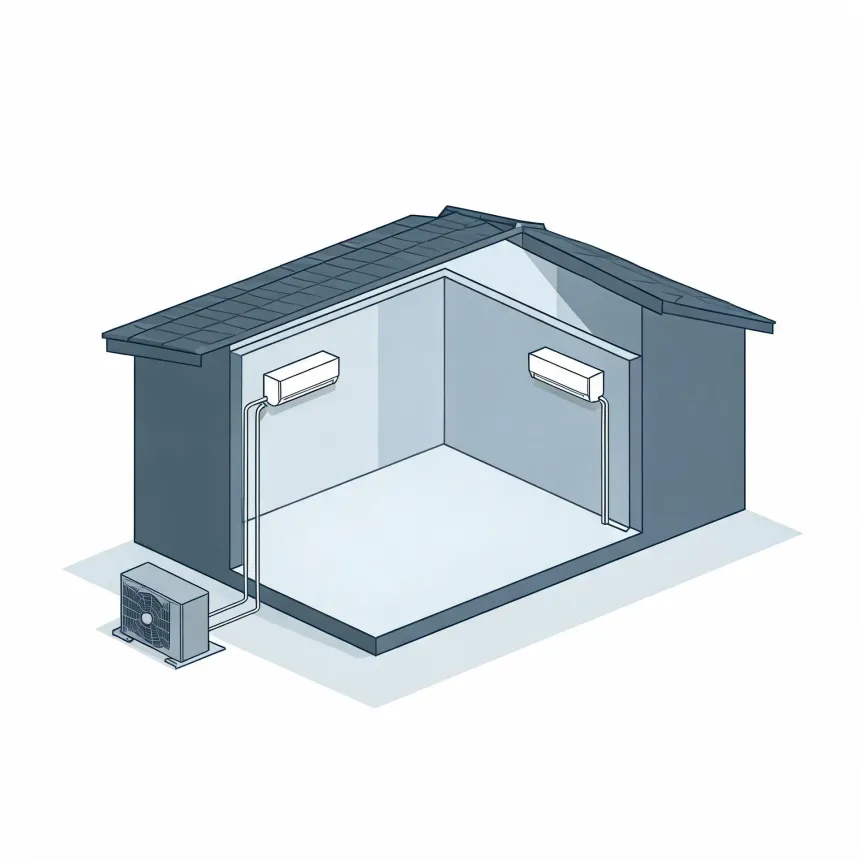
Cutaway isometric illustration of a small building interior showing two wall-mounted indoor air conditioning units connected by line sets running down to a single outdoor condenser unit on the ground outside.

Fuel oil and kerosene heat 57.3% of homes in Bennington County, more than any other fuel.

A mini-split in an oil-heated home adds a second way to heat and cool without touching the furnace.

A 75°F summer doesn't ask much of a mini-split

Summer afternoons average 75°F
118 damaging wind events from 2015 to 2024
4 hail events from 2015 to 2024

Half the homes in Bennington County were built in 1972 or earlier. A house that old wasn't built with a mini-split in mind, and whoever installs yours has to work with what's actually in the walls, not a guess. Wall framing, where the electrical panel sits, where a line set can run from outdoor unit to indoor head, all of it varies house to house. None of that rules out a mini-split. It just means the install gets planned around your house, not a standard one.

A standard mini-split is the right call here

At 21.90 cents per kilowatthour, the cost of running a mini-split here comes down to how efficiently it's sized and installed. A standard unit built to the federal minimum handles this climate fine. There's no reason to pay for more capacity or a higher rating than this house needs.

Find a contractor
A man in a cap, dark long-sleeved shirt and brown work pants walks up gray porch steps toward a dark blue front door, carrying a worn canvas tool bag filled with hand tools, with a potted shrub to the right.
A beige split-system air conditioner outdoor condenser unit mounted on metal wall brackets atop a stucco wall.

Built for this house, not a newer one

A mini-split installed today should outlast a lot of what's already in that wall. Before anyone runs a line set or mounts a condenser, that's worth a walkthrough, not a guess from a brochure spec sheet. The unit itself will run the same day in and day out, but how long it keeps working without trouble comes down to whether it was sized and placed for your house in the first place.

How many rooms it has to reach

A single zone with one indoor head costs less to put in than a multi-zone setup with several heads running off one outdoor unit. Every added zone means another line set, another mounting job, and another spot where the installer has to find a clean path through the wall. The outdoor unit also has to be sized for the combined load of every head it serves, not just one room.
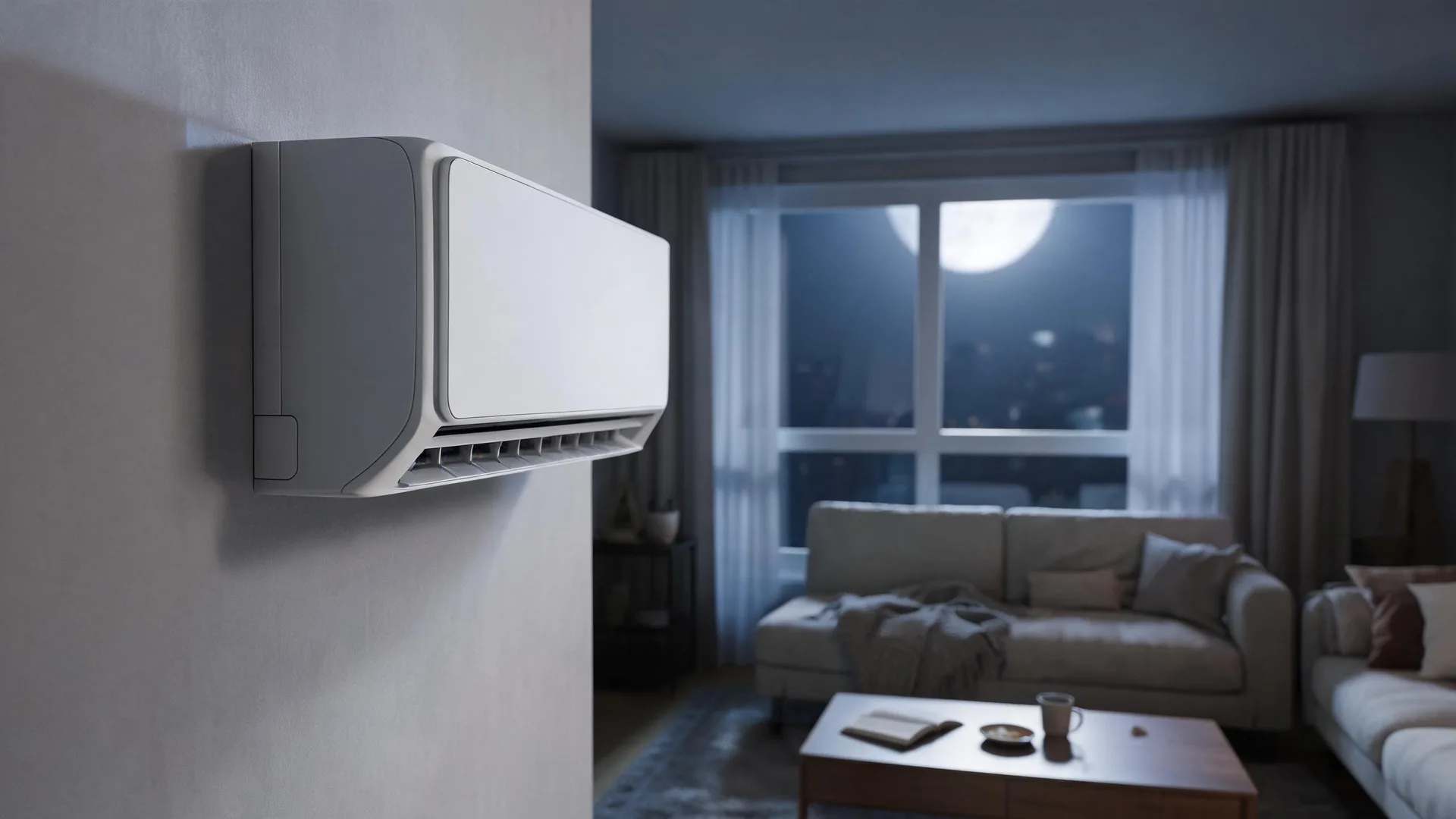
What it takes to run the line set

The line set carries refrigerant between the outdoor unit and the indoor head, and it has to be run through walls, framing, or soffits to get there. A short, straight run costs less labor than one that has to snake around obstacles or cross multiple floors. Whoever installs it has to route around what's already in the wall, not where it would be easiest on paper.

The number on the label, SEER2 for cooling and HSPF2 for heating, tells you how much heat a unit moves for the energy it uses. A higher rating means it squeezes more out of each cycle, not that it heats or cools a bigger space. Units rated for the same size room can still carry different numbers, and the one with the higher rating costs less to run over the life of the equipment. That number comes from lab testing under fixed conditions, so it won't match what you see on the coldest night of the year, but it's still the fairest way to compare one unit against another. A unit has to clear a minimum rating before it can be sold at all, so even the baseline option on the lot meets a real standard, not just whatever the manufacturer felt like building.

Installation day starts with the walkthrough already done. The outdoor unit gets set on a pad or mounted bracket, away from where snow piles up or runoff drains. The indoor head goes up on the wall first, mounted to a plate that holds it level. Then comes the hole through the wall for the line set, the drain line, and the electrical whip, all bundled together and sealed where they pass through. The line set gets connected at both ends, and the whole system is pressure tested before any refrigerant moves through it. Once that holds, the installer pulls a vacuum on the lines to clear out moisture and air, because either one left behind will cause problems later. Only after that does the system get charged and switched on, with the installer checking airflow at the head and temperature split before calling it done.