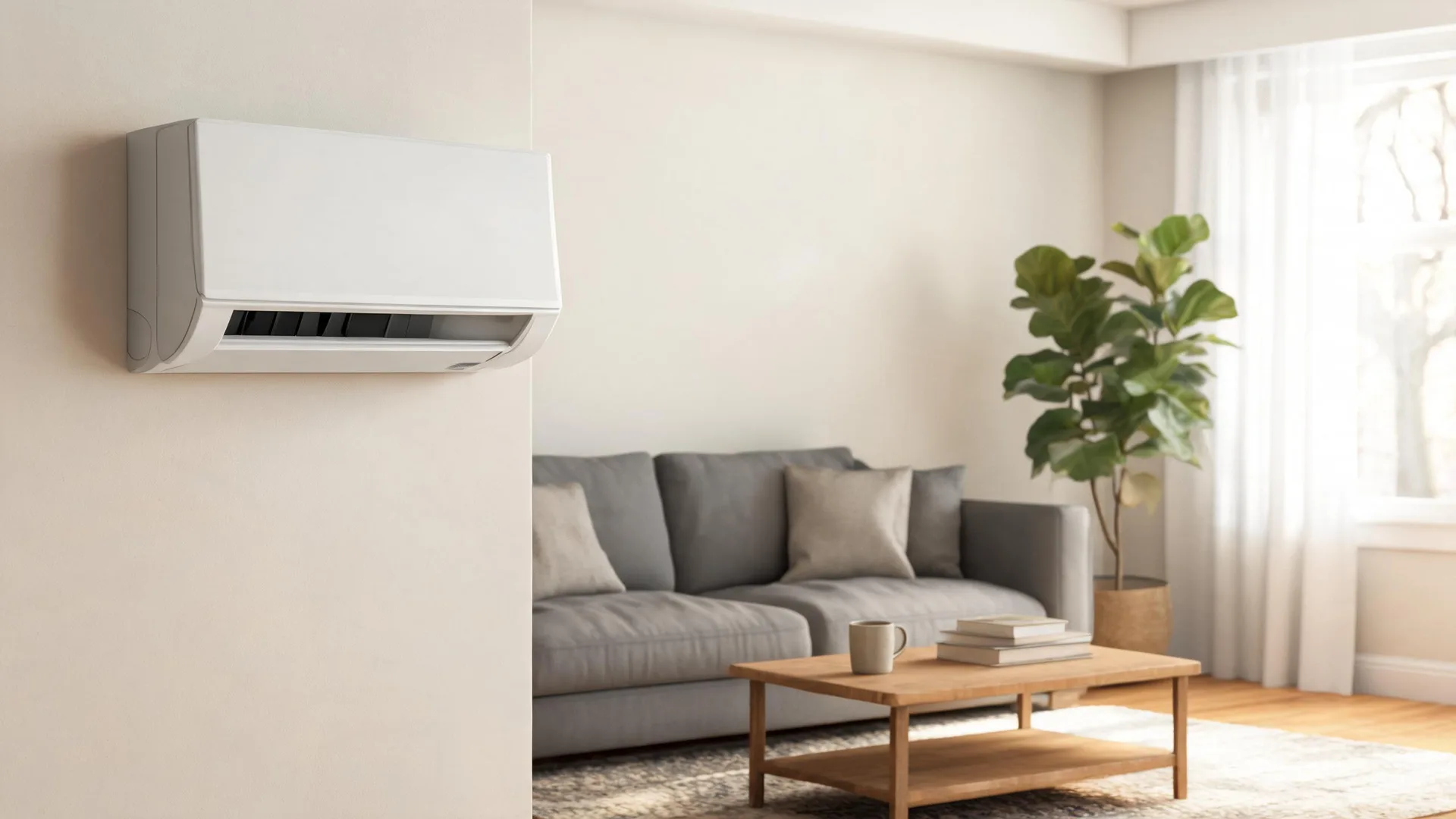
Oil heats most homes here
Fuel oil or kerosene heats 52% of occupied homes in Orleans County, more than any other fuel. Bottled or LP gas comes next at 18.3%. Utility gas barely reaches this area at 1.9%.

Takes about a minute. No obligation.
Fuel oil or kerosene heats 52% of occupied homes in Orleans County, more than any other fuel. Bottled or LP gas comes next at 18.3%. Utility gas barely reaches this area at 1.9%.
A mini split does not need gas lines or ductwork to run. It can take over heating and cooling for the rooms you use most while your oil furnace stays in place for backup or the coldest stretches.
Afternoon highs in Newport average 74 degrees even in July and August, and most months don't call for cooling at all.
A mini split here spends most of its time running easy, so a mid-range system holds up fine without paying for cooling capacity you won't use.




Newport sits in climate zone 6A, a cold zone with winters that run long. Any ductless mini-split installed here still counts as a split system under the federal efficiency standard. There's no separate category for ductless. A unit built from 2023 onward has to hit at least 14.3 SEER2 for cooling and 7.5 HSPF2 for heating, the same floor as any other split-system heat pump sold anywhere in the country. That rules out the low end of the market before you even start comparing. A heat pump meeting these minimums may also qualify for the federal energy efficiency tax credit.
Nothing about Newport pushes you toward a bigger unit or a higher tier. Electricity here runs 21.90 cents per kilowatt-hour, and a mid-range mini split sized for the rooms you're heating and cooling will do the job without you paying for capacity this climate doesn't ask for.
Find a contractor
Over a full year, the compressor barely gets tested. June, July and August stay mild enough that the outdoor unit cycles on now and then and sits quiet the rest of the time. A mini split put in now could run for years before cooling ever asks much of it. When something does go wrong down the line, it's more likely to be age or a dirty filter than a system that got worked hard.
One outdoor unit can run one indoor head or several, and that changes the quote. Find out if the system being priced covers just the main room or every space you want heated and cooled, and whether the outdoor unit has enough capacity to run all those heads at once on the coldest day, not just on average.
Every heat pump loses some capacity as the temperature drops, and the spec sheet should show output at a low temperature, not just at mild conditions. Ask where that system's heating capacity falls off and what's supposed to carry the load below that point, whether that's backup heat strips or the furnace already in the house.
The price moves with how many indoor heads you're running off one outdoor unit. A single zone is the simplest install. Add a second or third head and you're paying for more line set, more wall penetrations, and a bigger outdoor unit to carry all of them at once. Where that outdoor unit goes matters too. A short, straight line set between indoor and outdoor costs less to run than one that has to snake through walls or up multiple floors. Electrical work adds to it as well, since a mini split needs its own dedicated circuit, and if the panel doesn't have room for that, the panel work becomes part of the job before the system itself goes in.
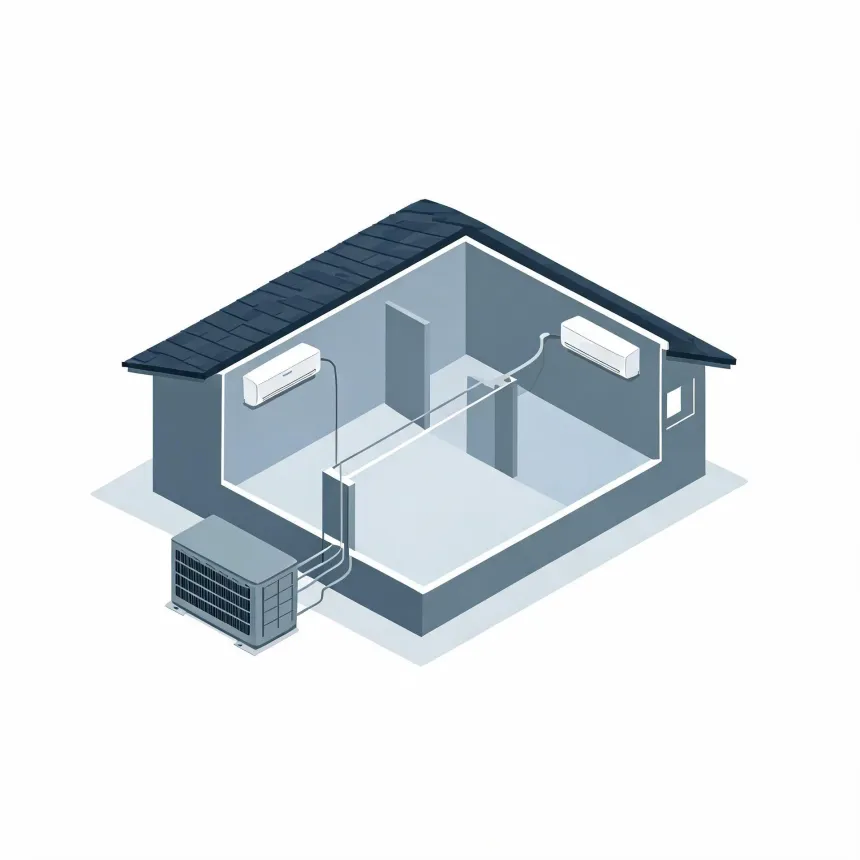
Installation starts with the outdoor unit and where the refrigerant lines need to run. The crew mounts the outdoor condenser on a pad or brackets, then runs the line set through a small hole drilled in the wall to each indoor head. That line set carries refrigerant, a condensate drain, and electrical wiring together, usually wrapped and sealed once it's in place. Each indoor head gets mounted high on a wall or ceiling, leveled, and connected before the whole system gets charged with refrigerant and tested. Once it's running, the crew checks airflow at each head and makes sure the system is cooling and heating the way it should before they leave. Most of the mess stays where the line set passes through the wall, since there's no ductwork to open up or patch.