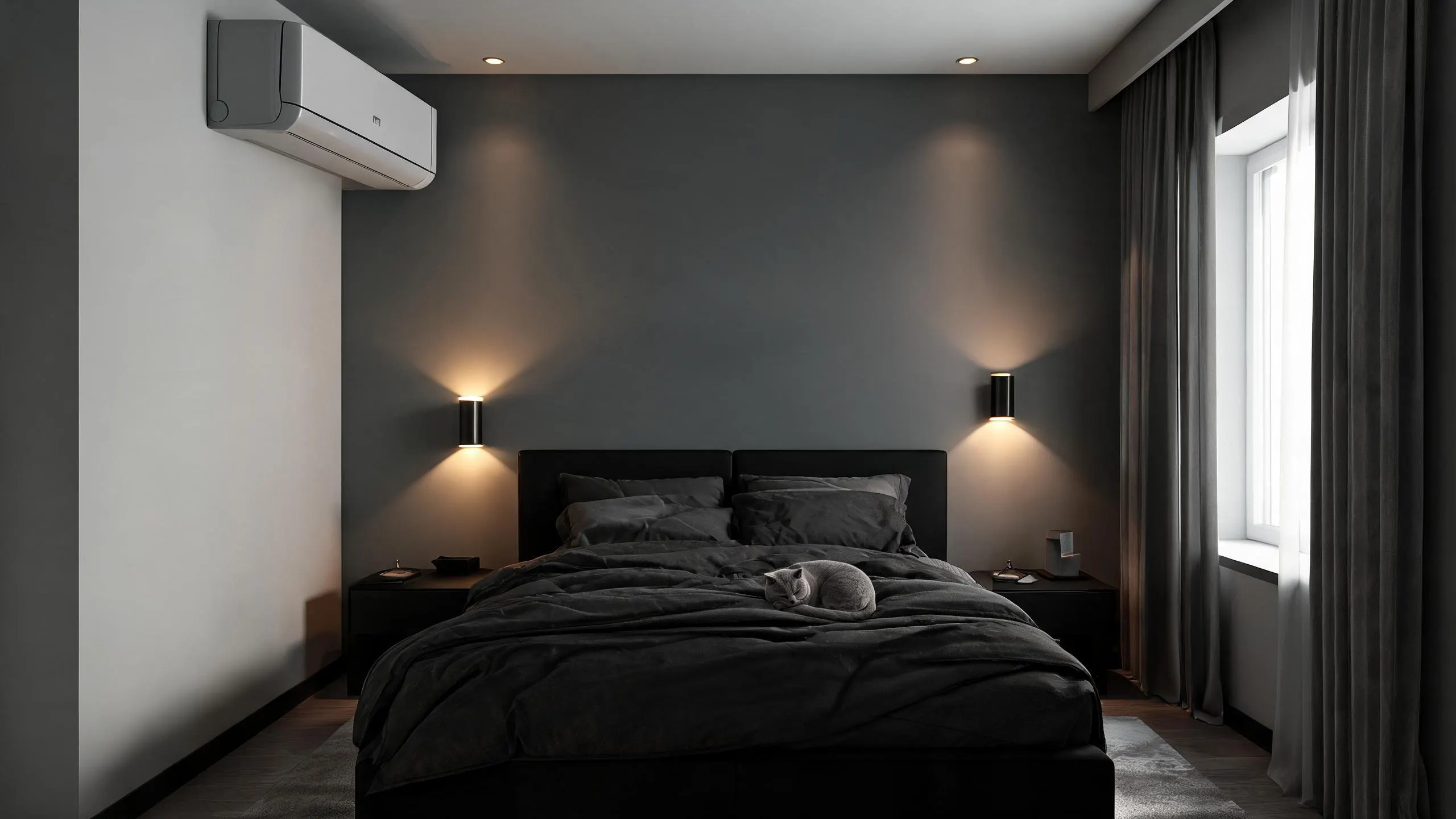






A minimalist bedroom with dark grey walls, a large bed with charcoal bedding, a sleeping cat, two warm-toned wall sconces, and a wall-mounted air conditioning unit.

Mini Split Installation in Morrisville, VT

Tell us about the job

Takes about a minute. No obligation.

New system or replacementMini-splitLamoille County, VT
Step 1 of 2

What ZIP code is the job in?

Oil and kerosene heat 41.1% of homes in Lamoille County, more than any other fuel, with another 35.2% on propane or LP. A mini split doesn't replace that furnace or boiler, it works alongside it. Most homeowners here add one to take the load off the oil burner during the mild stretches of the year, and to cool the house in summer, something an oil or propane system can't do at all. That's the gap a mini split is built to fill, not a whole new heating plant, just backup heat and cooling where the existing system can't help.

9 months
September through May, your system heats
10°F
the average winter night it heats against
74°F
the average summer afternoon it cools against
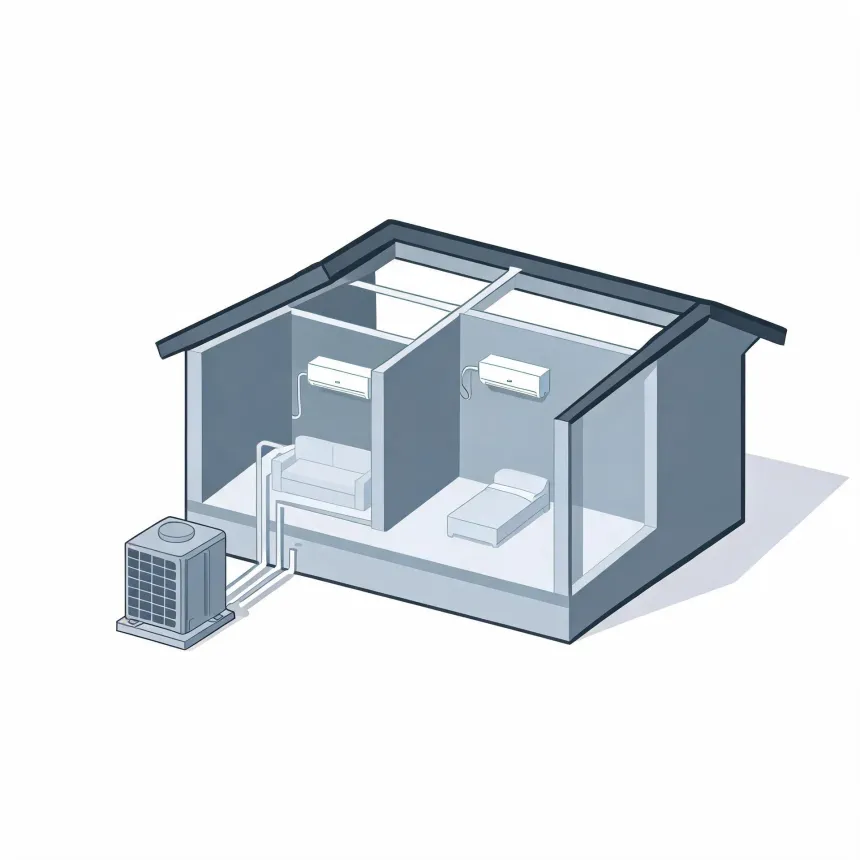
Illustrated cutaway of a two-room house showing two wall-mounted indoor air conditioning units connected by pipes to an outdoor condenser unit on the ground outside.

Summer afternoons in Lamoille County average 74 degrees.

A mini split here is doing cooling nobody's oil furnace can touch, not fighting constant heat.

Weather here knocks out power, not what size unit you need

82 severe weather events from 2015 to 2024
21% of homes statewide lost power a day or more in 2024
38 damaging wind events from 2015 to 2024
Standard sizing works fine in MorrisvilleVermont homes pay 21.90 cents per kilowatt-hour. The right size unit is what keeps that bill reasonable.

Every mini split has an efficiency rating on the label, and what it tells you is how much heat it moves for the power it draws. A higher rating means the compressor is doing more work per watt, which matters most in the shoulder seasons when it's running long hours at low speed rather than straining at full output. That rating is tested under set conditions, so it describes the equipment, not your house. How it performs where it's installed depends on the size of the unit matched to the room, where the indoor head sits, and whether the line set run is short and clean. A unit sized too big for the space will cycle on and off and never settle into the efficient low speed the rating assumes. The label tells you what the equipment can do. The installation decides whether it actually does it.

Mild summers mean you can pick for reliability, not for a spec sheet

At 74 degrees, the compressor is barely working. That's not a reason to chase the highest efficiency number on the label, it's a reason to pick the unit with a solid track record, sized right for the room.

Find a contractor
A man in a dark long-sleeve shirt and tan work pants, seen from behind, carries a canvas tool bag up porch steps toward a dark blue front door, with a potted plant beside him.
A white outdoor air conditioner condenser unit mounted on metal wall brackets against gray horizontal siding, with a blue sky and white clouds behind it.

The furnace doesn't retire, it just works less

The old system in a home adding a mini split usually isn't going anywhere. It keeps the furnace or boiler, and that equipment keeps running through the coldest stretch same as always. What changes is how many hours a year it runs. Every hour the mini split covers is an hour the burner doesn't fire, and a burner that cycles less wears less. The flip side is a burner that sits idle for long stretches still needs the same yearly service, the nozzle and filter don't skip a season just because the mini split picked up the slack. Old ductwork, if there is any, doesn't get touched by this at all. A mini split moves air through its own indoor head, not through existing supply trunks, so whatever state that ductwork is in stays exactly as it was.

The line set run sets the labor

Running refrigerant lines from the outdoor unit to the indoor head is most of the installation work. A straight run through a nearby wall is a different job than one that has to travel up a floor, around framing, or through a chase built just for it. Longer runs and more bends mean more refrigerant, more time, and more places the install can go wrong.
Where the outdoor unit sits is part of the job

The compressor needs a spot with clearance on the sides and above, away from where snow slides off a roof or piles up against a wall. Finding that spot and running power to it is part of what's being quoted, not an afterthought once the indoor head is up.

When you're comparing quotes, ask what each contractor is actually sizing the unit to. A proper sizing calculation looks at the square footage of the room, the windows, the insulation, and how the space is used, not just a rule of thumb per square foot. Ask where the indoor head goes and why that wall, not another one. Ask how long the line set run is and how many bends it needs, since that changes both the labor and how well the system performs once it's in. Ask what happens to the condensate line in winter, because a line that drains somewhere that can freeze will back up. And ask who's doing the vacuum test on the line set before it's charged, since a system that isn't pulled down to the right vacuum before refrigerant goes in will lose efficiency and may fail early, no matter what the label says it's rated for.

Installation day starts with the outdoor unit and the indoor head going in first, mounted and bolted but not yet connected. Once both are set, the line set gets run between them and connected at each end. Before any refrigerant moves, the whole line set gets pulled down with a vacuum pump, and it has to hold that vacuum for a stretch of time without creeping back up. That step confirms there's no moisture or air trapped in the lines, because either one will foul the system later even if everything looks fine on day one. Only after the vacuum test passes does refrigerant get released into the lines. Then it's a matter of running the system, checking the temperature split between the air going in and the air coming out, and confirming the condensate drains where it's supposed to instead of pooling at the indoor head.