






A row of white Colonial-style houses with glowing windows photographed at dusk along a road bordered by a stone wall.

Mini Split Installation in Island Pond, VT

Tell us about the job

Takes about a minute. No obligation.

New system or replacementMini-splitEssex County, VT
Step 1 of 2

What ZIP code is the job in?

Oil heats half the homes in Essex County, more than any other fuel. Another 14.3% run on bottled or LP gas, and barely any homes have utility gas at all. A mini split doesn't ask what fuel you already have. It runs on electricity, so it works the same whether the house next to it has an oil tank or a propane tank. For a lot of homes here, that makes it a second heat source for the shoulder months, or a way to add cooling without touching the oil furnace at all.

10 months
September through June, your system heats
8°F
the average winter night it heats against
74°F
the average summer afternoon it cools against
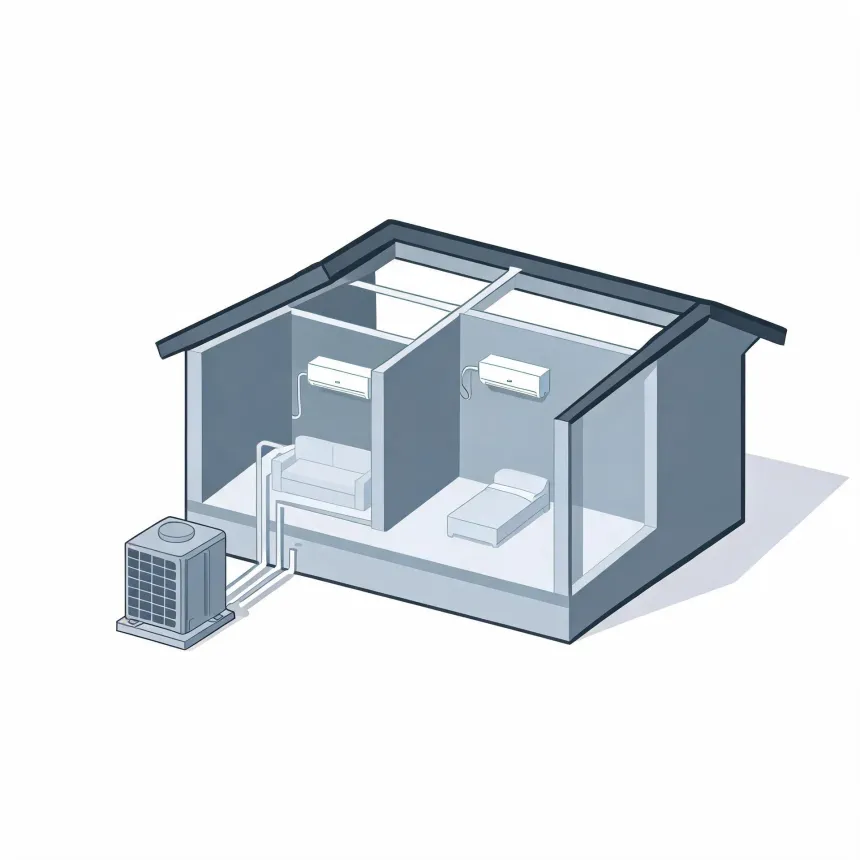
Illustrated cutaway of a two-room house showing two wall-mounted indoor air conditioning units connected by pipes to an outdoor condenser unit on the ground outside.

Vermont electricity runs 21.90 cents per kilowatt-hour.

A standard mini split sized right for the room keeps that cost in line, no need to size up.

A standard mini split handles what the weather here does

76 severe weather events from 2015 to 2024
21% of homes statewide lost power a day or more in 2024
40 damaging wind events from 2015 to 2024
Barely any cooling load to speak ofSummer afternoons here average 74°F, and most months don't call for cooling at all.

Half the homes in Essex County were built in 1973 or earlier. An older home like that was built around a specific heat source, usually a wood stove or an oil furnace, not around running line sets for a mini split. Installing one now means a contractor has to work with the walls and the layout that are already there, not the ones a newer build would offer. That's not a problem for the equipment itself. A mini split mounts on an interior wall and connects through a small hole to an outdoor unit, so it doesn't need ductwork to be added or modified. But where that wall is, how thick it is, and what's already running through it is specific to your house, so it's worth having a contractor walk the room before deciding on placement.

Any new system here has to meet zone 6A minimums

Essex County is rated zone 6A, a cold climate with winters that run long. A mini split installed here has to meet the federal minimum for a split-system heat pump, 14.3 SEER2 for cooling and 7.5 HSPF2 for heating, same as any other split system. That's the floor, not a special ductless category. A federal tax credit is available toward the cost of a system that qualifies.

Find a contractor
A man in a dark long-sleeve shirt and tan work pants, seen from behind, carries a canvas tool bag up porch steps toward a dark blue front door, with a potted plant beside him.
A white outdoor air conditioner condenser unit mounted on metal wall brackets against gray horizontal siding, with a blue sky and white clouds behind it.

The label tells you the ceiling, not the bill

The SEER2 and HSPF2 numbers on the label are a ceiling, not a guess at your bill. They're measured in a lab, at a set temperature, with the unit running at its best. A unit that cycles on and off a lot in daily use won't hit that number as often as one sized right and left to run long, steady cycles. Heating efficiency drops as the outdoor temperature drops, too, since a heat pump has less heat in the outside air to move inside on a cold day. None of that makes the rating meaningless. It tells you what the equipment is capable of, and a higher rated unit still costs less to run than a lower rated one under the same conditions. It just isn't a promise about what your thermostat will show at the end of the month.

Sizing comes from a room by room load calculation

A contractor measures the room, checks the window area and how the walls are insulated, and works out how much heat the room loses in winter and gains in summer. That number sets the capacity of the unit, not the size of the room next door or a rule of thumb from a brochure. Rooms the same size can still need different sized units if one has more glass or sits above an unheated space.
Oversized and undersized both cause problems

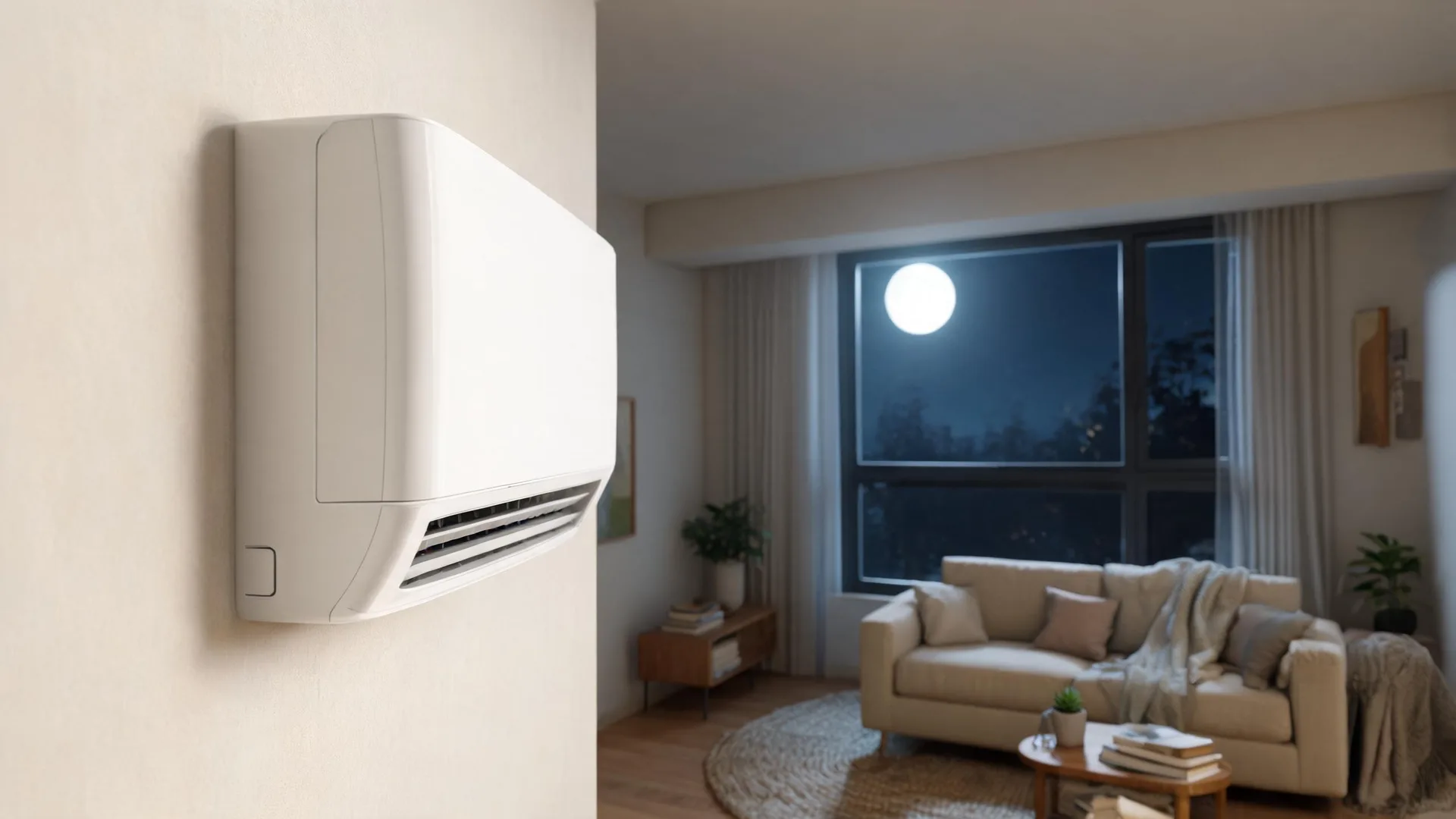
A unit too big for the room cools or heats it fast, then shuts off before it's run long enough to pull moisture out of the air, so the room feels clammy even at the right temperature. A unit too small runs constantly and never quite catches up on the coldest or hottest days. The right size runs in long, steady cycles, which is also what keeps the compressor from wearing out early.

When you're comparing systems, ask what's actually being compared. A multi-zone system running several indoor heads off one outdoor compressor isn't the same purchase as separate single-zone units, even if the total capacity looks similar on paper. With a multi-zone, if the compressor needs service, every room it feeds loses heat or cooling at once. Separate units keep that risk to one room. Ask too how the unit handles defrost. In cold weather a heat pump's outdoor coil collects frost and has to run a defrost cycle to clear it, and during that cycle it can blow cool air for a few minutes before switching back. Some units manage that cycle better than others, and it's worth asking a contractor how the models they carry perform at low outdoor temperatures, not just at the conditions on the spec sheet. Ask what the warranty covers on the compressor specifically, since that's the part most likely to be expensive if it fails outside of warranty.

Installation starts with the walk-through, confirming where the indoor head and outdoor unit will go before anyone touches a wall. The contractor drills a hole for the line set, usually small enough to fit behind where the indoor unit will hang, and runs the refrigerant lines, power cable and a drain line through it to the outdoor unit. That outdoor unit sits on a pad or wall bracket, far enough from the wall to pull air through the coil properly. Once the lines are connected, the system gets evacuated with a vacuum pump to pull out air and moisture before refrigerant goes in, since either one left in the lines can damage the compressor over time. The contractor then charges the line with refrigerant, powers it up, and checks that both heating and cooling run and that the indoor head is reading temperature correctly. Most of a day is spent on the lines and the vacuum process, not on mounting the equipment itself.