

What the cold actually does to a heat pump here
Winter nights in Caledonia County average 9°F, and that is the number that matters most in this choice. A standard heat pump starts losing heating capacity below 40°F, and below about 35°F it usually needs backup heat to keep up. Here, every single night that drops to freezing or below, about 175 of them a year, is already past both of those marks. This is not a system that dips below its comfort range once or twice a winter. It runs below it most of the heating season.
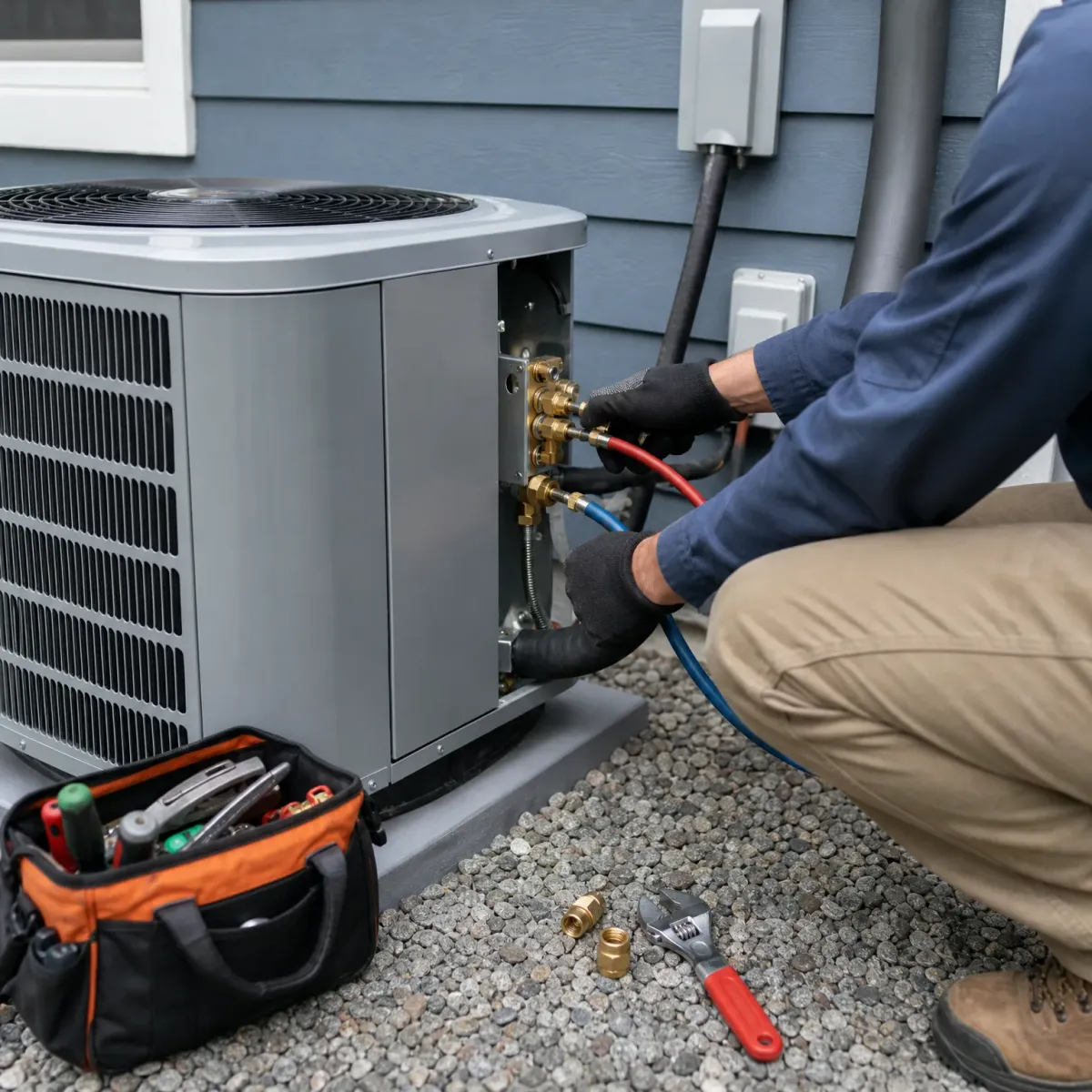
That does not mean a heat pump will leave you cold. ENERGY STAR's Cold Climate rating requires a heat pump to still produce 1.75 units of heat per unit of electricity at 5°F, and to hold onto at least 70 percent of its 47°F capacity at that same temperature, with testing to back it up. Field tests of cold-climate models in real homes found backup heat carried only a small part of the load between 0°F and 35°F, and the homes almost never ran on backup heat alone above 0°F. A heat pump built for this climate is a different machine from the federal-minimum one priced in the running-cost comparison above. The standard model will struggle on your coldest nights. The cold-climate model is built around exactly the nights you have.
Thirty nights a year here drop to 0°F or below. That is where any heat pump, cold-climate or not, leans hardest on whatever backup heat is wired into the system. If you go with a heat pump in this county, what happens on those thirty nights is the detail to get right before you sign anything, not after.